Copper Mines at Bingham, Utah
Plot
This short nonfiction film records the copper-mining district at Bingham, Utah, with attention to the steep canyon landscape and the tightly packed communities that grew along its slopes. Although the surviving material is incomplete, it shows the industrial and residential character of the area, evoking a mining West shaped by extraction, immigrant labor, and rough mountain terrain. The excerpt specifically reveals Highland Boy, a neighborhood associated with Italian and eastern European immigrant families, underscoring how mining settlements were often divided by ethnicity and work role. Rather than presenting a dramatized narrative, the film functions as an observational travelogue and industrial document, capturing a place whose social and geographic organization was already historically distinctive in the early 20th century.
Director
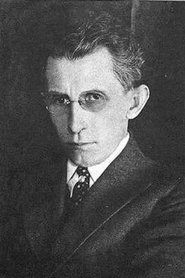
J. Searle DawleyAbout the Production
The film was made as a short actuality/documentary subject during the era when motion pictures frequently recorded industrial sites, local scenery, and socially significant places for exhibition as novelties and educational attractions. It survives only incompletely, so the full extent of the original footage, structure, and camera coverage is not fully known. The surviving excerpt is valuable because it documents a specific mining community whose built environment and ethnic geography have largely vanished. Like many Edison nonfiction subjects of the period, it was likely intended for general exhibition rather than as a theatrical feature, and it emphasizes observation over editorial argument.
Historical Background
The film was made in 1912, a period when the United States was undergoing rapid industrial expansion, urbanization, and intensified immigration, all of which shaped the labor systems of western mining regions. Bingham Canyon was one of the major copper-producing districts in the American West, and films of this kind offered audiences a view of extractive industry that was both informative and visually novel. The early 1910s were also a transitional moment in cinema itself: nonfiction shorts, scenic views, and industrial subjects still occupied a central place in exhibition, even as longer narrative features were beginning to dominate. Historically, the film matters because it preserves a fleeting image of a mining settlement organized by ethnicity, labor, and terrain, offering evidence for scholars of industrial history, migration, and early visual culture.
Why This Film Matters
Copper Mines at Bingham, Utah has significance as a visual document of a now-changed industrial landscape and the social world that supported it. It records the existence of immigrant working-class enclaves in a mining district, providing a rare moving-image trace of communities often underrepresented in mainstream histories. In cinema history, it belongs to the lineage of early actuality filmmaking, where the camera served as both witness and archive. For regional and labor historians, it is especially valuable because it captures a particular Utah mining environment before later technological and environmental transformations altered the site and its memory.
Making Of
Copper Mines at Bingham, Utah appears to have been produced in the style of an Edison actuality, with a practical, observational camera eye focused on a significant American industrial site. No detailed production diary survives in the available record, but the film likely involved location shooting in and around Bingham Canyon, where steep terrain and active mining operations would have made camera placement and exposure conditions difficult. Its incompleteness means that much of the production context has been lost, including the original edit structure, intertitles if any, and the intended order of scenic and industrial views. The surviving footage, however, suggests a deliberate attempt to preserve an image of a working mining district at a time when such footage could function both as spectacle and as informal ethnographic record.
Visual Style
The cinematography is characteristic of early nonfiction filmmaking, relying on straightforward observational framing rather than elaborate camera movement or editing. The visual emphasis is on geography, settlement pattern, and industrial environment, with the steep canyon walls and built structures helping define the composition. Because the film survives only in incomplete form, the full range of its visual approach cannot be reconstructed, but the extant footage suggests a practical, location-based style designed to present clear information about the site. Its value lies in the directness of the imagery and in the way the camera records the relationship between natural terrain and human occupation.
Innovations
The film does not appear to have introduced a major technical innovation, but it is technically notable as an early location-recorded industrial actuality that preserved a complex mining environment on film. Shooting in a steep canyon and around active industrial activity would have required careful handling of cumbersome early motion-picture equipment. Its importance is less about novelty in apparatus than about the documentary use of the camera as a tool of historical record. In that sense, it exemplifies an important early cinema practice: turning remote or specialized American spaces into visible, shareable moving images.
Music
As a silent film from 1912, it would not have had a synchronized recorded soundtrack. Like most films of the period, it was likely exhibited with live musical accompaniment chosen by the theater, ranging from piano to small ensemble performance depending on venue and budget. No original score is known to survive. Any music used today in archival presentations is typically a modern reconstruction or preservation accompaniment rather than an authentic original soundtrack.
Memorable Scenes
- The surviving view of the Highland Boy neighborhood, which reveals the ethnic and working-class composition of the mining settlement.
- The sweeping look at the steep Bingham Canyon hillsides, emphasizing how the town and mine were carved into a difficult mountain landscape.
- The juxtaposition of industrial extraction sites with residential areas, showing how closely labor and daily life were intertwined in the mining district.
Did You Know?
- The film is a surviving fragment rather than a complete print, which makes it especially important to historians of early documentary and industrial cinema.
- It captures Bingham Canyon before later large-scale changes transformed the mining region and its surrounding settlements.
- The surviving excerpt specifically identifies Highland Boy, a neighborhood associated with Italian and eastern European immigrant workers and families.
- The film reflects an early 20th-century fascination with industrial labor, landscapes of extraction, and the people who lived in company-town environments.
- J. Searle Dawley is better known today for early narrative filmmaking, but he also directed a number of nonfiction and industrial subjects.
- Films like this were often shown alongside newsreels, travelogues, and short dramatic subjects in mixed early cinema programs.
- Its preservation status makes it a rare visual record of the social geography of a Utah mining community in the pre-World War I period.
- Because it is incomplete, scholars must infer the original scope and sequencing from the surviving footage and archival records.
- The title suggests a focus on copper mining, but the historical value also lies in its incidental documentation of housing, terrain, and settlement patterns.
What Critics Said
Contemporary critical reception is not well documented, which is typical for many early nonfiction shorts that were reviewed only briefly, if at all, in trade publications or local newspapers. At the time of release, such films were generally assessed on the novelty and clarity of their views rather than on narrative artistry. Modern critical interest is primarily archival and historical: scholars value the film less as entertainment than as a fragmentary record of labor, migration, and landscape. Its incomplete survival has further increased its importance, since even partial footage can illuminate early documentary practices and the visual representation of industrial America.
What Audiences Thought
Specific audience response data has not survived, but films of this type were generally accessible to early cinema audiences because they combined recognizable places with the fascination of motion pictures themselves. Viewers in 1912 may have found the film interesting as an unusual glimpse of a far western industrial center and the people who lived and worked there. Today, its audience is largely composed of historians, archivists, and enthusiasts of silent cinema, who approach it as a rare historical artifact. Its appeal lies in its authenticity and in the sense of seeing a vanished social landscape in motion.
Film Connections
Influenced By
- Early Edison actuality films
- Travelogues and scenic views of the 1900s and 1910s
- Industrial documentary subjects from early cinema
This Film Influenced
- Later industrial documentaries about mining communities
- Regional historical films documenting the American West
- Archival preservation projects focused on labor and immigrant history
You Might Also Like
More Documentary Films
View allMore from J. Searle Dawley
View allFilm Restoration
The film survives only in incomplete form. It is not considered a lost film, but the extant material represents only part of the original production, limiting full reconstruction of its original runtime and structure.