Our Heavenly Bodies
Plot
Our Heavenly Bodies, released in German as Wunder der Schöpfung, is an ambitious Kulturfilm that attempts to explain the known universe of the 1920s through a mixture of documentary explanation, staged dramatic passages, animation, models, and illustrative special effects. The film moves from Earthly phenomena to the wider cosmos, presenting astronomy, planetary motion, and the then-current scientific understanding of space in a visually imaginative way. Alongside educational material, it incorporates fictionalized elements and humanized guiding figures to help organize the journey through the heavens. Its structure is less that of a narrative drama than a visual essay, with each sequence designed to broaden the viewer’s understanding of creation, science, and the scale of the universe.
About the Production
Our Heavenly Bodies was an unusually large-scale educational spectacle for the silent era and is often discussed as one of the most elaborate German science films of the 1920s. Contemporary and later descriptions note that roughly 15 special-effects specialists and 9 cameramen were involved, reflecting the film's reliance on visual experimentation, miniature work, trick photography, and carefully staged compositing. The film is also notable for its extensive use of tinting and toning, giving individual passages distinct atmospheric colors and helping distinguish different realms of the cosmos and modes of explanation. It combines documentary imagery, historical materials, fictional framing, and animation to create a hybrid form that was both pedagogical and spectacular. Exact budget and box office figures do not appear to be reliably documented in surviving standard reference sources.
Historical Background
The film was produced in the mid-1920s, during the Weimar Republic, a period of intense artistic experimentation, scientific popularization, and rapid public interest in modern technology and cosmology. German cinema at the time was especially strong in the documentary-educational and effects-driven traditions, with filmmakers exploring how film could teach as well as entertain. Astronomy and the broader public understanding of the universe were changing rapidly in the early 20th century, and films like this helped translate scientific ideas into accessible imagery for mass audiences. The production also reflects the era's fascination with synthesis: combining science, spectacle, and cultural instruction into a single cinematic event. Historically, the film matters because it shows how silent cinema helped shape visual language for space exploration and cosmic imagination long before the space age.
Why This Film Matters
Our Heavenly Bodies is significant as a landmark of early science cinema and an important example of the German Kulturfilm tradition. It demonstrates that long before television documentaries or modern IMAX science films, cinema was already being used to visualize abstract scientific knowledge in an emotionally engaging way. The film's blending of factual explanation with imaginative special effects anticipated later educational and speculative science filmmaking, and its cosmic imagery has attracted ongoing interest from film historians. It also represents a key moment in the development of cinematic representations of outer space, influencing how audiences learned to imagine travel beyond Earth. For scholars of silent cinema, it is a revealing artifact of Weimar-era confidence in both science and the expressive power of film.
Making Of
Our Heavenly Bodies was mounted as a prestige educational production rather than a standard narrative feature, and its construction reflects the ambitions of 1920s German science cinema. The filmmakers brought together a sizable team of effects artists and cinematographers to visualize subjects that could not be photographed directly, such as astronomical motions, planetary journeys, and cosmic scale. The film's hybrid form required switching between documentary footage, staged scenes, diagrams, models, and stylized effects while still maintaining a coherent educational progression. Its use of color tinting and toning would have required careful laboratory planning, especially because these hues helped separate scientific explanation from imaginative visualization. The result is a film that stands at the intersection of popular science, visual spectacle, and the experimental spirit of Weimar filmmaking.
Visual Style
The cinematography is one of the film's chief attractions, with an emphasis on carefully composed visual explanations and strongly differentiated atmospheres created through tinting and toning. The camera work had to accommodate models, optical illusions, staged dramatizations, and scientific illustration, all of which demanded precision and inventiveness. The film likely relies on a mixture of static explanatory imagery and fluid montage-like transitions to guide viewers through cosmological concepts. Its visual style is heightened by the silent-era color process, which gives the cosmos and Earthly scenes a distinctive, almost painterly look. The overall effect is both educational and dreamlike, using cinematography to make abstract scientific ideas legible and emotionally resonant.
Innovations
The film is notable for its extensive use of early special effects to visualize scientific and astronomical ideas that could not be captured directly by camera. Its production reportedly involved an unusually large effects team and multiple cameramen, indicating a complex workflow for combining live action, miniatures, optical effects, and animation. The tinting and toning strategy is also a major technical achievement, helping structure the film's educational flow and enhancing its cosmic imagery. As a hybrid of documentary and fantasy-like visualization, it helped establish methods for making scientific abstraction cinematic. In historical terms, it stands as an important example of how pre-digital filmmaking created convincing cosmic scale through practical ingenuity.
Music
As a silent film, Our Heavenly Bodies had no synchronized recorded soundtrack in its original release. Like most prestige silent features, it would have been accompanied by live music, either from a local pianist, organist, or larger ensemble depending on the venue. Surviving sources do not provide a definitive original score attribution that is consistently documented in standard references. Any modern presentations may use newly commissioned accompaniment or archival-style reconstructions. The film's rhythm and emotional impact would originally have depended heavily on live musical interpretation.
Memorable Scenes
- The sequence in which a space vessel or shuttle-like craft travels through the heavens and visits different planets, creating a striking early vision of cinematic space travel.
- The film's color-tinted cosmic passages, which visually separate different stages of the journey and lend the universe an otherworldly glow.
- The transitions between documentary explanation and dramatized illustration, which make scientific ideas feel like part of a living, cinematic world.
- The use of special effects and model work to simulate planetary bodies, astronomical motion, and the immensity of space.
Did You Know?
- The film is the German-language Wunder der Schöpfung, while Our Heavenly Bodies is an English-language title used in some international references.
- It is often classified as a Kulturfilm, the German non-fiction educational genre that flourished in the Weimar era.
- The production is remembered for blending documentary, historical illustration, dramatized scenes, and animation rather than following a conventional story structure.
- Its visual presentation made heavy use of tinting and toning, a common silent-era technique that was handled here with unusual ambition and care.
- The film's special-effects work included models, optical effects, and other studio tricks intended to visualize astronomical concepts.
- Later viewers and film historians have often compared some of its space-travel imagery to ideas later seen in 2001: A Space Odyssey, though the films are of course separated by more than four decades.
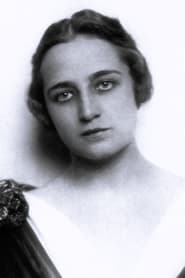
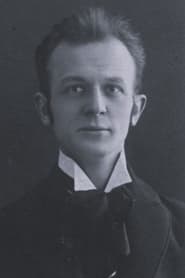
- Margarete Schön, Theodor Loos, and Paul Bildt are among the credited cast, indicating that established dramatic actors were employed to give authority and structure to the scientific material.
- Because it is a silent film, its original presentation depended heavily on live musical accompaniment and explanatory intertitles.
- The film is an important example of how Weimar cinema could combine popular entertainment with scientific education and visual experimentation.
- Surviving documentation suggests that the project was large and technically demanding for its period, especially in the coordination of camerawork and effects.
What Critics Said
Contemporary critical reception is not as widely preserved in easily accessible sources as that of major narrative features, but the film was generally treated as an ambitious and impressive scientific spectacle rather than as a simple classroom film. Later critics and historians have been especially interested in its visual ingenuity, its place within German educational cinema, and its unusually modern-feeling approach to space imagery. It is now often praised for its technical ambition and for the way it transforms scientific exposition into a cinematic experience. Some modern viewers may find its explanatory style dated, but its combination of design, effects, and color treatment continues to be admired. In film-historical terms, it is regarded as a fascinating precursor to later large-scale cosmic documentaries and speculative space films.
What Audiences Thought
Direct audience records are scarce, but the film appears to have been intended for broad public appeal rather than a narrowly academic audience. Its use of dramatic actors, special effects, and visually rich sequences suggests that producers expected spectators to be both instructed and entertained. As with many silent educational films, audience response likely depended on the venue, the quality of live musical accompaniment, and the skill of the presenter or intertitles in local screenings. Its endurance in film scholarship indicates that it made a memorable impression as a visual experience, even if it was not a mainstream commercial hit in the modern sense. The film's survival in historical memory suggests that viewers and later archivists recognized it as something unusual and ambitious for its time.
Film Connections
Influenced By
- Popular science lectures and illustrated astronomy books of the early 20th century
- German Kulturfilm educational cinema
- Weimar-era documentary and science films
- Expressionist visual experimentation in German silent cinema
This Film Influenced
- The films of later cinematic space visualization and science documentaries
- 2001: A Space Odyssey (1968) in the sense of later critical comparison of cosmic imagery
- Educational science films and television documentaries that blend explanation with spectacle
You Might Also Like
More Documentary Films
View allFilm Restoration
The film is apparently preserved in surviving form and remains accessible to historians and specialist viewers, though available prints may vary in completeness, tinting, and image quality depending on source and restoration history. It is not generally considered a lost film.