1903 · Approximately 1 reel; exact running time is not securely documented

Also available on: YouTube
The Messenger Boy's Mistake

The Messenger Boy's Mistake

1903 Approximately 1 reel; exact running time is not securely documented United States
Courtship and romantic testingMistaken identity and misunderstandingSocial embarrassmentComic reversalGendered clothing and domestic farce

Plot

"The Messenger Boy's Mistake" is a brief Edison comedy built around a romantic prank that goes amusingly wrong. Cholly, eager to visit his sweetheart, first sends her a large bouquet and then, to test whether she truly loves him, includes a note through a messenger boy asking her to 'wear this' if she returns his affection. The messenger boy dutifully delivers both the note and a package, but the young woman opens it to discover not a romantic gift at all, but an old pair of trousers and other masculine garments. The joke turns on misunderstanding and embarrassment, with the film ending on the absurd reveal rather than any complex resolution. Like many early comedies, it relies on a simple setup, visual clarity, and a final gag to deliver its effect.

About the Production

Release Date 1903
Production Edison Manufacturing Company
Filmed In Edison production facilities, likely the Black Maria studio area in West Orange, New Jersey

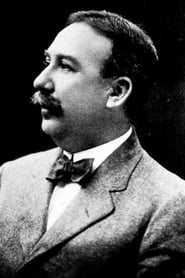
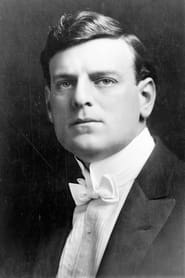
This is an early one-reel Edison comedy from the first years of American narrative film, when productions were typically staged in a straightforward, theatrical manner for a single fixed camera. The film is associated with Edwin S. Porter during his Edison period and features Gilbert M. Anderson, who would later become famous as 'Broncho Billy' in Western films. Surviving catalog descriptions and later film-reference sources identify it as a gag-based domestic comedy built around a mistaken delivery, a common comic formula in the nickelodeon era. As with many films from 1903, detailed crew records beyond the director and principal performer are sparse, and exact production circumstances, budget, and precise shooting dates are not documented in surviving mainstream sources.

Historical Background

The film was made in 1903, a formative year in American cinema when narrative film grammar was still being standardized and short comic scenes were a major part of exhibition programs. The Edison Manufacturing Company was among the dominant producers in the United States, and Edwin S. Porter was one of the key figures shaping how motion pictures could tell a story visually within a very short duration. At the same time, vaudeville, illustrated jokes, and stage farce heavily influenced film content, which is why misunderstandings, flirtation, and costume gags appear so often in shorts from this era. The movie reflects a pre-feature-film culture in which audiences watched a variety of brief subjects in one program, making concise comic payoff especially important. Its historical value lies in showing how early filmmakers adapted familiar social situations into economical cinematic jokes.

Why This Film Matters

Although not one of the canonical landmark films of the silent era, the picture is culturally significant as part of the broad body of early American comic filmmaking that helped establish film comedy as a durable genre. It demonstrates an early use of dramatic irony and visual punchline structure, techniques that would become foundational in slapstick and romantic farce. The film also preserves a glimpse of Edwardian-era social manners, including courtship rituals, gift-giving, and anxiety over public propriety. For scholars, it is useful as evidence of how Edison shorts circulated comic motifs that later filmmakers and comedians refined into more complex narrative forms. Its importance is therefore less about fame and more about its place in the evolution of cinematic storytelling and screen comedy.

Making Of

Specific behind-the-scenes documentation for this title is limited, which is typical for very early Edison shorts. The film was made in the period when Porter and the Edison organization were producing short comedies, actualities, and staged scenes for rapid distribution, often with minimal surviving paperwork beyond title listings and catalog summaries. The casting of Gilbert M. Anderson is notable because his career soon shifted toward acting, directing, and eventually pioneering Western serial-style storytelling. Production likely used simple interior staging with props and costumes as the source of the gag, emphasizing visual readability rather than naturalistic performance. The package reveal appears designed as the punchline centerpiece, suggesting that the film was constructed around a single comic situation rather than a complex script.

Visual Style

The cinematography is characteristic of early 1900s studio filmmaking: a static camera, frontal composition, and proscenium-like staging that allows the audience to read the action clearly. The visual emphasis would have been on body language, props, and clear spatial arrangement rather than camera movement or editing complexity. The gag depends on the audience seeing the package and understanding its contents as a comic reversal, so the shot design likely prioritizes legibility over realism. Lighting would have been bright and even, consistent with Edison studio practices of the period. The film's visual style is typical of early comedy before more elaborate shot breakdowns became standard.

Innovations

The film is not known for technical innovation in the sense of trick effects or advanced editing, but it is notable as an early example of concise cinematic joke construction. Its technical achievement lies in economy: a simple premise is communicated quickly and visually, with the final prop reveal serving as the narrative payoff. The film represents the kind of clear, efficient screen storytelling that helped early cinema move beyond mere recorded action. In this sense, it contributes to the development of comic timing, visual setup, and punchline structure on film.

Music

No original synchronized soundtrack survives, as the film was produced in the silent era. Like most early silent comedies, it would have been exhibited with live musical accompaniment tailored by the theater musician or exhibitor. Possible accompaniment might have included piano improvisation, light comedy cues, or popular tunes selected to match the romantic and farcical tone. No specific historic cue sheet is known for this title.

Famous Quotes

No spoken dialogue survives for this silent film.
The plot description centers on the note to 'wear this' if she loves him.

Memorable Scenes

  • The messenger boy delivering the bouquet and accompanying note as part of Cholly's romantic scheme.
  • The reveal in which the young woman opens the package and discovers an old pair of trousers and other masculine garments.
  • The comic payoff built on the audience anticipating the embarrassment before the character fully understands the mistake.

Did You Know?

  • The film is often cited as an early example of Edison-era situation comedy built around a one-joke premise.
  • Gilbert M. Anderson appears in the cast, years before he became one of the earliest major Western stars under the name Broncho Billy.
  • The title refers to a messenger boy, a common figure in early 20th-century urban life and a frequent comic device in vaudeville-style films.
  • The humor depends on the audience seeing the package content and anticipating the social embarrassment before the young woman does.
  • Like many Edison productions of the period, the film was likely designed for quick exhibition rather than long-term theatrical booking.
  • The plot involves cross-dressing or mistaken clothing, a recurring comic motif in silent-era farce.
  • The film belongs to the transitional period when American movies were moving from simple tableaux toward more elaborate narrative storytelling.
  • Because of its age, the film is of interest today not only as entertainment but as an artifact of early film comedy conventions.
  • Edwin S. Porter is best remembered for narrative milestones such as 'The Great Train Robbery,' and this title shows his work in smaller comic pictures as well.

What Critics Said

Contemporary critical reviews for this specific short are not widely preserved in standard modern databases, and surviving commentary is limited. At the time of release, films like this were generally assessed in trade listings, exhibitor catalogs, and local program notices rather than in the full critical framework applied to later feature films. Modern historians tend to view it as an example of early Edison comedy craftsmanship: modest in ambition, but valuable for understanding how jokes were visually staged before the rise of feature-length narrative cinema. Its reception today is primarily scholarly rather than popular, with interest centered on Porter, Edison production methods, and Gilbert M. Anderson's early screen career.

What Audiences Thought

There are no reliable surviving box-office records or audience surveys for this title. In the nickelodeon-era context, audience response would likely have depended on the clarity of the gag and the immediate comic surprise of the package reveal. Short comic subjects of this type were typically programmed as light amusement and were often well-suited to mixed audiences seeking quick, easily understood humor. Today, viewers encountering the film are more likely to do so through archives, historical screenings, or scholarly compilations, where its charm lies in its simplicity and period authenticity rather than in spectacle.

Film Connections

Influenced By

  • Vaudeville sketch comedy
  • Stage farce and domestic situational humor
  • Early Edison comic shorts
  • Illustrated joke culture and turn-of-the-century gag storytelling

This Film Influenced

  • Early silent farces built around package mix-ups and romantic misunderstandings
  • Later Edison and Biograph-era comic shorts that used prop-based punchlines
  • Silent-era domestic comedies featuring mistaken deliveries and cross-gender wardrobe gags

Film Restoration

Survival status is not clearly documented in the sources available to me; the film may survive in archival holdings or may be incomplete, but no universally cited restoration record is readily confirmed here.

Themes & Topics

messenger boyromantic prankbouquetmisdeliverytrousersfarce