1937 · 60 minutes

Also available on: Wikimedia Archive.org
The Mystery of the Hooded Horsemen

The Mystery of the Hooded Horsemen

1937 60 minutes United States
Identity and disguiseJustice versus law enforcement misunderstandingHeroic infiltrationTrust and suspicionFrontier law and outlaw violence

Plot

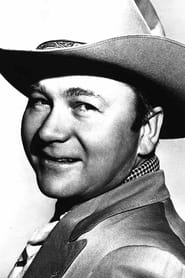
In this Republic Pictures western, Tex Ritter plays a singing cowboy who finds himself battling a masked outlaw gang terrorizing the countryside. After a showdown in which he shoots one of the hooded riders, Tex takes the dead man's hood and mask and uses the disguise to slip inside the criminal organization and learn how it operates. The ruse places him in increasing danger, especially when the gang begins to suspect there is an impostor in their midst. Tex manages a narrow escape, only to be seized by the local sheriff, who believes he is one of the very outlaws he has been trying to expose. From there, the story builds toward a familiar but effective chapter-western climax of mistaken identity, pursuit, and the eventual unmasking of the real villains.

About the Production

Release Date 1937-10-15
Production Republic Pictures
Filmed In United States studio production; exact shooting locations are not documented in the readily available surviving records

The film was produced as a low-budget Republic western, part of the studio's efficient B-western program designed for rapid release to neighborhood theaters. It was built around Tex Ritter's screen persona as a singing cowboy and likely relied on standing western sets, stock footage, and fast-paced action staging typical of Republic's production model. White Flash, Ritter's horse, is credited as part of the star package, reflecting the era's practice of giving a star's horse billing in westerns. Surviving documentation on costs, shooting schedule, and specific production anecdotes is limited, and many details of the making have not been widely preserved in standard reference sources.

Historical Background

The film was released in 1937, during the height of the American studio system and at a time when westerns were among the most reliable forms of popular entertainment. Republic Pictures had emerged as a major supplier of inexpensive but crowd-pleasing action films, serials, and singing westerns, filling a crucial niche for rural and small-town theaters. The Great Depression still shaped exhibition and audience tastes, so economical entertainment with clear heroes, familiar moral conflicts, music, and brisk pacing remained highly marketable. The Mystery of the Hooded Horsemen belongs to the era when the singing cowboy was becoming a stable screen archetype, blending music, frontier justice, and romance into a formula that could be turned out quickly and profitably.

Why This Film Matters

While not a landmark western in the art-cinema sense, the film is culturally important as an example of the Republic B-western machine and of Tex Ritter's role in popularizing the singing cowboy persona. These films helped codify a version of western mythology that was accessible, family-friendly, and musically driven, influencing later screen cowboys and genre conventions. The film also reflects how masked-outlaw and undercover-hero plots were used to create suspense efficiently within short-form genre cinema. For modern viewers and historians, it offers a compact illustration of how 1930s popular cinema packaged action, music, and frontier morality for mass audiences.

Making Of

The Mystery of the Hooded Horsemen was made within Republic Pictures' highly organized B-western production system, where scripts, sets, costumes, and action units were designed for speed and economy. Ray Taylor, who had extensive experience with serials and quick-turnaround adventure films, would have been well suited to the film's combination of horseback action, disguise intrigue, and short running time. Tex Ritter's presence meant the production could lean on his musical appeal and established western star image, while also using familiar supporting players and stock western elements to keep costs down. Because the film was produced in the mid-1930s as part of a large stream of Republic genre product, specific memoir-style anecdotes are scarce, but the picture is very much a product of the studio's efficient assembly-line craftsmanship.

Visual Style

The cinematography is characteristic of mid-1930s Republic westerns: functional, straightforward, and focused on clarity of action rather than elaborate visual flourishes. Scenes were likely shot with economical coverage, using medium shots for dialogue and movement, while horseback action and confrontations were staged to maximize momentum within a short runtime. Like many B-westerns of the period, the film would have depended on sturdy studio lighting, efficient editing, and familiar western exteriors or backlot settings. The visual style serves the narrative directly, emphasizing plot clarity, disguise, and pursuit over atmospheric experimentation.

Innovations

The film's main technical achievement is not innovation but efficiency: it demonstrates how Republic could produce a coherent, action-filled western in a very short runtime with limited resources. The disguise-and-infiltration plot would have required careful editing to maintain suspense and to keep the audience aligned with Tex Ritter's changing identity. Action staging, horseback movement, and rapid scene transitions likely reflect the polished economy for which Republic was known. There are no widely documented special effects or groundbreaking technical advances associated with the film.

Music

As a Tex Ritter vehicle, the film would have incorporated one or more vocal performances that supported Ritter's persona as a singing cowboy. The musical material is typical of Republic westerns of the era, where songs functioned as both entertainment and character branding rather than as integrated musical set pieces in the Broadway sense. Specific cue sheets and full song documentation are not consistently available in standard references, but the score and music direction would have been tailored to emphasize frontier mood, tension, and the appeal of Ritter's vocal numbers. Music in the picture is part of the studio formula that made these westerns distinctive.

Famous Quotes

null

Memorable Scenes

  • Tex defeats a hooded outlaw and uses the dead man's hood and disguise to penetrate the gang from within.
  • The tension rises as Tex, posing as one of the masked riders, must avoid exposure while gathering evidence against the gang.
  • Tex's escape from the outlaws is immediately undercut when the sheriff mistakes him for a criminal and arrests him.
  • The film builds to the familiar western reveal where hidden identities and criminal schemes are exposed in a brisk climactic confrontation.

Did You Know?

  • This is one of the many Republic Pictures B-westerns made to a tight one-hour running time, a format that allowed theaters to program multiple features per day.
  • Tex Ritter was already a popular singing cowboy by this point, and the film uses his image as both a hero and a performer to distinguish it from more purely action-driven westerns.
  • White Flash, Ritter's horse, receives cast credit, which was a common but notable marketing device for westerns of the period.
  • The plot uses the classic western trope of an undercover hero infiltrating a gang by wearing the enemy's disguise.
  • The film was directed by Ray Taylor, a prolific studio-hand director who specialized in quickly made action pictures and serials.
  • Iris Meredith appears in one of the many heroine roles she played in Republic westerns of the 1930s.
  • The film is representative of the transitional period in which sound westerns were fully established but still retained very simple, economical storytelling.
  • As with many Republic productions from the era, little behind-the-scenes paperwork and publicity material has survived in mainstream circulation compared with major studio releases.
  • The movie is sometimes discussed by collectors and genre historians as a typical example of the dependable, formula-driven Republic western rather than as a prestige feature.

What Critics Said

Contemporary reviews for many Republic B-westerns were often brief, promotional, or trade-oriented rather than full-length critical analyses, and specific detailed reviews for this title are not widely preserved in common reference sources. In its own era, the film would likely have been judged primarily on its efficiency, pacing, musical interludes, and the appeal of Tex Ritter rather than on originality. Modern critical attention is limited, but genre historians generally view it as a routine yet representative entry in the singer-western cycle. Today it is appreciated more as an archival artifact and a window into studio-era western production than as a major critical favorite.

What Audiences Thought

Audience reception was likely strongest among fans of Tex Ritter and patrons of low-priced neighborhood and rural theaters that relied on dependable western entertainment. Films of this type were designed to satisfy audiences looking for clear-cut heroism, action, and a few musical moments rather than prestige storytelling. Surviving audience-response data is sparse, but the continued interest of classic-film collectors and western enthusiasts suggests that the movie has retained niche appeal. Its value today lies less in mainstream popularity than in its status as a representative piece of 1930s genre entertainment.

Film Connections

Influenced By

  • Earlier silent and sound westerns centered on masked outlaws and undercover heroes
  • Republic Pictures serial and B-western formula
  • The emerging singing cowboy cycle of the 1930s

This Film Influenced

  • Later Republic and independent B-westerns that reused masked-outlaw and undercover-hero plot structures
  • Subsequent singing cowboy vehicles featuring Tex Ritter and contemporaries
  • Mid-century television western episodes that employed disguise and gang-infiltration storylines

Film Restoration

The film is preserved and appears to survive in archival and home-video circulation; it is not generally regarded as a lost film. Surviving copies may vary in condition depending on source, and it is typical of vintage Republic titles that preservation access is more common through archives, collectors, and classic-film presentations than through mainstream distribution.

Themes & Topics

masked outlawsundercover infiltrationmistaken identitysheriff arrestsinging cowboywestern pursuit