1919 · Approximately 5 reels

Also available on: Wikimedia Archive.org
The Tong Man

The Tong Man

1919 Approximately 5 reels United States
Organized crime and betrayalHonor, loyalty, and revengeRace, identity, and representationDesire and exploitationMoral corruption and social danger

Plot

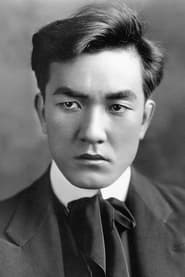
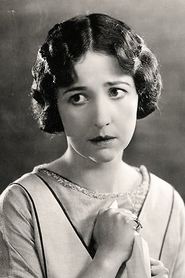
In San Francisco’s underworld, the criminal syndicate known as the tong becomes entangled in a cycle of betrayal, extortion, and vengeance centered on an opium-smuggling operation. A young woman, played by Helen Jerome Eddy, becomes vulnerable to the tong’s schemes, while the title character, portrayed by Sessue Hayakawa, is drawn into the conflict as loyalties shift and murder is plotted. As pressure mounts within the criminal network, hidden motives and personal honor collide, forcing the characters toward a violent reckoning. The story unfolds as both a crime melodrama and a period gangster tale, emphasizing the danger, secrecy, and fatal consequences of organized crime.

About the Production

Release Date 1919
Production Haworth Pictures Corporation
Filmed In Los Angeles, California, USA

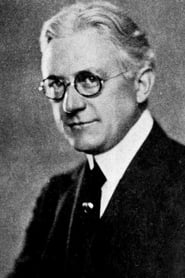
The Tong Man was produced by Sessue Hayakawa’s Haworth Pictures Corporation, part of the actor-producer’s effort to create vehicles that gave him substantial creative control at a time when Asian performers were largely excluded from leading roles in mainstream American cinema. Directed by William Worthington, the film belongs to the cycle of Hayakawa melodramas and crime dramas that helped establish him as one of the most prominent international stars of the silent era. Surviving documentation on the production is limited, and precise budgetary information does not appear to be reliably recorded in standard sources. Like many films of the period, it was mounted as a studio production with location-style exteriors and indoor staging typical of 1910s feature filmmaking.

Historical Background

The Tong Man was made in 1919, just after World War I, during a period when the American film industry was rapidly expanding its feature-film output and developing the star system that would define classical Hollywood. Silent cinema was at its commercial peak, and crime dramas, melodramas, and sensational urban stories were especially popular with audiences seeking contemporary excitement and moral conflict. The film also sits within a complicated historical context of racial representation in the United States: Asian actors were usually denied leading roles, and Asian communities were frequently portrayed through stereotypes, orientalist imagery, or sensationalized crime narratives. Sessue Hayakawa’s stardom matters because he managed to become an internationally recognized leading man within that restrictive environment, creating a rare space for an Asian performer to headline American feature films.

Why This Film Matters

The film is culturally significant primarily as part of Sessue Hayakawa’s pioneering screen career. At a time when Hollywood overwhelmingly marginalized Asian performers, Hayakawa achieved major-star status and built a production infrastructure around himself, making films that circulated domestically and internationally. The Tong Man also reflects the early cinema industry’s fascination with criminal underworld stories and with coded depictions of ethnic enclaves, which today are studied for what they reveal about period attitudes as much as for their narrative content. For film historians, it is an important artifact of silent-era star production, transnational stardom, and the limited but meaningful agency available to nonwhite performers in early Hollywood.

Making Of

The Tong Man emerged from the creative partnership between Sessue Hayakawa and his Haworth Pictures Corporation, which was formed so that he could pursue more complex and lucrative starring vehicles than the parts typically offered to Asian actors in mainstream productions. At this point in his career, Hayakawa was not merely acting but helping shape the kinds of stories in which he appeared, a notable achievement in an industry that otherwise constrained performers of color. William Worthington, who directed many of Hayakawa’s productions, was part of the trusted professional circle that helped give these films a polished, melodramatic style suited to silent-era audiences. Surviving production records are sparse, so many specific behind-the-scenes details about shooting schedules, set construction, and day-to-day production are not well documented, but the film clearly belongs to the era of compact, efficiently produced studio features designed around a star persona.

Visual Style

The film’s cinematography would have followed the visual conventions of late-1910s silent feature production, emphasizing clear storytelling, expressive close-ups, and carefully staged blocking to support dramatic tension. As a crime melodrama, it likely used contrasts of interior shadow and exterior urban settings to evoke secrecy, danger, and moral ambiguity, though precise shot-by-shot analysis is difficult without broad surviving access to the film. Silent features of this type often relied on static or gently mobile cameras, compositionally strong framing, and heightened acting detail rather than rapid editing or elaborate camera movement. Its visual style is best understood as part of the polished, studio-based melodramatic aesthetic associated with Hayakawa’s productions.

Innovations

The Tong Man does not appear to be associated with major technical innovations in the sense of special effects or groundbreaking camera technology. Its primary achievement lies in its professional silent-era feature construction and in the industrial importance of being a star-driven independent production under Hayakawa’s control. The film is technically notable as part of the body of work demonstrating how star-producer models operated outside the largest studio chains. For historians, its significance is less about invention than about the successful deployment of established silent cinema techniques to support a commercially viable genre picture.

Music

As a silent film, The Tong Man had no synchronized recorded soundtrack. Exhibition would originally have relied on live musical accompaniment, which could have ranged from a single pianist to a small theater orchestra depending on venue and budget. No original cue sheet or definitive commissioned score is widely documented in standard sources, so the exact accompaniment is generally unknown. Any modern presentations would likely use a reconstructed or newly composed silent-film score.

Memorable Scenes

  • The tense underworld confrontations surrounding the opium-smuggling scheme and the threat of murder, which form the dramatic core of the film.
  • The scenes that emphasize Sessue Hayakawa’s commanding screen presence as the title character is caught between criminal loyalties and personal danger.

Did You Know?

  • The film stars Sessue Hayakawa, one of the first Asian actors to achieve major international stardom in American cinema.
  • It was produced by Hayakawa’s own company, Haworth Pictures Corporation, giving him unusual autonomy for a nonwhite leading man in 1919 Hollywood.
  • The story centers on the tong underworld, reflecting early 20th-century American fascination with sensationalized crime narratives involving immigrant communities.
  • William Worthington directed the film during a period when Hayakawa was frequently collaborating with him on prestige silent features.
  • The film is part of the silent-era body of work that helped define Hayakawa’s screen persona as charismatic, intense, and often morally conflicted.
  • Because it is a 1919 silent film, the original presentation would have relied on intertitles and live musical accompaniment rather than synchronized sound.
  • The film is associated with the early Hollywood production environment of the Hollywood-area silent studios, before the industry’s later consolidation into the studio system as commonly known today.
  • Like many silent-era features, detailed box office records and audience survey data have not survived in a comprehensive form.
  • The use of the term 'tong' reflects the era’s then-common but now dated and often stereotyped Western vocabulary for Chinese-American associations and criminal organizations.
  • It remains a useful example of how silent-era American cinema mixed crime drama, exoticism, and melodramatic romance in stories aimed at broad audiences.

What Critics Said

Contemporary critical response to The Tong Man is not extensively preserved in the standard modern record, so detailed first-run reviews are difficult to summarize with confidence. In general, Hayakawa’s silent features were often praised for his magnetic screen presence, expressive acting, and the exotic melodramatic appeal of the roles he chose, even when the stories themselves relied on period stereotypes. Modern criticism is more likely to evaluate the film as a historical document than as a frequently screened canonical title, noting both its value as an example of early Asian-led American filmmaking and its problematic depictions of Chinese-American criminality. Its reputation today is tied less to widespread viewing than to scholarly interest in Hayakawa, silent crime melodramas, and film preservation history.

What Audiences Thought

At the time of release, the film would likely have appealed to audiences drawn to crime melodrama, interracial exotica as packaged by the silent-era industry, and the star power of Sessue Hayakawa. Hayakawa had a substantial fan base in the United States and abroad, and his films often performed well because audiences recognized his intense, charismatic screen presence. However, surviving detailed audience-response documentation is limited, so reception must be inferred from his broader popularity rather than from precise attendance records. Today, audience access is limited because the film is not widely available and is far less familiar than Hayakawa’s more celebrated surviving works.

Film Connections

Influenced By

  • Sensational crime melodramas of the 1910s
  • Urban underworld fiction and stage melodrama
  • Contemporary newspaper crime coverage
  • Chinese tong-themed pulp narratives of the era

This Film Influenced

  • Later Hollywood crime melodramas featuring ethnic underworld settings
  • Subsequent Sessue Hayakawa stardom vehicles and Asian-led independent productions
  • Silent-era organized-crime dramas that blended romance and sensationalism

Film Restoration

The film is believed to survive in archival form, though it is not widely circulated and may exist only in incomplete or archival copies rather than in mainstream home-video distribution. Availability is limited, and access is typically through archives, specialized screenings, or research institutions rather than commercial platforms.

Themes & Topics

tongopium smugglingmurder plotSan Francisco underworldsilent crime drama