A Dangerous Courtship
Plot
On the Husaby farm, the farmer Knut rules his household with a heavy hand and keeps a wary eye on the young men who come near his beautiful daughter Aslaug. Aslaug is secretly in love with Tore Naesset, the son of a smallholder, but her father rejects the match and instead favors the gawky Ola Thormundson, whose wealthy father makes him a more socially acceptable suitor. When Tore is driven away after trying to visit Aslaug, Knut and his sons physically assault him, making it impossible for him to return by the usual road. Refusing to give up, Tore devises a daring route to reach her: he crosses the fiord by rowing boat and begins climbing a steep fifty-meter rock wall to gain access to the summer farm in the mountains. The story builds as a romantic struggle between class prejudice, parental authority, and youthful determination, with the dangerous climb serving as the film’s central dramatic and visual climax.
About the Production
A Dangerous Courtship is a Swedish silent feature directed by Rune Carlsten and released in 1919. Like many Scandinavian films of the period, it was produced with a strong emphasis on outdoor locations and rural authenticity, giving the romance and conflict a distinctly Nordic landscape setting. Surviving documentation on the production is limited, and no reliable budget or box-office figures are commonly cited in standard film references. The film was made during the late silent era, when Swedish cinema was still internationally respected for its literary adaptations, natural scenery, and emotionally direct storytelling.
Historical Background
A Dangerous Courtship was made in 1919, just after the end of World War I, during a period when Sweden remained neutral and its film industry continued to produce works that circulated internationally. Swedish cinema in the 1910s was especially admired for its natural settings, moral seriousness, and literary or folkloric subject matter, with directors such as Victor Sjöström and Mauritz Stiller shaping the nation’s prestige abroad. This film reflects that broader tradition by combining rural realism, social hierarchy, and melodramatic romance against a landscape that is both beautiful and threatening. It also belongs to a moment when silent cinema was at its expressive peak, relying on visual storytelling, outdoor spectacle, and emotionally legible conflicts to reach audiences across language barriers.
Why This Film Matters
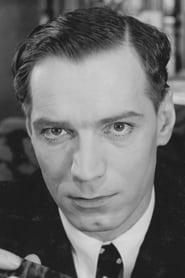
Although not among the most famous Swedish silent films, A Dangerous Courtship is part of the historical fabric that shows how Swedish filmmakers blended romance, class tension, and landscape-driven storytelling in the late 1910s. Its rural courtship plot reflects enduring themes in Scandinavian literature and cinema: the tension between individual desire and social obligation, and the symbolic power of the natural environment. For film historians, it is valuable as an example of the kind of regional production that supported Sweden’s international reputation during the silent era, even when the film itself did not become a major export title. The presence of Lars Hanson also gives it additional significance, since his career would bridge Swedish and international cinema.
Making Of
Very little detailed behind-the-scenes documentation survives for A Dangerous Courtship, which is common for many Scandinavian silent films of the 1910s. What can be inferred from the film’s surviving description is that the production relied on location shooting and on exploiting the dramatic terrain of the Swedish countryside, especially the fiord and cliff sequence that forms the climax. The story’s emphasis on a physically dangerous climb suggests a production that likely required careful staging, coordination, and safety considerations for its time, even if the exact methods are not recorded in standard references. As a silent melodrama with romantic and comedic elements, the film would have depended heavily on performance, gesture, and scenic composition to communicate the emotional stakes without synchronized dialogue.
Visual Style
The film’s most notable visual idea is the use of the natural landscape as both narrative obstacle and dramatic spectacle. The fiord, the mountain summer farm, and the towering rock wall create a strong sense of physical scale that would have been particularly effective in silent cinema. Scandinavian silent films of this period often favored composed outdoor imagery, clear spatial geography, and an almost painterly relationship between people and nature, and A Dangerous Courtship fits that pattern. Even without precise camera notes, the premise strongly suggests emphasis on long shots, scenic framing, and visual tension during Tore’s ascent.
Innovations
The film does not appear to be associated with a formally documented technical innovation, but its most impressive achievement was likely its staging of the cliff-climbing sequence within the conventions of silent-era filmmaking. The use of a fifty-meter rock face as a narrative obstacle would have required careful visual planning and practical production coordination. The film’s integration of romance, comic social friction, and outdoor physical action demonstrates the flexibility of Swedish silent melodrama, even if it did not introduce a named technical advance. Its achievement lies more in expressive location work and dramatic composition than in a specific patented technique.
Music
As a 1919 silent film, A Dangerous Courtship did not have an original synchronized soundtrack. It would originally have been exhibited with live musical accompaniment, typically by a pianist, organist, or small ensemble depending on the venue. No surviving score is commonly documented in standard sources, and no authoritative modern reconstruction is widely known.
Memorable Scenes
- Tore’s desperate crossing of the fiord by rowing boat to reach the mountain farm.
- The physical assault on Tore by Knut and his sons after he tries to use the road again.
- The film’s central climactic image of Tore climbing a sheer fifty-meter rock wall to continue his pursuit of Aslaug.
- The repeated scenes of suitors being chased away from the Husaby farm, establishing the family’s hostility toward courtship.
Did You Know?
- The film is a Swedish silent production from 1919, placing it in the mature phase of the Swedish silent cinema era.
- Rune Carlsten, later known as a director and actor, helmed the film early in his directing career.
- Lars Hanson appears in the cast; he would later become one of Sweden’s best-known silent-era stars and gain international attention.
- The plot hinges on a dramatic physical obstacle—a fifty-meter rock wall—which gives the film a quasi-adventure element in addition to its romance and family-drama structure.
- The story’s class conflict is central: the heroine’s father rejects the man she loves because he is socially inferior, favoring wealth and land over affection.
- The film’s rural setting and mountain imagery are characteristic of Scandinavian silent cinema’s use of landscape as emotional and dramatic space.
- The original English-language title is known as A Dangerous Courtship, but the film is also associated with its Swedish release title in archival records.
- Information on exact runtime, survival status, and production credits beyond the basic cast and director is sparse in widely available sources.
- The film belongs to a period when Swedish films often adapted melodramatic and literary material with a strong visual emphasis rather than intertitles-heavy exposition.
What Critics Said
Contemporary critical reception is not well documented in readily available modern sources, and no major consensus review record is commonly cited today. The film is generally discussed now as a minor but historically interesting Swedish silent feature rather than as a canonical masterpiece. Modern appraisal tends to focus on its place within Rune Carlsten’s early work, its relation to Swedish rural melodrama, and its likely visual use of landscape and physical action. Because detailed reviews and preservation information are scarce, its critical reputation rests more on historical classification than on extensive surviving criticism.
What Audiences Thought
Specific audience-response data from 1919 is not readily available in standard reference sources. As a romantic melodrama with comic and dramatic elements, it was likely designed to appeal to contemporary silent-film audiences who enjoyed emotionally direct stories, picturesque settings, and high-stakes courtship conflict. The dangerous cliff-climbing climax would have offered strong visual excitement, making the film accessible even to audiences outside Sweden if exported. Today, audience awareness is limited, mainly among silent-film enthusiasts, archivists, and researchers interested in early Swedish cinema.
Film Connections
Influenced By
- Swedish rural melodramas of the 1910s
- Nordic folk and village romance traditions
- Silent-era screen melodrama
- Early landscape-driven Scandinavian cinema
This Film Influenced
- Later Swedish rural romances and melodramas
- Scandinavian silent films that used landscape as an emotional and physical barrier
- Early adventure-romance films set in remote natural environments
You Might Also Like
More Romance Films
View allFilm Restoration
The survival status is not clearly documented in widely available standard references. It may be extant in archival holdings or may survive only incompletely, but no universally cited preservation record is readily available from common public summaries. Because of that uncertainty, it should be treated as a film with unclear preservation status until confirmed by a specific archive catalogue.