Brats
Plot
Stanley and Oliver are trying to enjoy a quiet evening at home, settling in to play a game of checkers, but their plans are repeatedly derailed by the chaotic behavior of their two mischievous sons, who mirror and magnify their fathers’ own comic incompetence. As the adults struggle to maintain order, the household turns into a miniature battlefield of escalating slapstick, misunderstandings, and domestic mayhem. The boys’ pranks and the fathers’ increasingly exasperated reactions create a comic cycle in which discipline, authority, and common sense all collapse at once. In classic Laurel and Hardy fashion, the situation builds from mild annoyance into total disorder, with the home environment becoming the stage for one absurd setback after another.
Director
James ParrottCast
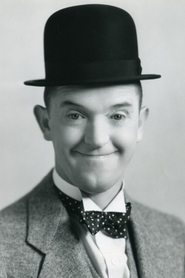
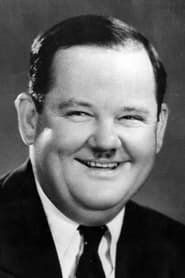
About the Production
Brats was made during Laurel and Hardy’s peak early sound period at Hal Roach Studios, when the pair were refining their screen personas into one of the most durable comedy formulas in film history. The film is notable for its elaborate use of dual roles: Stan Laurel and Oliver Hardy both portray the fathers and their own sons, a gag that depends on careful blocking, photographic doubles, and precise timing. The picture was designed around domestic chaos and escalating paternal frustration, a structure that allowed the studio to showcase the duo’s trademark rhythm of irritation, innocence, and physical comedy. Because the boys are played by the same actors, the film also functions as a technical showcase for compositing and split-screen-style staging common to early sound-era studio trick photography, all while remaining grounded in broad, character-driven comedy.
Historical Background
Brats was released in 1930, at the dawn of the sound era, when Hollywood was rapidly adapting its comedy formats to synchronized dialogue and sound effects. Laurel and Hardy had already emerged as major stars in short-form comedy, and Brats reflects the industry’s growing emphasis on recognizable screen personas that could carry a film even in a compact runtime. The early 1930s were also a period of economic uncertainty during the Great Depression, and lightweight domestic comedies offered audiences a form of escapism built around familiar problems made absurd. Within that context, the film’s middle-class household setting and its escalation from ordinary recreation to total chaos made it especially accessible and broadly appealing.
Why This Film Matters
Brats is significant as an example of Laurel and Hardy’s mastery of a comic template that became foundational for screen partnership comedy: two characters whose attempts at normal life are undone by their own personalities. The film’s dual-role device also helped demonstrate how visual trickery could be integrated into character comedy rather than existing merely as a novelty. For admirers of classic comedy, it remains a compact illustration of how Laurel and Hardy could stretch a simple premise into a carefully engineered sequence of escalating gags. More broadly, it contributes to the duo’s enduring image as performers who made domestic frustration, childish behavior, and mutual exasperation universally funny across generations.
Making Of
Brats was built around one of the most technically amusing premises in Laurel and Hardy’s early sound output: each comedian had to interact with a younger version of himself while maintaining the illusion that four separate characters were present. This required careful planning in camera setup, eyeline control, and editing to make the family units readable to the audience. The film also demonstrates Hal Roach’s confidence in Laurel and Hardy’s comic chemistry, since the entire short rests on the audience accepting that the boys are not simply similar to their fathers, but perfect comic inheritors of their flaws. The result is both a performance piece and a technical trick film, with the humor strengthened by the fact that the characters’ personalities are instantly recognizable even when duplicated across generations.
Visual Style
The cinematography is shaped by the needs of double-role illusion: the camera must preserve clear spatial relationships so that the fathers and sons can occupy the same domestic environment without confusing the viewer. This results in carefully arranged compositions, static or lightly mobile setups, and staging that emphasizes readable action over elaborate camera movement. The visual style is typical of early 1930s studio comedy shorts, with an emphasis on clarity, timing, and the choreography of bodies within the frame. The production uses the visual language of studio craftsmanship to make the impossible appear casual, which is a central part of the film’s charm.
Innovations
The chief technical achievement of Brats is its dual-role illusion, with Stan Laurel and Oliver Hardy each portraying two characters in the same scenes. The film required precise photographic trickery and staging to allow the performers to appear together as fathers and sons, a challenge that was handled with the kind of studio craftsmanship common at Hal Roach. Beyond the duplication effect, the short is also notable for how seamlessly that technique is integrated into the comedy itself, so the technical device never feels like a detached special effect but rather the engine of the story. Its success helped reinforce Laurel and Hardy’s status as artists capable of combining performance, timing, and studio illusion in a single comic package.
Music
As an early sound comedy short, Brats uses synchronized dialogue, incidental musical scoring, and sound effects as part of the comic rhythm rather than as a fully continuous musical score. The sound design supports the gags, emphasizing domestic noises, reactions, and the cadence of exasperation between the characters. No separate full musical soundtrack is generally cited as a standalone feature; instead, the film’s audio functions in service of the performances and timing.
Famous Quotes
No reliably documented standalone quotations from this short are widely cited in modern reference sources.
The film’s comedy is primarily visual and situation-based rather than quote-driven.
Memorable Scenes
- The opening domestic calm, where Stanley and Oliver try to settle into a quiet night of checkers before the interruptions begin.
- The repeated interruptions caused by the sons, who echo and aggravate their fathers’ own comic tendencies.
- The staging that allows Laurel and Hardy to appear as both generations in the same household, turning the family unit into a visual joke.
- The escalating household disorder that transforms an ordinary evening into a prolonged slapstick breakdown.
Did You Know?
- Brats is one of the best-known Laurel and Hardy shorts in which both comedians play dual roles, appearing as both the fathers and their sons.
- The sons are essentially miniaturized comic echoes of their fathers, a concept that intensifies the duo’s familiar behavior by making the next generation just as troublesome.
- The film was produced at Hal Roach Studios, the home base for many of Laurel and Hardy’s most celebrated shorts.
- The comedy depends heavily on visual precision, with repeated setups that require exact timing to distinguish the fathers from the sons in the same frame.
- The title refers to the unruly children at the center of the story, but the joke is that the fathers themselves are hardly more mature.
- Brats is often remembered for its highly structured domestic mayhem, which turns a simple night of leisure into a prolonged comic disaster.
- Like many Laurel and Hardy films of the period, it uses everyday domestic life as the framework for escalating absurdity.
- The short is an example of how early sound comedies still relied strongly on silent-era visual gags, pantomime, and physical business.
What Critics Said
Contemporary reception records for Brats are less abundant than for feature films, but the short has long been regarded by Laurel and Hardy historians and fans as one of the more inventive entries in their Hal Roach filmography. Critics and later scholars often praise its premise, the exacting mechanics of the double performances, and the way it turns a familiar family situation into a showcase for the team’s comic timing. In retrospective assessments, it is usually admired more for its construction and the performers’ control than for narrative complexity. Today it is generally seen as a strong representative short from the duo’s early sound period and a favorite example of their ability to wring maximal comedy from a small domestic setting.
What Audiences Thought
Audiences of the period generally responded warmly to Laurel and Hardy shorts because the pair’s characters were immediately legible and their humor required little setup. Brats would have been especially appealing as a short subject because it offered a fresh gimmick—fathers and sons played by the same comedians—while still delivering the expected rhythms of slapstick escalation. Modern audiences, particularly classic-comedy enthusiasts, often appreciate it as a brisk, high-concept short that remains easy to enjoy because its humor is visual, character-based, and largely timeless. Its reputation has endured among fans as one of the memorable examples of the duo’s early sound work.
Film Connections
Influenced By
- Laurel and Hardy’s established stage and screen comic partnership
- Silent-era slapstick traditions
- Hal Roach short comedy formula
- Domestic situation comedy
This Film Influenced
- Later double-role comedies using the same actor as parent and child
- Family slapstick shorts that build humor from generational echoes
- Television and film comedies that use mirrored parent-child behavior as a gag device
You Might Also Like
More Comedy Films
View allMore from James Parrott
View allFilm Restoration
The film survives and is preserved; it is available in archival prints and has appeared in home-video and classic-film releases, with no indication that it is lost.