Daisy Doodad's Dial
Plot
Daisy and her husband are both devoted to a face-pulling contest, each eager to prove superior comic mugging and public silliness. When the first big competition arrives, Daisy is unable to attend, and her husband takes the honors in her absence. Determined to win the next opportunity, Daisy makes a determined effort to reach the contest in time, but her journey becomes increasingly chaotic and she becomes trapped in a series of mishaps. After being rescued from trouble, she responds with irritation rather than gratitude, only for fate to catch up with her later that night in a comic comeuppance. The film plays as a brisk domestic farce built around escalating physical comedy, with the contest premise serving as a springboard for slapstick setbacks and a final joke-driven payoff.
Director
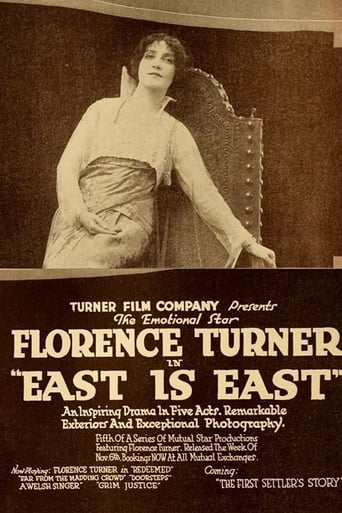
Florence TurnerAbout the Production
This short comedy was made during the early British silent era, when production was often centered on quick, topical farces designed for music hall audiences and neighborhood cinemas. Florence Turner was already a notable screen personality and one of the best-known women working in early British film production, and the film reflects the performance style of the period: broad gestures, energetic physical business, and a clear comic premise that could be understood without intertitles carrying much narrative weight. As with many films of its era, exact budgeting, crew breakdowns, and precise location records are not widely preserved, but the film is associated with the British and Colonial Kinematograph Company and appears to have been made economically as a short subject. The surviving record suggests that its humor depends heavily on performance and visual timing rather than elaborate sets or special effects.
Historical Background
The film was made in 1914, a pivotal year in world history and in the development of cinema. In Britain, the film industry was expanding but still competing with imported films, especially from the United States and continental Europe, and short comedies remained an important part of exhibition programs. This was also the final summer before the outbreak of World War I, a conflict that would reshape production, distribution, and public entertainment across Europe. In that context, light domestic comedy offered audiences a brief, accessible escape, while the presence of Florence Turner as director reflects a transitional period in which early film production had not yet fully hardened into the more rigid studio hierarchies of later decades. The film matters historically because it shows both the popularity of short comic subjects and the visibility of women as creative professionals in early British cinema.
Why This Film Matters
Daisy Doodad's Dial is culturally significant primarily as an example of early British comic filmmaking and as a work associated with Florence Turner, one of the period's notable female screen creatives. It demonstrates how silent comedies could build laughter around highly visual, immediately legible ideas that required little spoken explanation and could travel easily across audiences and exhibition contexts. The film also contributes to the historical record of women directing in the silent era, a fact that has become increasingly important in reassessments of film history. While not a universally famous title, it is valuable to historians because it represents the kinds of short, performance-centered films that helped establish comedy as a durable cinematic form.
Making Of
Daisy Doodad's Dial belongs to the early phase of Florence Turner's career as a filmmaker and performer in Britain, when she was working not just as an actress but as a central creative figure in production. In that era, women could and did hold unusual authority in smaller production environments, and Turner's involvement as director makes the film especially important in the history of women behind the camera. The production likely relied on studio-based staging and straightforward exterior or near-exterior filming to keep the comic action readable and economical. Early silent comedies of this sort were often designed around a single comic premise executed with strong visual clarity, and the film's plot suggests a tightly controlled sequence of escalating mishaps rather than a heavily scripted narrative.
Visual Style
The film's visual style would have been shaped by early silent-era conventions: static or minimally mobile camera placement, clear frontal staging, and emphasis on the performers' bodily expression. Because the comedy depends on a face-pulling contest and a sequence of escalating mishaps, the cinematography likely prioritizes readability over elaborate camera movement, ensuring that each joke lands cleanly in the frame. Early British comedies often used medium-distance compositions that allowed the audience to watch full-body action, and this film almost certainly follows that pattern. The visual storytelling would have depended on precise gesture, costume, and blocking rather than editing complexity.
Innovations
The film does not appear to be associated with major technical innovation in the sense of special effects or camera invention. Its achievement lies in the craft of silent comedy: economical storytelling, careful physical timing, and the use of a simple premise that can support multiple comic reversals. As an early 1910s short, it demonstrates the developing grammar of screen farce, where a recognizable social situation is quickly amplified into a chain of visual gags. Its historical value is therefore aesthetic and industrial rather than technological.
Music
As a 1914 silent film, Daisy Doodad's Dial had no synchronized recorded soundtrack. At original exhibition it would typically have been accompanied by live music, often a pianist or small ensemble, with the selection tailored to the mood of the venue and the comic action on screen. No standardized score is known to survive for the film. Any modern screenings would likely use archive-created accompaniment or newly commissioned music depending on the source print and presenting institution.
Memorable Scenes
- The face-pulling contest premise itself, which turns a simple comic performance into the film's central hook.
- Daisy's frantic attempt to reach the next contest, with each obstacle increasing the absurdity of her journey.
- The rescue sequence in which her annoyance at being helped becomes part of the joke.
- The final nighttime reversal, where fate catches up with her and provides the concluding comic pay-off.
Did You Know?
- The film was directed by Florence Turner, one of the rare women directing films in the 1910s and a major early screen star.
- It is a British silent comedy made in the same period when Turner was working prominently in the United Kingdom after earlier American fame.
- The title character's comic appeal comes from the idea of competitive facial expression, a very early example of a simple high-concept gag built around performance rather than plot complexity.
- The surviving plot description indicates that the story uses repeated humiliation and reversal, a standard structure in early slapstick comedy.
- The film appears to have been produced by the British and Colonial Kinematograph Company, a significant early British studio and distributor.
- Because of the film's age, many production details such as exact runtime, budget, and box office are not reliably documented.
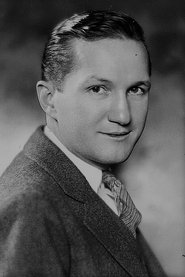
- Tom Powers is credited in surviving cast records, though early-film documentation can be inconsistent across archival sources.
- The film illustrates how early British comedies often drew on domestic situations and everyday social competition rather than outright anarchic chaos alone.
- As a 1914 release, it comes from the final years before World War I fundamentally altered the British film industry and audience culture.
- The film is notable today largely through archival and historical interest rather than widespread contemporary availability.
What Critics Said
Contemporary critical reception is not widely preserved in easily accessible detail, and surviving reviews are scarce for many short films of this period. Based on the title, surviving synopsis, and the conventions of early 1910s comedy, the film was likely received as a light amusement rather than a prestige feature, with its appeal resting on Florence Turner's popularity and the efficiency of its slapstick premise. Modern critical interest is mostly historical: scholars and archivists value the film for its connection to Turner, for its place in British silent comedy, and for what it reveals about gender and authorship in early cinema. It is therefore discussed more often in film history contexts than in mainstream criticism.
What Audiences Thought
There is no robust box-office or audience-survey record surviving for this specific short film. Like many early comedies, it would have been consumed as part of a mixed program, with its reception depending on local theater audiences and the live musical accompaniment provided at exhibition. The premise suggests broad, easily readable humor that likely played well with viewers familiar with music hall-style physical comedy. Its continued interest today is driven more by archival value than by mass modern audience familiarity.
Film Connections
Influenced By
- Music hall comedy traditions
- Early stage farce
- Victorian and Edwardian domestic humor
- Silent-film slapstick conventions
This Film Influenced
- Later British silent comedies built around domestic mishap
- Performance-centered slapstick shorts of the 1910s and 1920s
- Women-directed comedy shorts in early cinema history
You Might Also Like
More Comedy Films
View allMore from Florence Turner
View allFilm Restoration
Preservation status is not clearly documented in widely accessible modern sources; the film survives in archival record and plot summaries, but the availability of a complete, publicly accessible print is uncertain. It is best treated as an early film of limited circulation and archival interest, with no widely documented restoration status readily confirmed here.