Also available on: YouTube Archive.org
Rowdy Ann

Rowdy Ann

1919 United States
Gender role reversalFrontier vs. civilizationSocial refinement and reformPhysical comedyRegional identity

Plot

Ann is a hard-riding, hard-hitting cowgirl whose toughness has made her notorious in her western community. After she physically outmatches Hank, her parents decide that the only way to tame her is to send her East to college and try to refine her manners. Once removed from the frontier and placed among more polished society, Ann’s rough-edged independence becomes the source of comedy as well as conflict. The story plays on the contrast between western directness and eastern sophistication, building toward the familiar silent-era resolution in which Ann’s spirited personality is not erased, but redirected into a more socially acceptable form.

About the Production

Release Date 1919
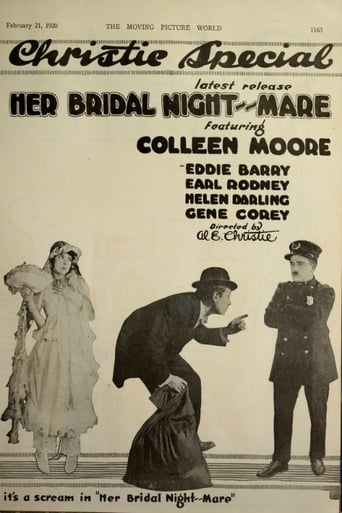
Production Christie Film Company

Rowdy Ann was produced as a light comedy western during the peak years of Al Christie’s studio output, when short and feature-length comedies were being turned out for the silent-era market with speed and economy. As with many films from this period, detailed production records such as budget sheets, shooting locations, and exact release logistics do not survive in widely accessible form. The film is associated with the Christie Film Company and reflects that company’s emphasis on brisk, gag-driven storytelling and broadly appealing character comedy. Surviving documentation indicates it was a 1919 release, but many contemporary trade-paper specifics are fragmentary, making precise behind-the-scenes reconstruction difficult.

Historical Background

Rowdy Ann was made in 1919, a year in which American cinema was rapidly expanding in scale, industrial organization, and audience reach. The end of World War I had shifted public taste toward entertainment that could balance escapism with recognizable social tensions, and comedies set in the West offered a playful way to revisit national myths without solemnity. The film also reflects the era’s fascination with the modern woman and with changing ideas about femininity, since its humor depends on the contrast between Ann’s rough independence and the more restrained expectations placed on women in polite society. In the silent era, such stories were often used to negotiate anxieties about gender roles, class behavior, and regional identity while still delivering broadly accessible laughs.

Why This Film Matters

Although Rowdy Ann is not among the best-known silent films, it is culturally interesting as an example of early twentieth-century gender-comedy and western parody. The film takes the familiar rugged frontier heroine and places her into a social-reform scenario, allowing audiences to laugh at the tension between strength and refinement. In that sense, it participates in a larger silent-cinema tradition of testing how much independence a female character can display before the narrative reins her back into conventional norms. For historians, the film is significant less for formal innovation than for what it reveals about popular attitudes toward women, the West, and the comic use of social contrast in late silent film.

Making Of

Rowdy Ann appears to have been mounted as a compact, efficient comedy feature in the Christie production system, where story concepts were often built around a central comic situation and a strong performer. Fay Tincher’s casting is especially telling, because her screen persona suited physically assertive, mischievous roles that could drive a film’s humor through action rather than sentiment alone. The surviving plot outline suggests that the film’s comedy depends on clashes between social codes rather than on complicated plot mechanics, which was a common and practical approach for silent comedy production. As with many films from 1919, little studio paperwork has survived in easily accessible form, so detailed accounts of set construction, shooting schedule, and crew activity are limited.

Visual Style

Specific shot-by-shot cinematographic analysis is limited by the scarcity of surviving detailed documentation and, if the film survives at all, by the challenge of access. As a 1919 silent comedy western, it would have relied on straightforward, readable staging, clear visual geography, and medium-distance framing to showcase physical performance and action. The comedy likely depended on broad body language and spatial clarity, with the camera serving primarily to present gags and character interactions cleanly. Any visual style would have been shaped by the practical norms of silent-era production rather than by elaborate camera movement or expressionist lighting.

Innovations

Rowdy Ann does not appear to be associated with a major technical breakthrough. Its value is instead in the efficient silent-comedy craftsmanship typical of the period: visual storytelling, concise setup-and-payoff structure, and the integration of western action with comic timing. The film represents the mature stage of pre-sound narrative technique, when filmmakers relied on expressive performance and clear scene construction to keep plot and humor legible. If preserved, it would be technically notable mainly as a surviving example of late-1910s silent genre filmmaking rather than as an innovation milestone.

Music

No original synchronized soundtrack survives, as the film was produced in the silent era before optical sound. Like most silent films, it would originally have been accompanied by live music in theaters, often improvised by a pianist, organist, or small ensemble depending on venue and exhibition budget. Specific cue sheets or commissioned scoring information are not readily documented in accessible references for this title. Any modern screenings would typically use a later compiled silent-film accompaniment if the film is shown in archive or repertory contexts.

Famous Quotes

I could not verify any surviving original dialogue or intertitles from this film in accessible sources; as a silent film, any wording would have appeared in intertitles rather than recorded speech.

Memorable Scenes

  • Ann’s physically comic beating of Hank, which establishes her as the toughest person in the story and triggers the parental decision to send her East.
  • The culture-clash material in which Ann’s western directness collides with the manners and expectations of eastern college life.
  • The broader comic transformation arc in which the heroine is placed in a refined environment that cannot easily contain her frontier energy.

Did You Know?

  • Rowdy Ann is a silent-era western comedy, a combination that was especially popular when studios wanted to blend frontier action with broad humor.
  • The film stars Fay Tincher, who was frequently cast in comedies and often played lively, independent women rather than passive ingénues.
  • Its premise centers on the comic tension between a rough western upbringing and the expectations of eastern finishing-school culture, a common silent-comedy device.
  • Al Christie was better known for comedy production than for pure westerns, so the film sits at an interesting intersection of genres in his filmography.
  • The known plot description indicates that Ann is so physically formidable that her parents believe college will make her more ladylike, a setup that supports both physical and social comedy.
  • Because the film is from 1919, it belongs to the late silent period before the major stylistic changes of the 1920s and the eventual transition to sound.
  • Detailed surviving production data such as budget and box office are not readily documented in standard modern references for this title.
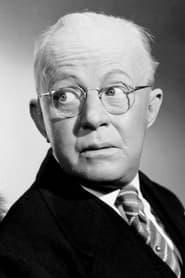
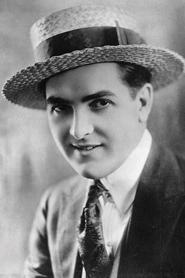
  • The film’s cast also includes Eddie Barry and Katherine Lewis, performers who appeared in silent-era comic and dramatic productions of the period.
  • Like many independent-era silent comedies, the film likely depended heavily on visual performance, physical business, and intertitle humor rather than elaborate spectacle.
  • The film is a useful example of how early cinema often softened frontier myths through satire and gender-reversal comedy.

What Critics Said

Contemporary critical reception is difficult to reconstruct in full because widely preserved reviews are sparse and the film is not heavily documented in surviving trade sources. The title does not appear to have generated the kind of lasting critical discourse reserved for major prestige productions or landmark comedies of the same era. Modern assessment tends to treat it as an example of a broadly appealing but lesser-known silent comedy, valued more for cast and historical context than for canonical status. Its interest today lies primarily in film-historical comparison: it illustrates how regional and gender stereotypes were transformed into light entertainment during the silent period.

What Audiences Thought

No comprehensive box-office record survives in standard references, so exact audience response cannot be quantified. Given the popularity of western comedy material in the late 1910s, the film was likely designed for mainstream amusement rather than niche appreciation. The premise of a forceful cowgirl being sent east would have offered immediate comic contrast, making the story easy for audiences to follow even with minimal intertitle exposition. Today, interest in the film is more archival and historical than popular, though viewers of silent cinema often seek it out for its genre blend and Fay Tincher’s comic presence.

Film Connections

Influenced By

  • Western melodramas of the 1910s
  • Silent comedy tradition centered on physical humor and social role reversal
  • Finishing-school and culture-clash comedy formulas popular in early cinema

This Film Influenced

  • Direct influence is difficult to document for this obscure surviving title, but it participates in the broader tradition of western-comedy heroines that later films continued to explore

Film Restoration

Preservation status is not firmly documented in widely accessible modern references. The film is not commonly available in home-video or streaming circulation, and it may be lost or surviving only in incomplete or archive-held form. Because no widely advertised restoration is associated with the title, it should be treated as scarce and potentially inaccessible to the general public until verified by a holding archive.

Themes & Topics