Somewhere In Wrong
Plot
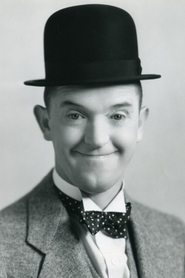
Stan Laurel plays a gentle, luckless tramp who wanders into a story of affection, misunderstanding, and social embarrassment in this short silent comedy. He becomes smitten with a young woman, but his feelings are not returned, and his good intentions repeatedly lead him into awkward situations rather than romantic success. Max Asher appears as a source of comic complication, helping to create the kind of escalating mishaps typical of Laurel's mid-1920s solo shorts. The film moves through a series of gag-driven encounters that highlight Stan's pathos as well as his ability to turn even failure into comedy, ending with the tramp still lovably off-kilter and romantically defeated.
Director
Scott PembrokeAbout the Production
This was a short subject produced during Stan Laurel's pre-Laurel-and-Hardy era at Hal Roach Studios, when he was being developed as a solo comic performer. Like many Hal Roach comedies of the mid-1920s, it was made quickly and economically on studio backlot locations with a small cast and a gag-centered scenario. Scott Pembroke, a reliable director of silent shorts, handled the production in the efficient, brisk style common to Roach two-reelers. Surviving records on exact budget, box office, and shooting schedule are not readily available, which is typical for many silent-era shorts.
Historical Background
The film was made in 1925, at the height of the American silent-comedy short subject. Hollywood studios were producing vast numbers of one- and two-reel comedies for weekly exhibition, and Hal Roach Studios had become one of the key suppliers of this market. This was also a crucial transitional period in Stan Laurel's career, as he was developing a distinct persona that blended slapstick with vulnerability and emotional openness. Historically, the film sits in the late silent era just before sound transformed comedy performance, making it a useful snapshot of how visual humor and character-based pathos were being refined in the 1920s.
Why This Film Matters
Although not among the most famous Laurel titles, the film is significant as part of the body of work that established Stan Laurel as one of silent comedy's most expressive performers. These shorts helped define the style of gentle, awkward, sympathetic comedy that would later distinguish Laurel and Hardy from more aggressive slapstick traditions. For film historians, it is also valuable as a surviving example of Hal Roach's production system, which nurtured talent and standardized the short-comedy form. Its importance lies less in cultural reach as a standalone title and more in its role within the development of one of cinema's enduring comic artists.
Making Of
Somewhere in Wrong was made at Hal Roach Studios during a period when Stan Laurel was being used as a versatile comic lead in two-reelers. Roach's productions emphasized speed, economy, and repeatable gag construction, and this film fits that model closely. Scott Pembroke, who directed a number of silent comedies, would have staged the action to maximize visual clarity for audiences watching without synchronized sound. The surviving historical record does not provide extensive production anecdotes, but the film clearly belongs to the industrially efficient, gag-driven environment that helped shape Laurel's later fame.
Visual Style
The film's cinematography is characteristic of silent-era studio comedy: straightforward framing, clear staging, and emphasis on readable physical action rather than elaborate camera movement. Scenes would have been composed to keep performers' bodies and reactions fully visible, allowing the audience to follow the comic business without intertitles interrupting the rhythm too often. The visual style likely relies on medium and long shots that preserve slapstick timing and spatial clarity, a hallmark of Hal Roach shorts. Any expressiveness in the image comes from performance, blocking, and the sharp contrast between Laurel's meekness and the more forceful comic personalities around him.
Innovations
The film does not appear to be associated with any major technical innovation, but it reflects the highly polished mechanics of the Hal Roach silent-comedy unit. Its achievement lies in economy: it compresses character, setting, and comic escalation into a short running time while maintaining clear visual storytelling. The film also demonstrates Laurel's growing command of pantomime, pathos, and reaction-based comedy, which would later become central to his lasting screen identity. In that sense, its technical merit is rooted in performance-driven filmmaking rather than special effects or camera novelty.
Music
As a silent film, it had no synchronized recorded soundtrack at release. It would originally have been exhibited with live musical accompaniment, typically a theater pianist or small ensemble playing cue-based music suited to comedy and romance. Modern presentations may use a newly compiled silent-film score or library accompaniment, depending on the source print or restoration. No original score is known to survive as a fixed, standard soundtrack.
Famous Quotes
No synchronized spoken dialogue exists in the original silent release.
Intertitle text from surviving prints is not consistently documented in available sources.
Memorable Scenes
- Stan Laurel's tramp character trying to express affection in ways that only deepen the misunderstanding around him.
- A sequence of escalating comic business in which Laurel's good intentions repeatedly turn into embarrassment.
- The final comic payoff, which leaves the romantic situation unresolved but reinforces the character's sweetness and persistence.
Did You Know?
- The film stars Stan Laurel before he became permanently paired with Oliver Hardy.
- It is one of the many short comedies Laurel made for Hal Roach in the 1920s while refining the tramp-like screen persona later associated with his partnership with Hardy.
- Scott Pembroke was a frequent silent-era comedy director and worked on numerous shorts for Hal Roach and related studios.
- The film's title is a play on the phrase "something wrong," a pun typical of silent comedy naming conventions.
- Max Asher was a familiar comic supporting player in silent shorts and often appeared in exaggerated authority or antagonistic roles.
- Because it is a short subject, the film relies heavily on visual gags and business rather than dialogue or complex plot turns.
- Like many silent comedies from the period, it was designed to accompany a program of multiple shorts and features rather than stand alone as a feature-length attraction.
- The film contributes to the evolution of Laurel's screen image from broad slapstick comedian to a more sympathetic, melancholy figure.
What Critics Said
Contemporary critical response is difficult to document in detail because many silent short films were reviewed briefly, if at all, in the trade press rather than in long-form criticism. In its original era, the film would have been judged primarily on the effectiveness of its gags, pacing, and audience laughs rather than on dramatic merit. Modern appreciation tends to be archival and historical: viewers and historians value it as part of Stan Laurel's pre-Hardy filmography and as a representative Hal Roach comedy. It is generally regarded as a modest but charming entry rather than a major landmark, with interest centered on Laurel's performance and comic timing.
What Audiences Thought
Specific audience-response records are not readily available, which is common for silent shorts from the 1920s. At the time of release, the film would have played for general moviegoing audiences as part of a broader program, where its success depended on whether it generated immediate laughs and sustained attention. Today, its audience is mostly composed of silent-film enthusiasts, Laurel scholars, and classic-comedy viewers who approach it as a historical artifact and a piece of performance history. Among that audience, its charm lies in Laurel's sympathetic persona and the compact efficiency of the comedy.
Film Connections
Influenced By
- The tramp-comedy tradition associated with Charlie Chaplin
- Hal Roach's house style of gag-driven short comedies
- Vaudeville and stage-mime traditions that informed silent screen performance
This Film Influenced
- The later Laurel and Hardy short-comedy style built in part on Laurel's solo silent persona
- Subsequent sympathetic tramp comedies in the silent and early sound eras
You Might Also Like
More Comedy Films
View allMore from Scott Pembroke
View allFilm Restoration
The film is preserved and known from surviving archival materials, though available versions may vary in completeness and print quality. As with many silent shorts, surviving copies can be derived from later archival sources rather than pristine original negatives. It is not generally considered a lost film.