1937 · Approximately 6-7 minutes

Also available on: YouTube Archive.org
The Paneless Window Washer

The Paneless Window Washer

1937 Approximately 6-7 minutes United States
Romantic rivalryWorkplace comedyUnderdog triumphCompetition and sabotageUrban slapstick

Plot

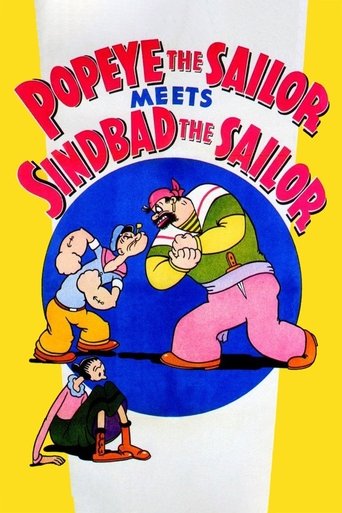
Bluto opens the cartoon by deliberately dirtying the windows of an office building so he can advertise his window-washing service, even though he is the one making the mess in the first place. His scheme works until he reaches Olive Oyl's stenographer office high above the street, where she refuses his help because she has already arranged for Popeye to do the job. What follows is a classic Popeye-versus-Bluto rivalry built around escalating slapstick, with Bluto trying to sabotage Popeye's efforts and Popeye responding with his usual mix of dogged persistence and physical ingenuity. The contest becomes a vertical battle across the building's exterior, using ladders, buckets, ropes, and windows as comic weapons and hazards. In the end, the short delivers the familiar Popeye formula of underdog resilience, romantic competition, and cartoon violence, all compressed into a fast-moving Technicolor-era theatrical short.

About the Production

Release Date 1937
Production Fleischer Studios, Paramount Pictures
Filmed In New York City, New York, USA (studio production)

This was produced as a theatrical Popeye cartoon short during the Fleischer Studios era, when the studio was still operating in New York before its later relocation to Florida. Like most Popeye entries of the period, it was made as a tightly timed animated short designed for a single-reel theatrical program rather than as a standalone feature. The film fits squarely within the studio's established house style: bold character animation, elastic slapstick, and economical storytelling built around a simple comic premise. No reliable public budget or box-office records are known for this specific short, which is typical for animated shorts of the 1930s.

Historical Background

The film was released in 1937, a year when American animation was thriving as a theatrical attraction and short subjects were still a normal part of the moviegoing experience. Fleischer Studios was one of the major forces in the industry at the time, competing with Disney, Warner Bros., and MGM, while Popeye remained one of Paramount's most dependable cartoon properties. The Depression-era audience was familiar with slapstick underdog stories, and Popeye's ability to triumph through grit and absurd cartoon force resonated strongly with viewers. The film also reflects the urban, labor-conscious imagination of 1930s comedy, turning an office building, a service job, and workplace competition into a cartoon battleground.

Why This Film Matters

Although not one of the most famous Popeye shorts, The Paneless Window Washer is representative of the style and attitude that made Popeye an enduring cultural figure: a working-class hero, a love triangle, and a comic world where brute force, luck, and personality collide. It helps document the Fleischer interpretation of Popeye before the character's later transitions through other studios and eras of animation history. As a theatrical short, it belongs to the broad tradition of cartoons that once served as a weekly communal entertainment experience in movie theaters, making it historically important even when individual titles are not widely known today. For animation historians, shorts like this are valuable examples of how recurring characters were adapted to fresh settings and gags while preserving a stable brand identity.

Making Of

The Paneless Window Washer was made within the highly efficient Fleischer Studios production system, where a small number of animators and directors had to deliver polished theatrical cartoons on a rapid schedule. Dave Fleischer, one of the studio's key directors, worked within a house style that emphasized compact storytelling, strong gags, and a slightly rougher, more rubbery animation feel than the competing Disney approach. The short almost certainly relied on the standard Popeye production pipeline of story outline, gag development, layout, animation, ink-and-paint, and then release through Paramount. Because it is a short-form comedy, the making of the film was less about elaborate narrative development than about timing, comic escalation, and the visual interplay between Popeye, Olive, and Bluto. Surviving production documentation for individual Fleischer shorts is limited, so specific behind-the-scenes anecdotes, alternate titles, or staff credits beyond the main creative team are not consistently documented in modern reference sources.

Visual Style

As an animated short, the film does not have live-action cinematography, but it does have a strong visual design shaped by the Fleischer studio aesthetic. The building exterior provides a tall, layered composition that lets the animators stage action vertically, a useful device for creating danger, surprise, and comic tension. The short likely makes use of exaggerated perspective, broad facial expressions, and elastic physical movement characteristic of Popeye cartoons from this period. Window panes, ladders, and ledges become recurring visual props that support both the narrative and the rhythm of the gags.

Innovations

The film's principal technical achievement lies in its efficient staging of complex slapstick in a narrow, vertical urban setting. It demonstrates the Fleischer studio's ability to animate action that appears precarious and dynamic while remaining precise enough to support fast comic timing. The short also reflects the studio's mature command of recurring-character animation, with recognizable character acting and a polished but vigorous use of motion. While it does not introduce a major new technique, it exemplifies the high-level craft that made Fleischer Popeye cartoons so influential.

Music

The score follows the typical Fleischer-era cartoon approach: light, cue-based music that punctuates action, underlines visual jokes, and helps drive the tempo of the comedy. Rather than functioning as a separate musical feature, the soundtrack is integrated with the animation so that musical accents often coincide with falls, impacts, or sudden reversals. Popeye cartoons of this era often used music to reinforce character momentum and slapstick timing, and this short would have operated in the same tradition. No individually documented original song or standalone score is commonly cited for this title.

Famous Quotes

I am what I am, and that's all that I am.
I'm going to wash them windows myself!

Memorable Scenes

  • Bluto deliberately dirtying the building's windows to create demand for his own window-cleaning business.
  • Olive refusing Bluto's services from her high office and choosing Popeye instead.
  • The escalating exterior battle on ladders, ledges, and window frames high above the street.
  • The repeated comic abuse of windows, buckets, and cleaning tools as improvised weapons in the rivalry.
  • Popeye and Bluto's final showdown, which turns a routine workplace task into a full-scale slapstick duel.

Did You Know?

  • The film is a Popeye theatrical short from the late Fleischer era, when the studio was producing a large number of fast-paced animated comedies for Paramount.
  • Bluto's self-defeating business scheme is a classic Popeye cartoon gag: the villain creates the very problem he claims to solve.
  • The short uses the high-rise office setting for vertical slapstick, which is a natural fit for animated comedy because it allows dangerous-looking gags without real-world consequences.
  • Popeye, Olive, and Bluto are presented in the familiar triangle that became one of the most recognizable recurring setups in American animation.
  • Jack Mercer, Gus Wicke, and Mae Questel are associated with the key voices credited for this period of Popeye cartoons, though casting records for individual shorts can vary by source.
  • Like many Fleischer cartoons, the humor depends heavily on timing, repeated visual escalation, and abrupt bursts of physical violence as punchlines.
  • The title is a pun on 'paneless,' referring to the windows, and 'window washer,' emphasizing the cartoon's repeated visual jokes about glass and building exteriors.
  • The short reflects the era's fascination with urban modernity, especially office towers and skyscraper labor, which were common visual backdrops in 1930s animation.
  • The cartoon is part of the long-running series that helped cement Popeye as one of the most recognizable animated characters of the 20th century.

What Critics Said

Contemporary critical reception for individual Popeye shorts like this one is sparsely documented, as they were generally reviewed in trade and newspaper contexts as part of short-subject programming rather than as major stand-alone cultural events. In their own time, Popeye cartoons were broadly popular and respected for brisk humor, energetic pacing, and the personality of their central characters. Modern reception tends to view these Fleischer shorts as important artifacts of prewar animation, admired for their lively design, expressive movement, and economical gag construction. While The Paneless Window Washer is not among the best-known Popeye entries, it is typically appreciated by animation fans as a solid example of the series' formula and the studio's 1930s craftsmanship.

What Audiences Thought

Audiences in 1937 would have encountered the film as a short comic attraction alongside features, and Popeye cartoons were generally dependable crowd-pleasers. The familiar characters, fast slapstick, and comic violence would have made the short immediately accessible to both children and adults. Today, audience reception is strongest among classic-animation fans and Popeye completists, who value it as part of the character's original theatrical run. For general audiences, it is often enjoyed as a compact piece of vintage humor that preserves the rough-edged charm of 1930s animation.

Film Connections

Influenced By

  • The established Popeye comic strip and its recurring love-triangle formula
  • Vaudeville-style slapstick comedy
  • Early 20th-century urban labor comedies
  • Silent-era physical comedy traditions

This Film Influenced

  • Later Popeye theatrical shorts
  • Subsequent animated rivalry comedies built around escalating gags
  • Television-era Popeye adaptations

Film Restoration

The film is preserved as part of the surviving Popeye/Fleischer theatrical cartoon library and is not considered a lost film. Like many classic cartoons of the era, it survives in archival prints and home-video or digital circulation in various releases, though the exact restoration status can vary by source and distribution copy. It is generally accessible to researchers and classic-cartoon collectors.

Themes & Topics

PopeyeBlutoOlive Oylwindow washingoffice buildingslapstickcartoon battle