The Raven
Plot
Charles Brabin’s The Raven (1915) is an ambitious biographical drama that traces Edgar Allan Poe’s life from his family origins and childhood losses through the emotional and financial collapses that shaped his legend. The film follows Poe after the death of his mother and his adoption by the wealthy John Allan, then depicts his expulsion from the University of Virginia, his courtship and marriage to Virginia Clemm, and the growing gulf between him and Allan as Poe struggles to establish himself as a writer. As poverty and alcoholism deepen, Virginia’s decline and death push Poe into a state of grief and instability, and the film increasingly shifts into expressionistic fantasy as he confuses a neighbor, Helen Whitman, with his dead wife and then slips into visions populated by spectres, hallucinations, and the ominous raven of his famous poem. In its final movement, the film portrays Poe’s mental and physical ruin as the fantasy world consumes him, ending with the poet’s death in 1849. Although loosely historical in places, the picture is built as a tragic portrait of artistic suffering, using Poe’s life and imagery from his writing to dramatize the mythology surrounding him.
About the Production
The Raven was produced during the transitional era when American filmmaking was still largely centered in the New York/New Jersey production corridor before Hollywood fully dominated the industry. It was mounted as a prestige literary-biographical vehicle for Henry B. Walthall, then one of the major stars of early American cinema, and it is notable for its stylized attempt to merge biography, melodrama, and Poe-inspired gothic imagery in a single feature. Surviving accounts and film documentation indicate that the production relied on theatrical performance styles typical of the period, but also used atmospheric lighting and set design to evoke the emotional landscape of Poe’s work. Like many Fox productions of the mid-1910s, it was made on modest silent-era resources, and precise budget and box-office figures do not appear to be readily documented in surviving standard references.
Historical Background
The Raven was made in 1915, a pivotal year in American film history when feature-length production was becoming the norm and companies were increasingly adapting respected literary material to elevate cinema’s reputation. The United States was still in the pre-Hollywood consolidation era, with major production activity in the New York and New Jersey region, where studios could exploit existing theater talent and urban infrastructure. Culturally, Poe had by then become a central figure in American literary mythology: a celebrated writer, a symbol of genius under torment, and an author whose life was often folded into the interpretation of his work. The film therefore belongs to a broader early-twentieth-century trend that treated authors as melodramatic protagonists and merged biography with symbolic fantasy, reflecting both Victorian-era reverence for literary genius and silent cinema’s growing confidence in depicting psychological states visually.
Why This Film Matters
This film is significant as one of the early American attempts to dramatize Edgar Allan Poe’s life on screen, helping establish the enduring screen image of Poe as a tragic, haunted, and alcohol-ridden visionary. By tying his biography to the raven imagery and supernatural atmosphere associated with his fiction and poetry, the film helped solidify a cultural shorthand that later films, television programs, comics, and stage works would repeatedly reuse. It also illustrates how silent cinema absorbed literature not merely by adapting plots, but by transforming authors themselves into mythic characters whose lives could be interpreted as extensions of their works. In the broader history of film, The Raven stands as an example of early prestige filmmaking that sought to prove that cinema could engage with major literary culture while also exploiting the expressive possibilities of fantasy and emotional spectacle.
Making Of
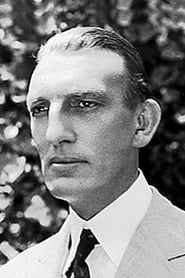
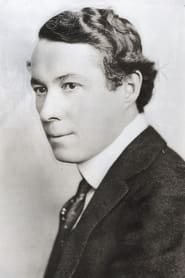
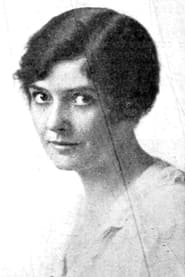
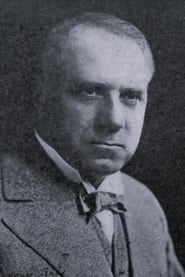
The Raven was produced at a time when film companies frequently adapted canonical literature and famous literary personalities to confer cultural legitimacy on motion pictures. Charles Brabin, who directed the picture, was known for handling melodramatic material with an eye for strong visual composition, and this project allowed him to turn Poe’s life into a sequence of emotional episodes and dreamlike images. The casting of Henry B. Walthall was important: his established screen presence gave the production gravitas, while Warda Howard and Ernest Maupain helped round out the domestic and social conflict around Poe’s career. As with many silent films of the period, exact production records are incomplete, but the finished work appears to have been shaped to balance biography, tragedy, and gothic spectacle, culminating in a highly stylized rendering of Poe’s psychological collapse. The film’s survival status is uncertain in some reference sources, which is typical of many early Fox titles, though it remains documented in film histories and databases as a distinct and significant early Poe-related feature.
Visual Style
The film’s visual approach would have depended on the expressive black-and-white photography and tableau staging typical of 1915 features, but its subject matter invited especially atmospheric treatment. Surviving descriptions indicate an emphasis on dark interiors, symbolic compositions, and heightened contrast to distinguish ordinary biography from Poe’s hallucinatory visions. Silent-era cinematography in such a film would have used static framing, carefully arranged actors, and stage-like depth to make dream sequences legible to audiences without dialogue. The result is likely to have been visually theatrical, but with an ambition to create gothic mood through lighting, gesture, and set decoration.
Innovations
The film’s principal achievement lies in its early fusion of biographical drama with subjective fantasy, allowing Poe’s inner turmoil to shape the film’s structure. That approach anticipates later psychological biopics and literary portraits that use dream imagery, hallucination, and symbolic montage to represent an artist’s mental life. While not known for a specific mechanical innovation, the film is notable for using silent-era tools—lighting, composition, performance, and intertitles—to create a layered portrait of instability and grief. Its integration of Poe’s famous raven motif into a life story is an early example of intertextual filmmaking, where an author’s work visually infiltrates his biography.
Music
As a silent film, The Raven had no synchronized recorded soundtrack at release. Like most films of the period, it would have been shown with live musical accompaniment, which may have ranged from a single pianist or organist to a small theater orchestra depending on venue and exhibition context. The specific cue sheet, if one existed, is not readily documented in widely accessible sources. Modern presentations of the film, when available, may use newly compiled accompaniment by preservationists or accompanists specializing in silent cinema.
Famous Quotes
Nevermore
Quoth the raven, Nevermore
Memorable Scenes
- Poe’s imaginative sequence in which his dead wife’s presence seems to return through hallucination, blurring the line between memory and delusion.
- The climactic raven imagery that transforms the poet’s grief into a visual embodiment of doom.
- Virginia’s illness and death, which are staged as the emotional fulcrum of the film and the point at which Poe’s life enters irreversible decline.
- Poe’s final descent into a nightmare of spectres and symbolic figures that externalize his psychological collapse.
Did You Know?
- The film is not an adaptation of Poe’s poem The Raven alone, but a hybrid biographical fantasy that uses the poem’s imagery as part of Poe’s life story.
- Henry B. Walthall was one of the best-known silent-era actors of the 1910s and had already achieved major fame before appearing in this production.
- Because the film predates the Hollywood studio system’s dominance, it belongs to the important East Coast production period associated with Fox and other early American companies.
- The movie combines historical figures such as John Allan and Virginia Clemm with symbolic and hallucinatory sequences, making it more expressionist in structure than a straightforward biography.
- Its plot reflects the era’s fascination with Poe as both literary genius and tragic madman, a romanticized image that greatly influenced later screen portrayals of the author.
- Silent film versions of literary authors’ lives were often used to attract educated audiences, and The Raven was likely intended as both prestige entertainment and literary branding.
- The film’s surviving descriptions suggest that it was staged with heavy reliance on mood, shadow, and dramatic tableau rather than fast cutting or action-driven storytelling.
- Unlike later sound-era Poe films, this 1915 version is especially interested in depicting the author’s inner life through visions and symbolic scenes.
What Critics Said
Contemporary critical notices are not widely preserved in standard modern references, but the film appears to have been treated as a serious prestige drama rather than a novelty item. Like many silent literary adaptations, it likely drew attention for Henry B. Walthall’s performance and for its atmospheric handling of Poe’s life and imagery. In modern retrospectives, the film is usually discussed as an early and important Poe-related screen work, valued more for historical significance than for strict biographical accuracy. Film historians often note its mixture of biography and hallucination as an early example of the cinematic biopic shaped by psychological and symbolic interpretation rather than documentary realism.
What Audiences Thought
Detailed audience-response records are limited, as is common for silent-era films, especially those from the 1910s. The movie was probably aimed at audiences who enjoyed literary adaptations, gothic melodrama, and star-driven prestige features, and Poe’s fame would have given it immediate curiosity value. Because the film relies on emotional escalation and visual fantasy, it likely appealed to viewers looking for both tragedy and spectacle. Its continuing presence in film databases suggests that it has remained of interest mainly to historians, archivists, and Poe enthusiasts rather than as a broadly revived popular title.
Film Connections
Influenced By
- Edgar Allan Poe’s poetry and fiction, especially The Raven
- 19th-century romanticized biographies of artists and writers
- early silent melodrama and prestige literary adaptations
- stage traditions of symbolic and expressionistic performance
This Film Influenced
- Later silent and sound-era Edgar Allan Poe biopics
- The Raven (1935)
- The Loves of Edgar Allan Poe (1942)
- The Haunting of Morella (1990)
- Various later cinematic and television portrayals of Poe as a tragic genius
You Might Also Like
More Drama Films
View allMore from Charles Brabin
View allFilm Restoration
Survival status is not consistently documented in the most accessible reference sources, and the film is generally treated as an early silent title with uncertain preservation details. It is known to survive in filmographic records and historical documentation, but a complete, widely circulated restoration is not commonly noted. If extant elements exist, they are likely held by archives or private collections rather than being broadly available in commercial circulation.