1913 · null

Also available on: Archive.org
An Unsullied Shield

An Unsullied Shield

1913 null United States

"null"

moral inheritancefamily honordecadence and declineancestral judgmentconscience

Plot

In this short supernatural drama, a young man of a decayed and morally bankrupt family falls asleep in the shadow of his own inheritance and is confronted by the living presence of his ancestors' portraits. One by one, the painted figures come to life and seem to step out of the walls of the house, turning from mute decoration into stern moral witnesses. They admonish him for his dissipation and warn him that he is dishonoring the family line through his degenerate behavior. The film resolves as a moral fable rather than a conventional narrative twist, using the supernatural event as an allegory for inherited duty, family honor, and personal redemption.

About the Production

Release Date 1913
Budget null
Box Office null
Production Vitagraph Company of America
Filmed In null

An Unsullied Shield is an early Vitagraph-era short film directed by Charles Brabin and released in 1913, a period when the company was producing many compact dramatic films for the nickelodeon and split-reel market. Like much of Brabin's work from this period, the film appears to have been constructed around a strong visual premise rather than elaborate dialogue or complex plot machinery, relying on imagery, performance, and the moral conceit of ancestral judgment. No surviving contemporary production records with detailed budgetary information are commonly cited, and the film appears to have been treated as a studio short rather than a prestige feature. The film is notable primarily for its concept and its place in Brabin's early career, as well as for the way it reflects the moralizing tastes of early American cinema.

Historical Background

The film was made in 1913, when American cinema was rapidly evolving from brief one-reel novelties into a more sophisticated narrative form. Studios such as Vitagraph were producing a large volume of dramas for nickelodeons and regional exhibitors, often emphasizing morality, family honor, and visual spectacle to appeal to broad audiences. This was also a transitional moment in film history: filmmakers were experimenting with longer scenes, more expressive acting, and more complex visual storytelling, while still relying heavily on titles and familiar narrative types. An Unsullied Shield reflects these trends through its allegorical treatment of inheritance and decadence, themes that resonated with early twentieth-century audiences concerned with respectability, lineage, and social order.

Why This Film Matters

While not a widely known surviving classic, the film is culturally significant as a representative example of early American moral drama and the allegorical silent short. Its premise, in which ancestors literally return through portraiture to rebuke a wayward descendant, draws on longstanding cultural anxieties about family decline, moral duty, and the weight of the past. Films like this helped establish cinema as a medium capable of expressing symbolic ideas visually, not just recording moving images or staging comic sketches. For historians, it is also a useful artifact of Vitagraph's output and of Charles Brabin's early filmmaking style, showing how silent films used household spaces, portraits, and spectral visitation to dramatize conscience and social inheritance.

Making Of

An Unsullied Shield was made during a formative period for Vitagraph, when the studio was refining the short dramatic film as a commercial and artistic form. Charles Brabin, still early in his directing career, worked in an environment where productions were expected to be economical, visually legible, and quickly comprehensible to theater audiences. The film's central conceit—ancestral portraits coming to life—would have depended on careful staging, lighting contrast, and the actors' ability to convey both supernatural authority and moral seriousness without spoken dialogue. No detailed surviving production anecdotes are widely documented, but the premise suggests the kind of theatrical, symbolic storytelling that silent-era directors often favored when presenting a compact moral drama.

Visual Style

The cinematography would have relied on the visual grammar common to early 1910s studio drama: static or minimally mobile camera placement, carefully arranged tableau compositions, and expressive lighting to separate the ordinary domestic setting from the uncanny visitation of the portraits. The effect of portraits coming alive likely required simple but effective stagecraft, such as actor blocking, cutaways, dissolves, or other silent-era optical techniques available to studios like Vitagraph. The film's visual interest probably came from the contrast between inert framed images and embodied ancestors, turning the wall of portraits into a dramatic surface of memory and judgment. As with much early silent cinema, clarity of gesture and staging would have been crucial to making the allegory immediately understandable.

Innovations

The film's chief technical interest lies in its likely use of early silent special effects or staging to make portraits appear to come alive, a visual trick that would have required precision in editing and performance. Even if accomplished without elaborate optical effects, the transformation from still portrait to active moral witness demonstrates the inventive use of cinematic illusion available in the 1910s. The production also exemplifies the efficient storytelling methods of the early short drama, where a single premise could communicate character, conflict, and moral resolution in a brief running time. Its significance is therefore less about groundbreaking apparatus than about skilled adaptation of theatrical and pictorial devices to film.

Music

As a 1913 silent film, it had no synchronized recorded soundtrack. In exhibition, it would typically have been accompanied by live music from a pianist, organist, or small theater ensemble, with accompaniment chosen by the exhibitor or from a cue sheet if one was provided. No specific original score is known to survive in standard reference sources. Music would have served to heighten the supernatural atmosphere and underscore the moral seriousness of the ancestral admonition scenes.

Famous Quotes

null

Memorable Scenes

  • The moment when the ancestral portraits seemingly awaken and begin to confront the sleeping descendant with their moral authority.
  • The climactic admonition scene in which the family past is transformed into a visible, living rebuke of present decadence.
  • The atmospheric domestic setting where the portraits dominate the wall like silent judges before the supernatural event begins.

Did You Know?

  • The film was directed by Charles Brabin, who later became a significant director in both silent and early sound cinema.
  • It was produced by Vitagraph, one of the major American studios of the early silent era.
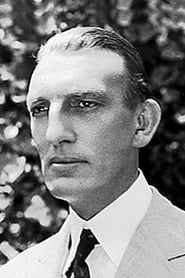
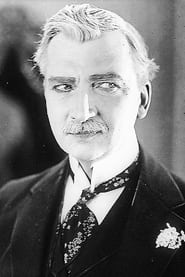
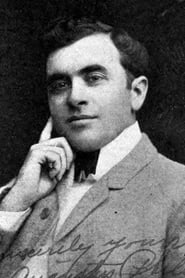
  • The known cast includes Wadsworth Harris, Marc MacDermott, and Mrs. Wallace Erskine, all associated with stage and early film work.
  • The plot is built around a supernatural moral tableau rather than action-driven melodrama, which was common in short films of the period.
  • The surviving description indicates a family-portrait motif, a visual device frequently used in early cinema to symbolize ancestry, conscience, and moral inheritance.
  • The film belongs to a wave of 1910s short dramas that often ended with a moral lesson instead of ambiguity.
  • As with many films from 1913, full surviving production documentation is sparse, making plot summaries and trade references especially important for reconstruction.
  • The title suggests an allegorical meaning in which the family shield or crest remains morally 'unsullied' only if the descendant behaves honorably.
  • Because many silent-era shorts are lost, information about this title is limited and often drawn from catalog and archive references rather than complete prints.

What Critics Said

Contemporary critical documentation is limited, and no extensive body of reviews is commonly cited for this title. Like many 1913 shorts, it likely circulated in trade listings and local exhibition contexts rather than receiving the kind of criticism reserved for later feature-length releases. Modern assessment is therefore largely historical rather than critical: scholars view it as an example of early studio melodrama and moral allegory, especially within Vitagraph's production line. Its interest today lies less in a canonized reputation than in what it reveals about silent-era storytelling conventions and the thematic preoccupations of the time.

What Audiences Thought

Direct audience response records are not readily available, which is typical for a short film from this era. The film was probably received as a compact dramatic attraction suited to nickelodeon and neighborhood theater programming, where audiences expected quickly readable morality tales, family melodrama, or uncanny effects. Its supernatural premise would have made it memorable as a visual novelty even if it was not a major box-office title. Because the film is obscure and likely lost or difficult to view, later audience reception is mostly limited to archival interest and silent-film scholarship.

Film Connections

Influenced By

  • Victorian morality tales
  • gothic family legends
  • stage melodrama
  • early allegorical cinema

This Film Influenced

  • null

Film Restoration

Likely lost or not readily available in complete, publicly accessible form; no widely circulating restored print is commonly referenced in standard film-history summaries.

Themes & Topics

ancestral portraitssleepmoral admonitiondegenerate descendantfamily legacysupernatural visitationsilent drama