The Water-Funker
Plot
Max is hopelessly in love with Lili, a lively and capricious young woman who will not agree to his wishes unless he proves himself by recovering a ring she has thrown into the sea. The problem is that Max is terrified of water, and the prospect of entering the sea sends him into comic panic. Determined to win Lili’s approval, he tries one scheme after another to overcome his fear and retrieve the ring, but each attempt only deepens the chaos around him. The film builds its humor from Max Linder’s trademark blend of elegant suitor, escalating physical embarrassment, and inventive slapstick, turning a simple romantic challenge into a series of increasingly absurd predicaments. In the end, the film plays as a classic early comedy of courtship, fear, and determination, with the sea serving as both the obstacle and the source of the gag-driven spectacle.
Director
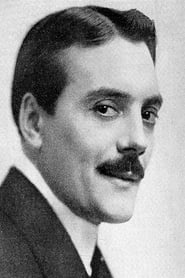
Max LinderCast
About the Production
The Water-Funker is an early Max Linder comedy made during the period when he was one of Pathé's most important comic stars and one of the best-known screen comedians in Europe. Like many films of 1913, it was produced as a short silent comedy, relying on visual timing, pantomime, and carefully staged physical business rather than intertitles or dialogue. The surviving documentation for many early Pathé shorts is sparse, so precise production details such as unit crew, exact shooting locations, and budget are generally not documented in accessible modern sources. Its seaside premise suggests location or location-style staging, but the available record does not reliably confirm specific shooting sites beyond France. The film is associated with the polished, urban comic persona Linder refined for Pathé, in which vanity, romance, and bodily mishap collide in elegant farce.
Historical Background
The Water-Funker was produced in 1913, just before the outbreak of World War I, during a period when French cinema was among the most influential in the world. Pathé Frères was a dominant force in international film production and distribution, and short comedies starring recognizable performers were a major part of that export economy. Max Linder was at the height of his silent-era popularity and had already become a transnational screen celebrity, influencing how audiences understood film comedy as a star-driven form. The film reflects the prewar fascination with modern leisure, seaside recreation, and the comic possibilities of romance in everyday life. Historically, it matters as part of the European comic tradition that helped define screen persona, narrative gag structure, and the template for later slapstick stars in the United States and elsewhere.
Why This Film Matters
Although The Water-Funker is not one of the most famous titles in Max Linder’s filmography, it is culturally significant as an example of the sophisticated short comedies that helped establish cinema as a mass entertainment form before feature-length narrative fully dominated the market. Linder’s elegant, self-deprecating comic style provided an important bridge between stage clowning, vaudeville-like physical humor, and the later screen personas of Charlie Chaplin, Harold Lloyd, and others. The film also illustrates the international circulation of silent comedy: its visual premise needed little translation, making it ideal for wide distribution across language barriers. For modern viewers and historians, it is valuable as a document of early comic structure, performance style, and the development of a recognizable film star persona. It also reinforces the importance of French cinema in the prewar era, when filmmakers in France were setting patterns that would shape global screen comedy for decades.
Making Of
The film was made during Max Linder’s productive years at Pathé, when he was emerging as an international screen icon and refining the comedic style that would become closely associated with his name. Production on films of this type was typically fast and economical, with an emphasis on carefully choreographed gags, clean compositions, and a strong central performer who could carry the entire short. The story’s dependence on fear of water would have required visual planning to make the gag progression legible to audiences in any country, which is one reason Linder’s films traveled so well internationally. While the archival trail does not preserve a detailed making-of record, the film fits squarely within the Pathé model of efficient studio comedy that relied on star charisma and pantomimic precision. The result is a concise example of early French comic filmmaking in which the scenario is simple, but the execution depends on timing, gesture, and mounting frustration.
Visual Style
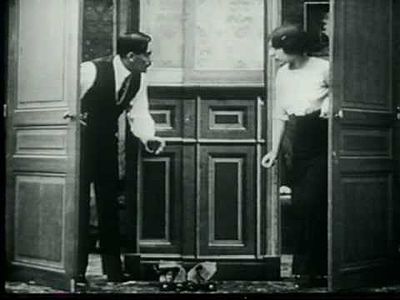
The film’s visual style is characteristic of early 1910s French studio comedy: fixed-camera framing, clearly staged action, and strong emphasis on readable body language. Max Linder films often favored a clean presentation that let the performer’s gestures and timing remain front and center, and The Water-Funker would have used that approach to emphasize fear, hesitation, and comic escalation. The seaside or waterside setting likely provides visual contrast between the neatness of the protagonist and the unruly natural element he dreads. Rather than relying on rapid editing, the film’s comedy would have been built through composition, movement within the frame, and the timing of each gag beat.
Innovations
The film’s main achievement is not technical novelty in the modern sense but the refinement of comic staging for silent cinema. It demonstrates how a short film could sustain momentum through escalating physical business, clear visual storytelling, and a recurring comedic premise. The use of the sea as a comic obstacle allows the film to exploit a common silent-era gag environment while keeping the action simple enough to follow without dialogue. It is also an example of how early star comedies created a distinctive persona through repeated types of behavior, a technique that was foundational to later screen comedy.
Music
As a 1913 silent film, The Water-Funker originally had no synchronized recorded soundtrack. In exhibition, it would typically have been accompanied by live music chosen by the theater, often a pianist or small ensemble improvising or drawing from cue sheets and local practice. No original score specific to the film is known to survive in the standard record. Modern screenings, where available, may use contemporary accompaniment created for archival presentation.
Famous Quotes
null
Memorable Scenes
- Max’s comic panic as he confronts the sea and tries to avoid the water despite the urgent need to recover the ring.
- The escalating attempts to overcome his fear, which turn the simple task into a chain of physical gags and embarrassment.
- The repeated contrast between Lili’s capricious demand and Max’s visible dread, which drives the film’s comic rhythm.
Did You Know?
- This film is also cataloged under its French title, "Le pneumatique," in some archival and reference sources.
- It stars Max Linder, one of the first internationally famous screen comedians and a major influence on later silent-era comedy.
- The premise centers on a fear of water, allowing the film to turn a simple romantic task into a sustained physical-comedy routine.
- Lucy d'Orbel appears as Lili, the capricious romantic interest who sets the story in motion by throwing the ring into the sea.
- The film belongs to the period when Pathé was producing and distributing short comedies built around recognizable comic personalities for a broad international market.
- Like many surviving records of early 1910s shorts, detailed modern production documentation is limited, which makes exact credits beyond the principal cast difficult to confirm.
- The film is a good example of Linder's screen persona: stylish, self-conscious, romantic, and repeatedly undone by social or physical embarrassment.
- Because it is a silent short, the comedy depends on visual escalation, expressive acting, and gag construction rather than spoken repartee.
- The seaside setting connects it to a recurring silent-comedy tradition in which water, bathing, and rescue provide fertile ground for slapstick.
- It is one of the smaller but still historically important entries in Linder's early 1910s output, when he was establishing the vocabulary that later comedians would build upon.
What Critics Said
Contemporary critical commentary on this specific short is not well preserved in easily accessible modern sources, which is common for many early silent films of its length and type. In the broader historical sense, Max Linder was widely admired for his sophistication, precision, and ability to combine elegance with farce, and films from this period are generally regarded by historians as exemplary of early screen comedy. Modern assessments tend to value the film less as a stand-alone masterpiece than as part of Linder’s essential body of work and as evidence of the craft and popularity of prewar French comic shorts. Its reputation today is therefore largely archival and historical rather than based on a large volume of contemporary reviews.
What Audiences Thought
No detailed audience-response data survives in the standard reference record for this title, but films starring Max Linder were generally very popular with early international audiences. The humor was designed to be immediately accessible through visual action, embarrassment, and clear emotional stakes, which made it effective across markets and languages. As a short comedy from a major star, it would likely have been received as light, brisk entertainment, especially in programs featuring a variety of shorts. Today it is chiefly appreciated by silent-film enthusiasts, historians, and viewers interested in the roots of cinematic slapstick.
Film Connections
Influenced By
- French vaudeville and stage farce traditions
- Early Pathé comic shorts
- Music-hall and pantomime performance styles
- The emerging cinematic persona comedy of the 1910s
This Film Influenced
- The comic persona films of Charlie Chaplin
- Harold Lloyd-style romantic slapstick comedies
- Later silent-era farces built around a single escalating gag premise
You Might Also Like
More Comedy Films
View allMore from Max Linder
View allFilm Restoration
The film is known to survive in archival record and reference databases, but detailed public preservation information, restoration status, and surviving element details are not consistently documented in widely accessible sources. It is not generally described in standard references as a lost film.