1912 · Approximately 10-20 minutes

Also available on: Archive.org
Man's Calling

Man's Calling

1912 Approximately 10-20 minutes United States
Duty versus personal desireReligious vocation and spiritual conflictFamily expectationRomantic temptationMoral choice

Plot

A young man who has been intended for the priesthood faces a profound conflict between family duty and personal desire when he realizes that the life chosen for him is not the one he wants to live. As his obligation to the Church presses in on him, he is drawn toward a different path, creating tension between spiritual vocation, romantic feeling, and the expectations placed upon him by others. The film follows his attempt to reconcile these competing claims before the situation reaches a dramatic emotional climax. In keeping with many short dramas of the period, the story is compact, moralistic, and centered on a single decisive choice that defines the protagonist’s future.

About the Production

Release Date 1912
Production Universal Film Manufacturing Company
Filmed In United States

Man's Calling was made in the early silent-film era as a short dramatic subject under director Allan Dwan, one of the most prolific American filmmakers of the 1910s. Surviving documentation on the production is sparse, which is typical for films from 1912, and precise budget, shooting schedule, and box-office figures are not known. The film was produced during a period when Universal was rapidly expanding its output of one-reel and short features for the national and international market. Like many films of the time, it likely relied on straightforward studio production methods, minimal intertitles, and performance-driven storytelling rather than elaborate sets or location work.

Historical Background

Man's Calling was made in 1912, a pivotal year in the development of American cinema. The industry was moving rapidly from one-reel shorts toward more sophisticated storytelling, but the market was still dominated by brief melodramas, religious dramas, westerns, and comic one-acts that could be shown in a program of several films. This was also the era when Universal was consolidating itself as a major production and distribution force, and directors like Allan Dwan were helping define the studio's efficient, high-volume production model. The film's subject matter reflects early twentieth-century anxieties about vocation, moral duty, and modern individual choice, themes that would continue to appear in cinema long after the silent era. In a broader cultural sense, it also illustrates how early film often translated social and spiritual conflicts into concise, emotionally direct narratives for mass audiences.

Why This Film Matters

Although Man's Calling is not among the best-known silent films, it is culturally significant as an example of the kind of moral drama that helped shape early American screen storytelling. Films like this contributed to the establishment of cinema as a medium capable of handling serious subjects, not merely novelty or comedy. It also represents the work of Allan Dwan at an early stage in his long career, providing evidence of how directors learned to tell clear stories under the constraints of the one-reel format. For scholars of silent cinema, the film is valuable as a record of early Universal production, star casting, and the social concerns that popular filmmaking addressed before feature-length realism became dominant.

Making Of

Man's Calling was created at a time when American studios were producing films at a remarkable pace, and Allan Dwan became known for his ability to stage clear, readable narratives quickly and efficiently. The cast included J. Warren Kerrigan, one of Universal's dependable stars, which suggests the film was designed to be marketable through familiar faces as much as through its religious and romantic tension. Early silent productions like this one were often made with small crews, limited takes, and simple set-ups, with the emphasis placed on visual storytelling and expressive acting. No detailed production papers, continuity records, or publicity materials have survived in common circulation, so much of the film's behind-the-scenes history remains inferred from the practices of Universal and Dwan's early career.

Visual Style

The cinematography is not documented in surviving detailed technical sources, but as a 1912 silent drama it would almost certainly have used fixed or minimally moving cameras, medium-distance framing, and carefully staged blocking to keep the action readable in a short runtime. Early Universal films often relied on simple compositions and strong gestures rather than elaborate camera movement, and this film likely followed that convention. Intertitles would have carried essential narrative information, while facial expression and body language supplied the emotional nuance. Any visual style would have been shaped by the limitations and conventions of early one-reel production rather than by later expressive silent-era techniques.

Innovations

The film does not appear to be associated with any major technical innovation, but it is representative of the technical discipline required of early narrative cinema. Its achievement lies in compact visual storytelling under severe runtime limitations, where a single moral conflict had to be communicated quickly and clearly. Allan Dwan's early work is often noted for professional efficiency and narrative clarity, qualities that were crucial in the one-reel era. From a historical standpoint, films like this helped normalize the grammar of silent drama before more elaborate editing and camera movement became standard.

Music

As a silent film, Man's Calling had no synchronized recorded soundtrack. Like most films of 1912, it would have been exhibited with live musical accompaniment provided by a pianist, organist, small ensemble, or theater orchestra depending on the venue. No original cue sheet or score is widely known to survive for this title. Modern presentations, if any, would typically use a newly compiled silent-film accompaniment or generic period-style music.

Memorable Scenes

  • The central scene in which the young man confronts the expectation that he will enter the priesthood while privately resisting that future.
  • The emotional turning point where his personal desires and imposed obligations come into direct conflict.
  • The climactic resolution that determines whether he will submit to duty or pursue the life he truly wants.

Did You Know?

  • The film was directed by Allan Dwan, who would later become one of the longest-working directors in American cinema history.
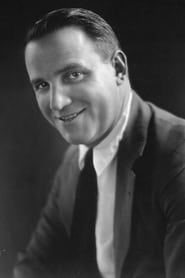
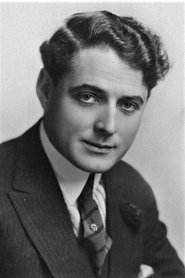
  • It stars J. Warren Kerrigan, a popular leading man of the silent era who appeared in many early Universal productions.
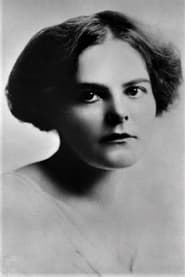
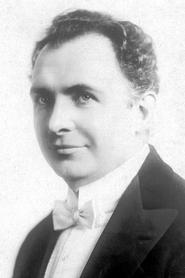
  • Jessalyn Van Trump and George Periolat were both active in early 1910s screen melodramas and supporting casts.
  • The film was released in 1912, when American cinema was still dominated by short subjects rather than feature-length narratives.
  • Its premise reflects a common silent-era melodramatic structure: a young man torn between duty, vocation, and personal love.
  • The title suggests a moral or spiritual dilemma, which was a frequent subject in early studio-era drama.
  • Because the film is so early, surviving plot descriptions are limited and the production is not as fully documented as later Dwan films.
  • Allan Dwan was already building the efficient, workmanlike directorial style that made him valuable to fast-turnaround companies like Universal.
  • The film belongs to a period when Universal was producing a large number of brief, quickly made dramas for exhibitors.
  • If extant at all, the film is likely held only in fragmentary form or not publicly accessible, which is common for films from this era.

What Critics Said

Contemporary critical reception is not well documented in surviving sources, which is common for short films from 1912. As a release from the early Universal system, it likely received notice primarily through trade coverage, exhibitor listings, or brief synopses rather than extensive critical essays. Modern assessment is similarly limited by the film's obscurity and the uncertain survival status of the print, so it is not widely discussed in general film criticism. Today it is mainly of interest to silent-film historians, Allan Dwan scholars, and archivists rather than to mainstream reviewers.

What Audiences Thought

Specific audience-response records are not known, but the film would have been seen in the context of popular nickelodeon and road-show-era programming where short dramas were intended to be immediately legible and emotionally affecting. The premise of a young man resisting a religious vocation in favor of a different life would likely have engaged audiences through its conflict between duty and desire. J. Warren Kerrigan's star appeal probably helped attract viewers, since recognizable names mattered greatly in early cinema exhibition. Like many films of the era, its reception would have depended heavily on local exhibitors, accompanying programs, and the moral sensibilities of the audience community.

Film Connections

Influenced By

  • Early stage melodrama
  • Religious morality tales
  • One-reel dramatic shorts common in 1910s American cinema

This Film Influenced

  • Later silent melodramas about vocation and personal sacrifice
  • Early religious and moral dilemma dramas in American cinema

Film Restoration

The preservation status is uncertain in readily available public sources. The film is an early 1912 silent short, and no widely circulated restoration or complete surviving print is commonly cited. It may survive only in archives, in incomplete form, or not at all, but definitive public documentation is limited.

Themes & Topics