Polin Performs "The Anatomy of a Draftee"
Plot
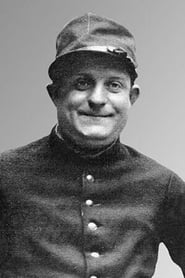
In this very brief early sound-era-style performance film, the performer known as Polin appears on screen and delivers a song titled "The Anatomy of a Draftee." Rather than following a narrative story with multiple scenes, the film presents the act as a filmed stage or vaudeville performance, centering entirely on the entertainer's delivery. The emphasis is on the comic or topical lyrics, the performer's persona, and the novelty of capturing a song performance on motion-picture film at a time when cinema was still defining its forms. The result is less a plot-driven short than a preserved record of a popular entertainment style from the first decade of cinema.
Director
Alice Guy-BlachéCast
About the Production
This short film belongs to the very early period of Alice Guy-Blaché's work at Gaumont, when the studio produced short subjects that documented performers, comic sketches, and topical songs for exhibition in nickelodeons and fairground-style venues. Like many films of 1905, it was made quickly, economically, and with a strong emphasis on novelty and immediate audience appeal rather than elaborate narrative construction. The production likely relied on a single setup and minimal staging, with the camera held in a fixed position to record the performance as clearly as possible. Because the film survives chiefly as a historical record of an act rather than as a developed dramatic work, precise details such as budget, exact shooting location, and original release scheduling are not well documented.
Historical Background
The film was produced in 1905, a pivotal year in the development of cinema, when the medium was rapidly shifting from novelty attraction to a more established mass entertainment form. In France, companies like Gaumont and Pathé were expanding output and experimenting with many short genres, including filmed songs, comic sketches, and topical performances. This was also the era when moviegoing was becoming more regularized in urban and semi-urban exhibition spaces, and short, instantly readable subjects were particularly valuable. The film matters historically because it captures the overlap between stage entertainment and early cinema, showing how film served as a vehicle for preserving and circulating popular performance culture.
Why This Film Matters
Although not a canonical narrative masterpiece, the film is culturally significant as part of the early record of performance cinema and as an example of Alice Guy-Blaché's extensive contribution to the medium's formative years. Works like this helped define cinema as a space where contemporary songs, comic routines, and recognizable performers could be presented to wider audiences than a live theater engagement could reach. It also preserves evidence of the kinds of topical humor and popular stage material that shaped early twentieth-century entertainment. For film historians, it is valuable because it demonstrates both the range of Alice Guy-Blaché's output and the diversity of film form before feature-length storytelling became dominant.
Making Of
The film was made during a period when Alice Guy-Blaché was heavily involved in developing and directing a wide range of shorts for Gaumont, including comic pieces, actualities, and performance films. These productions were often assembled with a practical exhibition purpose: to provide theaters with fresh material that audiences could understand instantly, even without intertitles or elaborate continuity. The production style for a performance film like this would have been straightforward, with the performer staged in front of the camera and the action arranged to be readable from a frontal viewpoint. Although surviving documentation is limited, the film fits squarely within the Gaumont system of efficient, studio-produced shorts designed for repeatable exhibition and broad audience appeal.
Visual Style
The cinematography would have been characteristic of 1905 studio production: a fixed camera, a relatively static composition, and a straightforward frontal view designed to keep the performer fully visible. Rather than employing cutting, camera movement, or elaborate mise-en-scène, the visual style likely prioritized legibility and the continuous presentation of the act. This approach was common for performance films because the camera functioned as an audience surrogate, recording the stage-like action with minimal interference. The simplicity of the image is part of its historical value, revealing the grammar of early cinema before later conventions fully developed.
Innovations
The film's main technical significance lies in its early use of cinema to document a song performance, helping bridge recorded image and live entertainment culture. While it does not feature advanced editing or special effects, that simplicity itself reflects the technical norms of its moment and the efficient production methods used by studios like Gaumont. As an example of an early performance film, it demonstrates the camera's role as a stable recording device before more complex storytelling techniques became standard. Its importance is historical rather than technological in the modern sense.
Music
As a 1905 film, it would not have had synchronized recorded sound. The song performance would have been conveyed visually on screen, while exhibitions likely used live accompaniment, a pianist, or possibly a singer/lecturer depending on the venue and local practice. The title indicates that the musical or comic element was central to the attraction, and the film likely depended on audience familiarity with the song or with Polin's performance style. Any modern presentation would usually rely on silent-film accompaniment practices rather than an original recorded soundtrack.
Memorable Scenes
- Polin performing the entire song directly for the camera in a single, stage-like setup
- The static presentation that preserves the rhythm and gestures of a live comic song act
Did You Know?
- The film is credited to Alice Guy-Blaché, one of the earliest narrative filmmakers and one of the first women directors in cinema history.
- It features the performer Polin, who was known for comic songs and stage entertainment.
- The title suggests a topical piece about military service or conscription, a subject often used in turn-of-the-century popular song comedy.
- Films like this were commonly produced as short one-shot records of performers, blending cinema with vaudeville and music hall culture.
- Because it is so early, the film likely predates synchronized sound and would have been shown with live musical accompaniment or performed recitation in the theater.
- The film illustrates how early cinema preserved popular stage acts that otherwise might have existed only in live performance.
- Alice Guy-Blaché's body of work at Gaumont included many shorts of this kind, demonstrating her range beyond later narrative films.
- The exact running time is not consistently documented, but films of this type in 1905 were often only a single reel fragment or a minute or two in length.
What Critics Said
Contemporary critical reception is not well documented for this specific short, which is typical for very early films that were reviewed, if at all, in trade notices rather than formal criticism. At the time, such films were generally judged by their novelty value, clarity of presentation, and ability to amuse or attract audiences rather than by artistic ambition in the later sense. Modern scholars view it primarily as an archival and historical artifact: a surviving example of early performance cinema and an important component of Alice Guy-Blaché's filmography. Its critical importance today comes less from narrative complexity than from authorship, rarity, and historical context.
What Audiences Thought
Specific audience-response records for this film are not available, but shorts of this kind were generally popular with early cinema audiences because they delivered familiar entertainment in a concise, easily digestible format. Viewers of the period often appreciated filmed songs and stage acts because they extended the reach of theatrical performance and offered a new technological attraction. The combination of a known performer and a topical or comic song would likely have helped the film play effectively in mixed programs. Today, audiences interested in silent cinema and film history tend to approach it as a curiosity and a valuable glimpse into early entertainment culture.
Film Connections
Influenced By
- Vaudeville and music hall performance traditions
- Early filmed song and comic act shorts produced in France
- Popular topical songs of the early 1900s
This Film Influenced
- Early performance shorts and filmed vaudeville acts of the 1900s
- Later archival documentation films of stage performers
More Music Films
View allMore from Alice Guy-Blaché
View allFilm Restoration
The film appears to survive as a historical early short, though documentation is limited and availability may vary by archive or online catalog. It is not widely circulated in mainstream distribution, and access is typically through film archives, scholarly collections, or specialized online sources rather than commercial streaming.