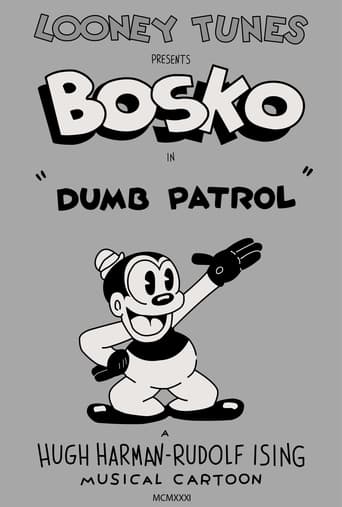
1930 · 7

Also available on: Wikimedia
Sinkin' in the Bathtub

Sinkin' in the Bathtub

1930 7 United States
Music as an organizing force for everyday lifeComic resilience in the face of mechanical troubleRomantic playfulnessEscapism and carefree enjoymentThe transformation of ordinary travel into performance

Plot

Bosko, the exuberant Warner Bros. cartoon star, sets out for a carefree automobile ride with Honey, and the pair spend much of the short singing, dancing, and enjoying the rhythm of the road. Their outing is presented as a fast-moving string of comic musical gags, with Bosko constantly turning ordinary travel into performance and play. Trouble briefly appears when the car suffers setbacks and mechanical misfortune, but even these disruptions are handled with cheerful slapstick rather than real danger. The short ends on the same upbeat, musical note on which it begins, reinforcing the cartoon’s playful premise that songs, motion, and comedy can transform everyday mishaps into entertainment.

About the Production

Release Date 1930-04-19
Production Harman-Ising Productions, Warner Bros. Pictures
Filmed In Produced in the United States, Animated production work associated with the Warner Bros. animation studio in Hollywood, California

Sinkin' in the Bathtub is historically significant as the first Looney Tunes cartoon released by Warner Bros., making it an early foundation stone for one of the most important animated franchises in film history. It was produced by the team of Hugh Harman and Rudolf Ising during the early sound-cartoon era, when studios were experimenting with how synchronized music and sound could reshape animation. The short was designed as a musical showcase for Bosko, an early Warner Bros. cartoon character who would go on to appear in additional shorts before the character rights and studio circumstances changed. Its title derives from the popular song 'Singin' in the Bathtub,' and the cartoon leans heavily on rhythmic, music-driven gags characteristic of late 1920s and early 1930s animation.

Historical Background

Sinkin' in the Bathtub was released in 1930, right at the start of the Great Depression, during a moment when audiences were gravitating toward escapist entertainment and studios were still exploring how to exploit the new possibilities of synchronized sound. Animation in this period was heavily influenced by vaudeville, Tin Pan Alley songs, and musical revue structure, and short cartoons were often built as audio-visual showcases rather than tightly plotted stories. Warner Bros. was in the process of building its animation division and using the Looney Tunes and Merrie Melodies branding to connect cartoons with the company's growing music publishing and sound-film business. The short matters historically because it marks the birth of Looney Tunes as a theatrical series and represents one of the earliest attempts to define Warner Bros.' distinctive cartoon identity. In a broader film-history sense, it belongs to the generation of early sound cartoons that helped establish animation as a major commercial and artistic form in American cinema.

Why This Film Matters

The film's chief cultural importance lies in its status as the first Looney Tunes release, placing it at the starting point of a brand that would become one of the most recognizable in global popular culture. While the cartoon itself is not as famous today as later Warner Bros. animation classics, it is a crucial artifact for understanding how the studio's signature style developed from musical novelty shorts into a sophisticated comic universe. Bosko, though now less familiar to general audiences, was an important early star who demonstrated the commercial potential of recurring animated characters. The short also reflects the historical relationship between cartoons and popular music, showing how animation was used to reinforce and capitalize on contemporary songs and musical tastes. For historians, it is a valuable early example of sound-era experimentation and of the studio system's method of building long-running properties from short-form theatrical releases.

Making Of

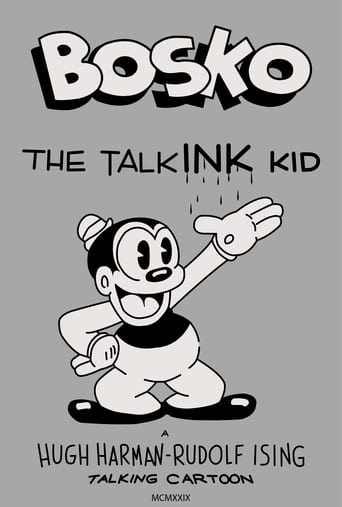
The cartoon was created during a transitional moment in animation, when synchronized sound had only recently become standard and studios were racing to define what sound cartoons could do beyond simple novelty. Hugh Harman and Rudolf Ising, who had worked with Walt Disney earlier in the decade, brought a strong musical sensibility to the Warner Bros. shorts they produced. Bosko was conceived as a flexible cartoon performer who could sing, dance, and react expressively to the soundtrack, making him well suited to the studio's early sound-driven strategy. Because the short was made very early in Warner Bros. animation history, it reflects a period of experimentation in timing, musical pacing, and comic structure rather than the more polished narrative style that later became typical of the studio. The cartoon also sits within the broader story of how creators, characters, and even rights disputes shaped the identity of early animation series.

Visual Style

As an animated short, the film's visual style is rooted in early studio cartoon design rather than live-action cinematography. The animation emphasizes broad, elastic movement, simple character shapes, and rhythmic choreography synchronized to the soundtrack. Visual gags are staged to maximize musical timing, with motion often functioning like choreography in a vaudeville act. The backgrounds and layouts are comparatively simple by later standards, reflecting the production methods and budgetary realities of early 1930s animation, but the short uses motion and timing effectively to keep the action lively.

Innovations

The film is notable for being part of the early wave of fully synchronized sound animation at Warner Bros., a key technical and commercial development of the era. Its achievement lies less in a single invention than in the successful integration of music, effects, and movement into a cohesive cartoon performance. As the first Looney Tunes release, it also helped establish the theatrical branding strategy that Warner Bros. would continue to develop through the 1930s. The short demonstrates the studio's early command of timing and synchronization, both of which were essential to the evolution of sound cartoons.

Music

Music is central to the film's identity, and the cartoon was built around the song 'Singin' in the Bathtub,' which serves as both title inspiration and tonal guide. Like many early sound cartoons, it uses music not merely as background but as the engine for gags, movement, and character expression. The soundtrack likely featured studio-arranged accompaniment and synchronized effects typical of the period, with Bosko's actions carefully timed to musical beats. The short exemplifies the early Warner Bros. approach of using popular songs and lively musical numbers to anchor animated comedy.

Famous Quotes

No widely documented dialogue quotes are commonly cited for this early cartoon.
The short is better known for its title pun on 'Singin' in the Bathtub' than for memorable spoken lines.

Memorable Scenes

  • Bosko and Honey's cheerful car ride, which establishes the cartoon's upbeat, music-driven mood
  • The comic breakdown of the ride when bad luck briefly interrupts their fun
  • The recurring musical performance style in which everyday actions are turned into rhythmic entertainment
  • The opening sequence that introduces Bosko as a lively, song-and-dance animated personality

Did You Know?

  • It was the very first Looney Tunes cartoon released by Warner Bros.
  • The short introduced audiences to Bosko as an early Warner Bros. animated star.
  • Honey, Bosko's girlfriend, appears as part of the early Bosko universe and reflects the era's heavily musical, vaudeville-influenced cartoon style.
  • The title is a play on the popular song 'Singin' in the Bathtub,' with the spelling altered to 'Sinkin'' for comic effect.
  • The film was produced by Hugh Harman and Rudolf Ising, two of the most important early figures in American sound animation.
  • It belongs to the pre-Code era, when cartoons often used broader musical and ethnic caricature conventions now viewed as historically dated.
  • The cartoon is an early example of Warner Bros. using animation as a marketing vehicle for music and popular songs tied to the studio's sound-film identity.
  • Bosko would become an important early character for Warner Bros. before the Harman-Ising partnership left the studio and Bosko's tenure ended there.
  • Although now best remembered historically, at the time it was part of the studio's effort to compete with other animated stars and series already established in the market.
  • The short helped establish the 'Looney Tunes' brand name long before the later, more famous era of Bugs Bunny, Daffy Duck, and Porky Pig.

What Critics Said

Contemporary reception was generally shaped more by the novelty of early sound cartoons than by long-form critical analysis, and the short was part of a broader wave of musical animated entertainment that audiences and exhibitors were still learning how to evaluate. Modern critics and historians tend to view the film primarily as an important historical milestone rather than as one of the strongest or most polished early Looney Tunes entries. Its energetic music-driven structure and lively timing are often appreciated as representative of the period's animation style, but its storytelling and character design are also recognized as products of an early stage in the medium's development. Today it is discussed chiefly in the context of Warner Bros. animation history, the Bosko era, and the evolution of sound cartoons rather than as a standalone masterpiece of the genre.

What Audiences Thought

At the time of release, audiences encountering the cartoon in theaters likely saw it as a fresh and entertaining sound short, particularly because synchronized music and comedy were still novel attractions. The series approach, with a recurring character and repeated musical gags, was designed to be immediately accessible and easy to enjoy as part of a feature program. While there are no widely cited modern audience metrics for this specific short, its preservation in animation history and continued discussion among classic-cartoon fans suggest sustained interest from historians and collectors. Contemporary viewers tend to approach it as a charming but primitive early sound cartoon, valued more for historical curiosity than for mass entertainment appeal.

Film Connections

Influenced By

  • Vaudeville performance traditions
  • Popular Tin Pan Alley songs of the late 1920s and early 1930s
  • Early synchronized sound cartoons
  • Theatrical musical revue shorts

This Film Influenced

  • Subsequent Looney Tunes and Merrie Melodies shorts
  • The later Warner Bros. cartoon tradition built around recurring characters and music-driven comedy

Film Restoration

The film is preserved and available in archival and classic-cartoon contexts; it is not considered lost. As an important early Looney Tunes release, it has been retained in historical cartoon collections and referenced in animation scholarship.

Themes & Topics

BoskoHoneycar ridemusicslapstickearly Looney Tunes