The Ship
Plot
Set in sixth-century Venice, The Ship follows a community of refugees and settlers struggling to found a Christian-led order in a city still shaped by violence, superstition, and the memory of pagan rule. At the center of the drama is Basiliola Faledro, an exotic dancer who returns from afar carrying a private vendetta: her father and brothers were blinded and humiliated by fanatical zealots, and she seeks revenge against the men now in power. Her targets are the brothers Gràtico, newly elevated to authority, with Marco serving as arbiter and tribune and Sergio as bishop, while their sister Ema becomes associated with the title’s symbolic declaration that the people’s homeland is a ship. As Basiliola schemes and seduces her way through the political and religious tensions of Venice, the film builds toward a tragic clash between erotic power, civic duty, and fanatic devotion. The story presents Venice itself as a precarious, floating civilization, suspended between faith, vengeance, and the struggle to define a national destiny.
About the Production
The Ship was a large-scale Italian prestige production mounted in the early silent era and associated with the literary and theatrical world surrounding the D'Annunzio circle. It was directed by Gabriellino D'Annunzio, son of the poet-playwright Gabriele D'Annunzio, and was closely tied to the grandeur and stylization typical of elite Italian historical spectacle films of the period. The film drew on a prominent stage work and was designed to translate the monumental, declamatory style of its source into cinema, with elaborate costumes, symbolic staging, and a strongly sculptural use of bodies and architecture. Like many Italian silent-era productions of the period, exact financial records are not well documented in surviving public sources, and detailed box-office figures are not readily verifiable.
Historical Background
The Ship was made in 1921, during a turbulent period in post-World War I Italy marked by political unrest, social conflict, economic instability, and intense debates over national identity. Italian silent cinema at the time was still drawing on the prestige of the prewar epics and historical dramas that had made the country an early center of feature-length spectacle. The film’s focus on Venice’s origins and on the struggle to found a Christian civic order fits neatly into the era’s fascination with heroic national myths, cultural continuity, and the moral authority of civilization. It also belongs to a broader European trend in which cinema was increasingly used to adapt major literary and theatrical works in order to elevate film’s cultural standing. In that sense, The Ship reflects both the artistic ambitions and the ideological anxieties of its moment, using antiquity as a mirror for modern concerns about authority, faith, and collective destiny.
Why This Film Matters
The Ship is culturally significant primarily as a representative of high-prestige Italian silent cinema and of the D'Annunzian aesthetic that linked literature, theater, nationalism, and the moving image. Its importance lies not only in the story it tells but in the kind of film it is: a work designed to make cinema appear monumental, literary, and formally sophisticated. The production also illustrates the cross-pollination between stage performance and early film, especially through the presence of Ida Rubinstein, whose career bridged dance, theater, and screen spectacle. More broadly, the film contributes to the long cinematic tradition of imagining Venice as a symbolic city, a place where water, power, religion, and identity intertwine. For historians of Italian cinema, it is part of the lineage that helped define silent-era epic style and the use of historical narratives as vehicles for cultural prestige.
Making Of
The Ship emerged from the cultural orbit of Gabriele D'Annunzio, whose influence on Italian art, politics, and theatrical spectacle extended well into cinema. Gabriellino D'Annunzio’s direction reflects an inherited aesthetic of grandeur, symbolism, and rhetorical intensity, with an emphasis on monumental composition rather than naturalistic acting. The involvement of Ida Rubinstein suggests a deliberate attempt to fuse dance, physical expressiveness, and visual spectacle into a cinematic form that could appeal to audiences already familiar with elite stage performance. As with many ambitious Italian silent productions, the film was likely shaped by elaborate set design, carefully posed tableaux, and an interest in evoking historical authenticity through costume and architecture, even when precise production details are no longer fully documented. Surviving information indicates that the film was conceived as a prestige historical drama rather than a routine commercial feature, which helps explain its literary pedigree and stylized presentation.
Visual Style
The film’s visual style is associated with the stately, tableau-based aesthetics common to early Italian historical cinema. Expect carefully composed frames, an emphasis on architecture and costume, and performers arranged in sculptural poses that reinforce the dramatic hierarchy of the story. The imagery likely uses contrast between public ceremonial spaces and intimate moments of intrigue to dramatize the conflict between civic order and personal revenge. As with other prestige silent productions from Italy, the cinematography would have prioritized clarity of gesture and pictorial grandeur over rapid cutting or expressive camera movement, creating a form of screen pageantry that resembles living historical painting.
Innovations
The film’s notable achievements are primarily aesthetic and production-based rather than technological in the modern sense. It exemplifies the early Italian mastery of large-scale historical staging, complex costume drama, and monumental composition that helped establish the nation’s international reputation in silent cinema. Its achievement lies in integrating literary prestige, theatrical performance, and cinematic pictorialism into a unified spectacle. The production also contributes to the evolution of the historical epic as a form in which architecture, gesture, and symbolic setting carry as much narrative weight as dialogue would in sound cinema.
Music
As a silent film, The Ship would originally have been accompanied by live music in theaters, often by a pianist, organist, or small orchestra depending on venue and exhibition conditions. No universally standardized original score is widely documented in accessible sources, and surviving performances may have used locally assembled accompaniment or cue-based arrangements. Like many silent historical dramas, the film’s emotional effect would have depended heavily on musical interpretation during exhibition, with music reinforcing the operatic, tragic, and ceremonial qualities of the narrative. Specific surviving score information is not readily available in common reference sources.
Famous Quotes
Their native homeland is aboard a ship.
A wandering people struggle to establish Christian Theocracy.
Basiliola Faledro returns to avenge her pagan lineage.
Memorable Scenes
- Basiliola’s return from distant lands, presented as both a personal vengeance story and a symbolic intrusion into Venice’s fragile civic order.
- Public scenes of political and religious authority in which the brothers Gràtico stand as representatives of the city’s emerging leadership.
- The declaration that the Venetians' homeland is a ship, turning the city’s identity into a powerful civic metaphor.
- The climactic confrontations in which erotic manipulation, family trauma, and religious power converge within the historical pageantry of the setting.
Did You Know?
- The film is based on a work associated with Gabriele D'Annunzio, whose literary prestige helped shape Italian silent cinema into a vehicle for national myth and high art.
- Its director, Gabriellino D'Annunzio, was the son of Gabriele D'Annunzio, linking the film directly to one of the most influential cultural figures of the era.
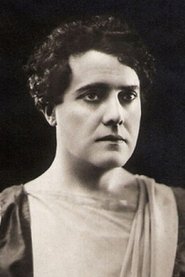
- Ida Rubinstein, one of the lead performers, was famous internationally as a dancer and stage performer before appearing in film, which gave the production an unusually theatrical star presence.
- The story is set in a highly stylized sixth-century Venice, reflecting the silent-era Italian fascination with antiquity, civic origin myths, and monumental historical pageantry.
- The title refers to a metaphor spoken within the narrative, emphasizing the precarious, mobile nature of the Venetian people and their city-state identity.
- The film belongs to the tradition of Italian historical spectacles that sought to elevate cinema through literary adaptation, painterly mise-en-scène, and majestic architecture of space.
- Like many silent films from the period, it survives in incomplete, scarce, or hard-to-access archival form in public discourse, which has limited its modern visibility.
- Its cast combines stage and screen performers, a common practice in prestige silent production, especially in films aiming for aristocratic or high-cultural legitimacy.
What Critics Said
Contemporary critical reception is difficult to summarize comprehensively because detailed surviving reviews are limited and the film is not among the best-documented silent titles of its era. In the context of its release, it was likely evaluated within the framework used for prestige historical dramas: admiration for pictorial beauty, staging, and literary ambition, alongside possible criticism of its theatricality or heaviness. Modern critical discussion tends to focus less on mass popularity and more on its value as a historical artifact of D'Annunzio-influenced cinema, its relationship to the Italian silent spectacle tradition, and its place within early representations of Venice on film. Because the film is obscure today and may survive only in limited form, its reputation is largely scholarly rather than popular, with interest centered on preservation, authorship, and historical context rather than on broad critical consensus.
What Audiences Thought
Audience reception data is not well preserved in widely available sources, so precise public reaction is hard to reconstruct. Given the film’s elite literary pedigree, elaborate historical setting, and star casting, it was likely intended for audiences receptive to prestige art cinema and theatrical spectacle rather than mass-market sensationalism. In its own era, Italian audiences had a strong appetite for historical dramas and visually opulent productions, though the film’s formal seriousness and symbolic style may have limited its appeal outside cultivated urban circles. Today, audience reception is mostly a matter of cinephile and archival interest, with viewers encountering the film as a rare artifact of early Italian cinema rather than as a familiar repertory title.
Film Connections
Influenced By
- The literary and theatrical works of Gabriele D'Annunzio
- Italian silent historical epics of the 1910s and early 1920s
- Fin-de-siècle symbolism and decadent theatrical aesthetics
- Stage melodrama and declamatory acting traditions
This Film Influenced
- Later Italian historical dramas that blended national mythology with visual spectacle
- Silent-era Venetian epics and origin stories
- Prestige literary adaptations in European cinema
You Might Also Like
More Drama Films
View allMore from Gabriellino D'Annunzio
View allFilm Restoration
The film is not widely available and is generally treated as a rare silent-era title with limited surviving visibility; public access is restricted and preservation information is incomplete in commonly available sources. It may survive in archival holdings, but it is not a broadly circulating mainstream preservation title. Modern availability appears limited to specialized archives, rare screenings, or scholarly contexts rather than commercial home-video circulation.