Also available on: Archive.org
L'Intruse

L'Intruse

1913 France
Child vulnerabilityKidnapping and coercionUrban dangerExploitation and innocenceMoral intrusion into domestic life

Plot

In Louis Feuillade’s short crime melodrama, a child is abducted and thrust into a harsh street life, forced to sell flowers as part of the criminals’ exploitative scheme. The film follows the child’s vulnerable position as the household and the wider community become entangled in the search for the missing youngster. As the plot develops, suspicion and danger circulate around the people associated with the kidnapping, with Feuillade building tension through quickly established situations rather than elaborate exposition. The story plays as both a rescue drama and a social warning about predatory adults who prey on innocence, a theme that was common in early French serial and crime films. The narrative resolves in the compact, melodramatic manner typical of Feuillade’s pre-war work, emphasizing moral contrast between the exploited child and the forces that profit from the abduction.

About the Production

Release Date 1913
Production Société des Établissements L. Gaumont
Filmed In France

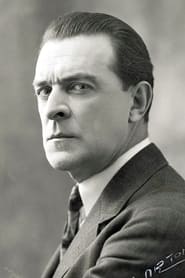
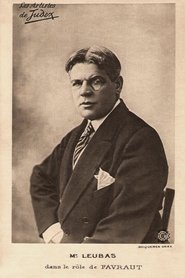
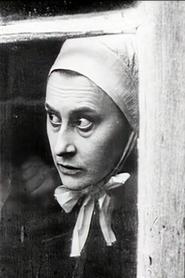
L'Intruse was produced as a short silent film during Louis Feuillade’s highly productive early-1910s period at Gaumont, when he was making compact crime dramas, domestic melodramas, and serial chapters at a rapid pace. As with many films of this era, detailed production records such as unit notes, shooting dates, and set information are scarce or incomplete, so much of the film’s making must be inferred from the broader Feuillade/Gaumont production context. The film’s cast includes key Feuillade collaborators such as René Navarre, Renée Carl, and Louis Leubas, suggesting a production assembled from the studio’s regular repertory of experienced performers. Because the film is very short and silent, its dramatic force depends on pantomime, clear framing, and rapid visual storytelling rather than elaborate staging or special effects.

Historical Background

L'Intruse was released in 1913, a moment when French cinema was still one of the world’s major production centers and just before the upheaval of the First World War would reshape European film industries. This was the era in which Gaumont and Pathé were producing a wide range of shorts and serials for a broad popular audience, and Feuillade was emerging as one of the most important directors of crime and melodramatic cinema in France. Stories about abducted children, urban danger, and social exploitation resonated strongly in a society grappling with rapid modernization, changing family structures, and anxieties about city life. The film also belongs to the late silent period before feature-length narrative conventions fully standardized; it therefore reflects a transitional phase in which filmmakers had already become adept at emotionally charged storytelling but were still working within shorter forms. In that sense, the film is historically valuable not only as a specific title but as an example of how pre-war French cinema translated social fear into succinct melodramatic form.

Why This Film Matters

Although not one of Feuillade’s most famous titles, L'Intruse is culturally significant as part of the body of early French crime and melodrama that helped define what cinematic suspense could look like before the rise of later thrillers. Its premise—an abducted child reduced to street labor—captures a recurring early cinema concern with innocence threatened by urban vice, a theme that appears in both French and international silent films of the period. The film also contributes to the enduring reputation of Louis Feuillade as a filmmaker who could make simple premises feel ominous and socially pointed through restrained but effective visual narration. For historians, it is a useful example of how silent-era shorts explored moral disorder and domestic disruption in a way that anticipates later crime cinema. Its value today is as much archival and historical as it is popular, helping illustrate the textures of pre-war commercial filmmaking and the performance style of Gaumont’s repertory company.

Making Of

Very little detailed behind-the-scenes documentation appears to have survived for this particular film, which is common for many 1913 one-reel or short-length productions. What can be said with confidence is that it was made within Louis Feuillade’s efficient Gaumont production system, where frequent collaboration with the same actors allowed rapid assembly of films with consistent performance styles. Feuillade’s working method at the time favored clear visual storytelling, location or simple-set realism, and fast production schedules, all of which would have suited a compact story of kidnapping and street exploitation. The cast list indicates the participation of well-known silent-era performers whose screen presence could quickly establish villainy, vulnerability, or social status without intertitles doing all the work. Any further specifics about sets, shooting days, or directorial anecdotes are not securely documented in widely available sources.

Visual Style

The cinematography would have been characteristic of early 1910s French silent filmmaking: static or lightly adjusted camera positions, clear staging, and an emphasis on readable action within the frame. Feuillade’s films of this period often favor practical settings, strong group composition, and visual economy, allowing the viewer to understand relationships and threats quickly. In a story about a kidnapped child forced into street selling, the visual strategy likely depends on contrasts between vulnerable innocence and bustling public space, making the city or street environment feel both ordinary and unsafe. Early Gaumont productions also often used naturalistic light and straightforward mise-en-scène rather than overtly theatrical spectacle, which would reinforce the film’s sense of realism. The film’s visual interest lies less in camera movement than in the director’s ability to generate tension through blocking, proximity, and the timing of revelations.

Innovations

The film’s technical interest lies in its efficient silent-era storytelling rather than in any single groundbreaking innovation. Feuillade was especially skilled at compressing narrative into a few scenes while preserving emotional clarity, and that economy is itself a major achievement of early cinema craftsmanship. The film likely demonstrates careful visual organization, with simple but effective use of framing and actor movement to communicate kidnapping, coercion, and rescue-oriented tension. As part of Gaumont’s production culture, it also reflects the industrial standardization that allowed French studios to produce a large volume of polished short films with consistent quality. Its enduring technical value today is as an example of how pre-war filmmakers used limited means to create suspenseful, socially legible drama.

Music

As a 1913 silent film, L'Intruse had no synchronized recorded soundtrack. In original exhibition, it would typically have been accompanied live by a pianist, small ensemble, or theater musician, with accompaniment varying according to venue and local practice. No definitive original cue sheet or composer credit is generally associated with the film in standard references. Modern presentations of the film, when available, may use newly prepared silent-film accompaniment created for preservation screenings or archival releases.

Memorable Scenes

  • The central abduction premise, in which a child is taken and reduced to selling flowers on the street, is the film’s most memorable and defining dramatic image.
  • The juxtaposition of innocence and public urban space creates a strong visual and emotional contrast that likely functions as the film’s key suspense device.
  • The moments in which adults search for or react to the child’s disappearance would have been staged to maximize melodramatic tension in the compact running time.

Did You Know?

  • The film is a Louis Feuillade silent short from Gaumont’s prolific pre-World War I output, placing it in the same broad creative era that produced many of his famous crime and serial works.
  • It features René Navarre, who became internationally recognized as one of Feuillade’s signature screen performers, especially through his association with early French crime cinema.
  • The known plot premise involves a kidnapped child being forced to sell flowers in public, a striking example of early cinema’s frequent use of endangered childhood as melodramatic subject matter.
  • Like many films from 1913, it survives in a historical and archival context that is not always richly documented, making cast and plot references especially valuable for identification.
  • The title, L'Intruse, translates roughly as 'The Intruder' or 'The Intruder Woman,' suggesting themes of invasion, disruption, and domestic threat even though the surviving plot summary centers on a kidnapped child.
  • Feuillade’s films often mix crime, domestic melodrama, and social anxiety, and L'Intruse fits that pattern by turning a simple premise into a morally charged situation.
  • The film was made before feature-length standardization fully dominated European production, so its storytelling would have been compact, economical, and visually direct.
  • The appearance of Louis Leubas and Renée Carl links the film to Gaumont’s stable of reliable players who appear frequently across early French productions.

What Critics Said

Contemporary critical reception is difficult to document in detail for this specific title, and there are no widely cited reviews that have become standard references in the way later landmark films have. In its own period, a Feuillade short like L'Intruse would likely have been received as a competent, emotionally direct melodrama within the popular output of Gaumont, valued for narrative clarity and strong acting rather than overt artistic experimentation. Modern critical discussion tends to be limited and mostly archival, with interest centered on Feuillade’s development as a director, the recurring themes in his work, and the film’s place in the history of early crime and suspense cinema. Today it is generally appreciated by silent-film scholars and collectors as part of the director’s broader body of work, even if it is less famous than his major serials. Its modern reputation is therefore chiefly scholarly rather than mass-canonical.

What Audiences Thought

No reliable audience survey data survives for the film, but in 1913 it would have been shown as part of a popular commercial cinema culture that favored concise melodramas and sensational story material. The child-kidnapping premise suggests it was designed to provoke immediate sympathy, tension, and moral outrage in viewers, emotions that were central to silent-era audience engagement. Feuillade’s films were generally well suited to broad audiences because they relied on legible situations, expressive acting, and strong visual hooks rather than dense dialogue or literary complexity. For modern viewers, the film is primarily of interest to silent-film enthusiasts, historians, and audiences drawn to early French cinema rather than mainstream repertory crowds. Because of its age and likely limited availability, contemporary audience reception is shaped more by archival screenings and online preservation access than by theatrical exhibition.

Film Connections

Influenced By

  • French melodramatic cinema of the early 1910s
  • Gaumont crime and social-drama shorts
  • Popular stage melodrama conventions
  • Urban crime narratives in pre-war European fiction

This Film Influenced

  • Later French crime serials associated with Louis Feuillade's style
  • Child-endangerment melodramas in silent cinema
  • Urban suspense dramas of the silent era

Film Restoration

The film appears to survive in archival circulation, though detailed preservation information is limited in widely available sources. It is not generally described as a lost film in standard film-historical references, but accessible copies and restoration details are scarce compared with Feuillade’s more famous works. Its survival status is best understood as partially documented and of interest primarily to archives and silent-film historians rather than the general public.

Themes & Topics

kidnapped childstreet flowerscrime melodramasilent filmFrench cinemarescue drama