1914 · Approximately 10-15 minutes

Also available on: Archive.org
Max as a Chiropodist

Max as a Chiropodist

1914 Approximately 10-15 minutes France
Deception and disguiseSocial aspiration and vanityProfessional pretensionRomantic courtshipPhysical embarrassment

Plot

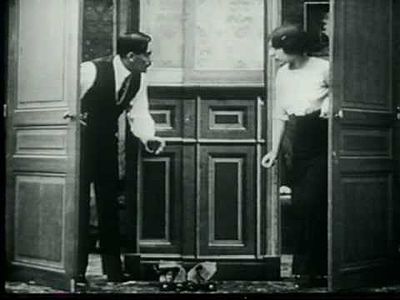
Max, eager to call on a young woman he is courting, arranges to visit in a role that will allow him to gain entry into her home and impress her. To do so, he presents himself as a chiropodist, or pedicurist, adopting the pretensions and confidence of a professional man while remaining very much the same mischievous Max at heart. Once inside, his improvised medical expertise quickly becomes the source of a string of comic misunderstandings, social embarrassment, and escalating physical gags. The deception is complicated by the presence of other household members, including a rival or watchful onlooker, and Max’s efforts to maintain his disguise lead to increasingly frantic behavior. The film builds toward the collapse of his scheme, using Max’s vanity and improvisation as the engine for broad slapstick comedy.

About the Production

Release Date 1914
Production Pathé Frères
Filmed In France

This short comedy was made during the period when Max Linder was one of Pathé's most valuable stars and one of the central figures in prewar screen comedy. Like many French films of the 1910s, it was produced quickly as a compact one-reel comedy built around a single comic premise, with the humor carried by Linder's performance style rather than elaborate sets or effects. Surviving documentation on the specific production is limited, and detailed records such as shooting locations, budget, or individual crew roles beyond Linder are not generally preserved in accessible sources. The film belongs to the transitional moment when Linder's screen persona was becoming internationally recognizable: an elegant, self-regarding boulevardier whose vanity repeatedly traps him in absurd situations. As with other Pathé-era comedies, the emphasis was on brisk visual storytelling, clear pantomime, and fast setup-to-payoff structure.

Historical Background

The film was made in 1914, a pivotal year in world history and in the history of cinema. Europe was on the brink of the First World War, and French film production was still highly active, with Pathé among the most influential studios in the world. Silent comedy was rapidly evolving from simple one-shot gags into more developed narrative forms, and Max Linder was among the key performers helping define the screen comedian as a star persona. His refined, socially ambitious character often reflected the modern urban life of the early twentieth century, where status, manners, and appearances became fertile material for comedy. The film therefore sits at an important crossroads: late prewar French popular cinema, the rise of internationally exportable screen comedy, and the gradual shift toward character-driven rather than purely situational humor.

Why This Film Matters

Although Max as a Chiropodist is a short and relatively obscure film, it is culturally significant as part of Max Linder's body of work, which strongly influenced the development of cinematic comedy worldwide. Linder's elegant, self-conscious style provided a model for later comedians who built humor from a distinctive character caught in humiliating social situations. The film also reflects early cinema's fascination with professional masquerade and bourgeois pretension, themes that remained central to screen comedy throughout the silent era and beyond. For historians, it is another example of the Pathé shorts that helped establish the commercial viability of recurring comic stars and recognizable comic personas. Its value today lies less in mass fame than in its place within the lineage of screen comedy that shaped later international silent-film practice.

Making Of

Max as a Chiropodist was produced in the era when Max Linder functioned as one of the first true screen celebrities, often shaping his comedies around a recognizable persona rather than a fully separate character each time. The production would have been designed to take advantage of his strengths: immaculate timing, elegant physical comedy, and the contrast between his fashionable exterior and his helplessness in practical situations. Detailed behind-the-scenes records are scarce, but the film almost certainly followed the efficient Pathé method of the period, using limited locations, a small cast, and a compact narrative built to deliver a series of visual punch lines. Its comic construction suggests the kind of tightly controlled staging Linder favored, where each beat complicates the previous one until the hero's deception becomes impossible to sustain. Because it was made just before the upheaval of World War I, the film also represents a mature moment in French slapstick before international production patterns changed dramatically.

Visual Style

The cinematography would have been typical of French studio-era silent comedy, with a clear, static presentation that favored full-body performance and readable action. Early 1910s comedies often relied on medium-wide framing to keep the performer visible from head to toe, allowing physical business to register cleanly. The visual style likely emphasizes straightforward staging, with the camera observing the comic action rather than moving aggressively through the space. The primary visual appeal comes from timing, gesture, and the gradual increase in chaos rather than from elaborate camera tricks or montage.

Innovations

The film does not appear to be associated with major technical innovations, but it demonstrates the mature use of silent-comedy staging and visual narrative economy. Its achievement lies in the disciplined construction of a comic premise that can be understood instantly without dialogue. Like many Max Linder films, it uses expressive pantomime, carefully timed entrances and exits, and escalating visual misunderstanding to create a complete comic arc within a short running time. These qualities helped define a durable grammar for screen comedy that later filmmakers and performers would build upon.

Music

As a silent film, it had no synchronized recorded soundtrack. In original exhibition, it would have been accompanied by live music, typically a pianist or small ensemble depending on venue and market. Modern screenings may use newly commissioned silent-film accompaniments or archival-style piano scores, but no original score is known to survive.

Memorable Scenes

  • Max arriving under the pretense of being a chiropodist, using the disguise to gain access to the woman he wants to visit.
  • The comic tension of Max trying to maintain professional authority while obviously being out of his depth.
  • Escalating embarrassment as household members begin to disrupt or scrutinize his performance.
  • A sequence of physical mishandling and awkward reactions that undercut the seriousness of his fake profession.
  • The likely collapse of the disguise, a classic Linder payoff in which vanity defeats ingenuity.

Did You Know?

  • The film is a Max Linder vehicle, meaning the comedian himself is the central creative and performative force, as was common in his work at the height of his fame.
  • Its comic premise depends on disguise and social aspiration, a recurring Max Linder theme in which the character tries to pass himself off as more refined, competent, or respectable than he really is.
  • The title can be misleading to modern viewers because 'chiropodist' is an older term roughly equivalent to a foot specialist or pedicurist, not a general physician.
  • The film survives in modern catalogs under multiple title variants and can be difficult to track because early French shorts were often distributed internationally under altered English titles.
  • Gabrielle Lange appears in the cast, reflecting the frequent use of recurring players around Linder in Pathé comedies.
  • Because it is a 1914 short, it likely played on a variety program or as part of a mixed bill rather than as a standalone feature, which was typical for the era.
  • The film belongs to the final prewar phase of Linder's French career before the First World War disrupted European production and exhibition patterns.
  • Like many silent comedies of the period, it relies on visual escalation rather than intertitle-heavy dialogue construction.
  • The film is part of the larger body of work that helped establish the template later refined by stars such as Chaplin, Keaton, and Lloyd, though Linder's style was more socially polished and gentlemanly.
  • The known plot summary is very brief, so much of the detailed story reconstruction comes from the film's title, genre conventions, and the surrounding corpus of Linder's shorts.

What Critics Said

Contemporary reviews for many short silent comedies were often brief, trade-oriented, and not always preserved, so specific first-run critical notices for this title are limited. Within the broader reception of Max Linder's work, however, critics of the period generally admired his polish, timing, and ability to turn everyday social situations into refined farce. Modern film historians regard such shorts as important components of Linder's surviving output and as evidence of his role as one of the earliest major comedians of the screen. Since the film is not widely circulated in the same way as his most famous titles, scholarly discussion tends to focus more on its place in his oeuvre than on detailed stand-alone criticism.

What Audiences Thought

Audience reception is not well documented in surviving sources, but films of this type were designed for immediate popular appeal. Linder was a major draw for international audiences, and his comedies were exported widely, suggesting strong contemporary popularity for his persona and his style of humor. Viewers of the time would have recognized the pleasure of seeing a vain, socially ambitious man become trapped by his own pretensions. Today, audiences who encounter the film usually do so as part of curated silent-comedy programs or archival screenings, where it is appreciated as a concise example of prewar slapstick and star-centered performance.

Film Connections

Influenced By

  • French music-hall and pantomime comedy
  • Max Linder's own earlier screen persona and recurring comic situations
  • Turn-of-the-century bourgeois farce

This Film Influenced

  • Later Max Linder comedies and the broader body of European slapstick
  • Early character-driven silent comedies that center on a vain gentleman in social trouble
  • The polished social-comedy style associated with later silent comedians such as Charlie Chaplin

Film Restoration

The film is extant in archival records and film catalogs, though detailed public information about specific restoration status is limited. It appears to survive as a preserved silent short rather than a confirmed lost film.

Themes & Topics