1909 · Approximately 10 minutes

Also available on: Archive.org
The House of Cards

The House of Cards

1909 Approximately 10 minutes United States
Temptation and moral weaknessGambling and chanceTrust and betrayalGuilt and consequencesLaw and accountability

Plot

Tom, a ranch hand working for a rancher who trusts him implicitly, is given a bag of gold and sent into town to deposit it at the bank. When he arrives, he discovers that the bank has already closed for the day, leaving him temporarily in possession of the money. Lured into a card game, Tom gambles away the rancher’s gold and is soon overwhelmed by guilt and panic as the loss becomes a criminal matter rather than a mere mistake. A warrant is issued for his arrest on charges of embezzlement, and Tom’s efforts to escape the consequences become increasingly desperate as the story moves toward its moral reckoning.

About the Production

Release Date 1909
Production Edison Manufacturing Company
Filmed In United States

This was an early Edison-era one-reel drama directed by Edwin S. Porter, one of the key figures in formative American cinema. Like many films from 1909, it was produced under studio conditions typical of the period, with limited available documentation surviving on exact production circumstances, crew divisions, or shooting locales beyond the general Edison production context. The film belongs to the transitional era in which narrative clarity, melodramatic incident, and visual economy were central priorities, and it likely relied on studio-built settings and straightforward staging rather than extensive location work. Surviving records do not reliably preserve a detailed budget, box-office figure, or exhaustive production log for this title.

Historical Background

In 1909, American cinema was in a period of rapid consolidation and artistic maturation. The nickelodeon boom had created a vast audience for short films, and studios such as Edison were refining narrative form to satisfy viewers who increasingly expected coherent stories rather than novelty scenes alone. The House of Cards emerged in an era when morality plays, crime-and-punishment plots, and western settings were especially useful because they communicated quickly to audiences and could be staged economically. The film also sits within the transitional moment before feature-length filmmaking became dominant in the United States, so its one-reel scale reflects the industrial standard of the day. Historically, the film matters because it is part of the work of Edwin S. Porter, whose films helped define how moving-image storytelling could be organized around causality, suspense, and visual narration.

Why This Film Matters

Although not among the most famous silent films, The House of Cards is culturally significant as a representative example of early American narrative filmmaking under Edison. It demonstrates how early cinema used simple but potent dramatic premises—temptation, loss, guilt, and legal peril—to create immediate emotional engagement for audiences. The film also illustrates the western/drama hybridization common in early U.S. shorts, showing how frontier identity and moral consequence could be combined within a compact format. In a broader film-historical sense, it belongs to the body of work that helped establish the conventions later feature films would expand upon, including clear narrative motivation, escalating conflict, and a morally legible conclusion. Its value today is largely archival and historical, offering insight into what mainstream commercial filmmaking looked like before the feature era fully took hold.

Making Of

The House of Cards was produced in the context of Edison’s highly organized early studio output, where films were generally created quickly and efficiently for release as part of a steady stream of one-reel entertainments. Edwin S. Porter was already an established director by 1909, and by then his work reflected the industry’s growing emphasis on concise narrative escalation and easily legible dramatic situations. While detailed behind-the-scenes records are scarce, the film likely depended on the period’s standard production methods: staged interiors, compact casts, and brisk editing designed to keep the story intelligible within a short running time. The presence of performers such as Herbert Prior, Mary Fuller, and Marc McDermott suggests a studio stock-company system in which familiar actors were deployed across multiple Edison titles. Like many silent-era shorts, the film’s historical production circumstances are better understood through Edison’s broader practices than through a surviving granular production report.

Visual Style

The film’s cinematography would have been typical of 1909 Edison production: static or minimally moving camera setups, staged action within clearly framed compositions, and an emphasis on readable blocking rather than expressive camera movement. Early silent dramas often relied on tableau-like presentation, with actors arranged to make narrative relationships obvious to the viewer. Any suspense or emotional emphasis would have been created through composition, gesture, and editing rather than through elaborate visual effects. As an early Porter work, it belongs to the tradition of functional but effective visual storytelling that prioritized clarity and momentum.

Innovations

The film’s main technical importance lies not in spectacular innovation but in its participation in the early standardization of narrative film grammar. Under Porter, Edison productions helped refine the use of short-form dramatic structure, legible staging, and sequential causality to guide audience comprehension. The film likely demonstrates efficient continuity between scenes and a concise presentation of offscreen consequences, such as the bank closure and the later warrant, that advance the story without elaborate exposition. Its significance is therefore historical and formal: it shows how early commercial cinema was learning to tell a complete dramatic story in a compact, economical form.

Music

As a silent film, The House of Cards had no synchronized recorded soundtrack. In original exhibition, it would typically have been accompanied by live music, often a pianist or theater musician, with accompaniment selected to match the mood of the scene and the preferences of the venue. No original composed score is known to survive for the film, and any modern presentation would generally use a reconstructed or newly prepared silent-film accompaniment. Because music practices varied widely from theater to theater, there is no single definitive original soundtrack.

Famous Quotes

Silent film; no verified spoken dialogue survives.
No documented intertitle text is reliably preserved in surviving sources.

Memorable Scenes

  • Tom arriving at the bank only to discover it is closed, a simple but effective setup that turns an errand into a crisis.
  • The card game in which Tom loses the rancher’s money, serving as the film’s central moral turning point.
  • The moment the loss escalates into legal danger, with a warrant issued for Tom’s arrest and the stakes transformed from private shame to public disgrace.

Did You Know?

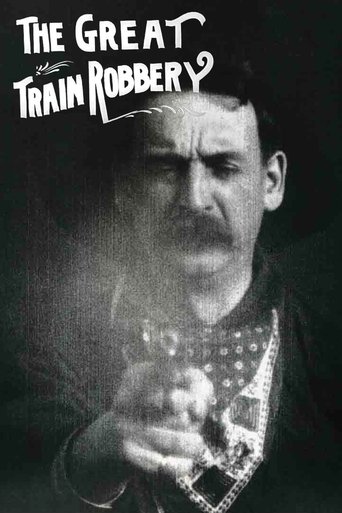
  • The film is directed by Edwin S. Porter, best known for helping establish the language of early narrative film with titles such as The Great Train Robbery.
  • It was made during Porter’s later Edison period, when he was working in a medium that was rapidly moving from actualities and brief skits toward more developed dramatic storytelling.
  • The plot is a cautionary morality tale centered on gambling, responsibility, and the consequences of betraying trust, which was a common dramatic framework in early cinema.
  • The title should not be confused with later films of similar name, especially the 1960s black-comedy/psychological drama The House of Cards.
  • Because surviving documentation for many 1909 Edison films is incomplete, exact release-day publicity and production minutiae are often difficult to verify with certainty.
  • The cast includes Herbert Prior, Mary Fuller, and Marc McDermott, all familiar names in early Edison productions.
  • As an early western-drama hybrid, it reflects the period’s tendency to combine frontier settings with domestic melodrama and moral conflict.
  • Films like this were typically exhibited on programs alongside other shorts, rather than as standalone features.
  • The film is part of the larger body of Porter-directed Edison dramas that helped move American cinema toward more complex continuity storytelling.
  • The surviving synopsis emphasizes the dramatic turning point of the closed bank and the card game, a very economical setup typical of one-reel storytelling.

What Critics Said

Contemporary critical reception is not well documented in surviving mainstream reviews, which is common for many short Edison films from 1909. At the time of release, it would likely have been judged primarily as a solid dramatic program piece rather than singled out as an artistic landmark. Modern critics and historians tend to view it through the lens of Edwin S. Porter’s career and Edison’s studio output, treating it as an instructive artifact of early narrative construction rather than a canonical masterpiece. Its present-day reputation is therefore shaped more by film scholarship, archival interest, and historical context than by a long tradition of popular criticism.

What Audiences Thought

Audience reception is not extensively preserved in surviving records, but the film was made for the nickelodeon-era audience that favored short, straightforward melodramas with clear stakes. The gambling-and-guilt premise would have been easily understood by viewers of the time, and the suspense of whether Tom would face the consequences of losing the rancher’s money likely provided effective dramatic tension. As with many Edison shorts, success would have been measured by reliable exhibition value and audience appetite for fresh program content rather than by individual box-office reporting. Today, its audience is primarily scholars, silent-film enthusiasts, and viewers interested in early American cinema.

Film Connections

Influenced By

  • Stage melodrama
  • Turn-of-the-century moral caution tales
  • Early American western iconography
  • Edison one-reel dramatic shorts

This Film Influenced

  • Later gambling-and-guilt melodramas
  • Early western dramas built around moral conflict
  • Narrative silent shorts that used clear cause-and-effect plotting

Film Restoration

Preservation status is uncertain in public-facing sources; like many 1909 Edison shorts, it is a historically documented silent film that may survive in archival holdings or fragmentary form, but it is not widely circulated in restored commercial editions. Where extant, such films are usually accessible through film archives, research collections, or specialized silent-cinema programs rather than mainstream release. No universally cited modern restoration is commonly associated with the title.

Themes & Topics