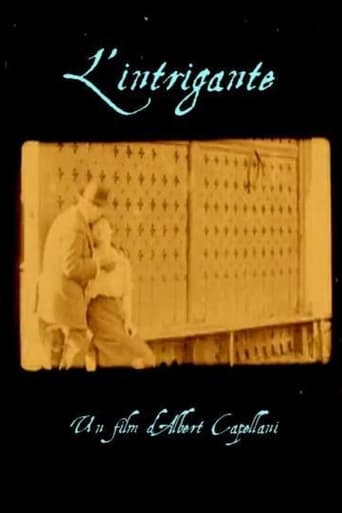
Deadly Idyll
Plot
A young couple in a rural village are separated by the different paths their lives take: she leaves to pursue a career on the stage, while he remains behind in the small community where they grew up. Over the years, time and circumstance transform both of them, widening the emotional distance between the pair and making their earlier bond seem like a memory from another life. Eventually, the man is hired as a porter for a theatrical company and comes face to face with the woman he once loved. She has become a very different person and does not recognize him, turning their reunion into a poignant encounter shaped by memory, loss, and the cruelty of time. The story resolves as a tragic melodrama, emphasizing the emotional cost of ambition, separation, and the way identity can be reshaped by the world.
Director
Albert CapellaniAbout the Production
Deadly Idyll was produced during the formative years of French narrative cinema, when Pathé Frères was one of the dominant forces in European film production and distribution. Like many films of the period, it was made as a short silent melodrama for broad circulation, with emphasis on visual storytelling rather than intertitles or elaborate sets. The film reflects Albert Capellani's early development as a director of emotionally driven dramas and his work within the industrial studio system that Pathé helped standardize. Precise production records such as budget, box office, and exact shooting locations do not appear to survive in readily accessible archival documentation.
Historical Background
Deadly Idyll was made in 1906, a pivotal year in the international development of cinema. In France, Pathé Frères and other studios were rapidly transforming film from a fairground attraction into a structured industrial art form, with standardized production, distribution, and exhibition. This was also the period in which narrative cinema was becoming more sophisticated, with filmmakers increasingly relying on continuity, emotional clarity, and recognizable dramatic types. The film belongs to the silent era before synchronized sound, before feature-length storytelling became the norm, and before critical film culture had fully matured. Its significance lies partly in what it reveals about early cinematic taste: rural innocence, urban performance, class mobility, lost love, and the passage of time were all highly legible dramatic themes for audiences of the day. The story also reflects the cultural fascination with theater as both a glamorous profession and a place of illusion, identity change, and emotional revelation. As an early Capellani film, it helps trace the evolution of a filmmaker who would later become important in the development of more elaborate narrative cinema in France and abroad.
Why This Film Matters
Deadly Idyll is culturally significant primarily as an early example of French melodramatic filmmaking and as part of the broader Pathé output that helped define international silent cinema in the 1900s. Even though it is not a widely known title today, films like this contributed to the grammar of screen melodrama: separation, transformation over time, mistaken or unrecognized identity, and emotional confrontation. These narrative patterns became enduring staples of cinema across many countries and decades. The film is also important because it sits within the career of Albert Capellani, a director later recognized for bringing sophistication to silent narrative form. For scholars of early film, titles such as Deadly Idyll are valuable not only as individual works but as evidence of how quickly cinema developed its own expressive language. In a broader cultural sense, the film captures early 20th-century anxieties and fantasies about social mobility, the allure of the stage, and the fragility of memory and personal identity.
Making Of
Very little behind-the-scenes documentation appears to survive for Deadly Idyll, which is typical for short silent films from 1906. What can be established is that it was made under the Pathé system during a period when the company was producing a large volume of one-reel dramas for domestic and export markets. Albert Capellani was working in a style that prioritized lucid staging, strong emotional situations, and economical narrative movement, all of which fit the production demands of the time. The film's theatrical setting and time-jump structure suggest a production designed to showcase expressive acting and clear visual contrasts rather than elaborate special effects or location work.
Visual Style
The cinematography is characteristic of early French silent drama: static or minimally mobile framing, carefully arranged tableau compositions, and staging that prioritizes legibility over spectacle. Because the film predates later camera mobility and editing complexity, dramatic information is conveyed through the placement and movement of actors within the frame, along with contrasts between rural and theatrical settings. Early 20th-century Pathé productions often used clear, frontal visual presentation so that action could be easily followed by audiences in large exhibition spaces. The film's likely visual strength lies in its contrast between the simplicity of village life and the artificiality of the theater world. That opposition would have been emphasized through costume, props, and performance rather than through sophisticated lighting effects. Even in the absence of detailed surviving production notes, the style can be understood as part of the broader French approach to refined but economical silent storytelling.
Innovations
The film does not appear to be associated with a single famous technical innovation, but it is technically notable as part of the period when French cinema was refining narrative economy and visual clarity. Its time-span structure, moving from youthful separation to later reunion, demonstrates an early use of ellipsis and temporal compression that was still being standardized in screen storytelling. The film also shows the industry practice of producing concise melodramas that relied on strong pictorial composition and readable action. In a broader sense, the technical achievement is less about a specific device and more about the successful translation of a sentimental dramatic premise into silent cinematic terms. That ability to communicate emotion and narrative without dialogue was one of the essential skills being developed by filmmakers like Capellani at the time.
Music
As a silent film, Deadly Idyll had no synchronized recorded soundtrack. Like most films of its era, it would have been shown with live musical accompaniment in theaters, varying by venue, accompanist, and local exhibition practice. No specific original score has been documented in surviving accessible sources. Any music heard in modern presentations would be a later archival or festival accompaniment rather than an original fixed soundtrack.
Memorable Scenes
- The emotional separation of the young lovers as she departs to begin a stage career while he remains in the village.
- The later encounter in which the man, now working as a porter for a theater company, comes face to face with the transformed woman he once loved.
- The recognitionless reunion scene, where the tragedy rests on her failure to identify him and on the visual irony of their shared past.
Did You Know?
- The film is also known by its French title, which is commonly cited in archival references as part of Pathé's early output.
- It was directed by Albert Capellani, who would later become one of the major French filmmakers of the silent era and eventually work in the United States as well.
- The premise centers on theatrical life and transformation, a recurring melodramatic motif in early cinema because it allowed for visual contrast between rural innocence and urban spectacle.
- As a 1906 production, it belongs to the period when films were typically very short and relied on concise visual narrative rather than complex editing patterns.
- The film is associated with Pathé Frères, whose international distribution network helped circulate French films widely in the pre-World War I era.
- Because of its age and short-form production context, detailed contemporary reviews and audience records are scarce compared with later feature films.
- The story's central emotional device is recognition denied by time, a melodramatic convention that was especially effective in silent film storytelling.
- Deadly Idyll is valuable to historians as an example of early narrative clarity in the French studio system, where filmmakers were refining ways to communicate plot and emotion without spoken dialogue.
- The film illustrates how stage performance and cinema were already being linked thematically in early 20th-century popular stories.
- Surviving database references to the film often rely on catalog listings rather than extensive plot documentation, which is common for obscure silent-era shorts.
What Critics Said
Contemporary critical reception is not well documented in surviving sources that are easily accessible today, which is common for obscure short films from 1906. There is no broad record of major review coverage in the manner associated with later feature films, and the film is more often discussed in catalog or archival contexts than in period criticism. Modern critical attention, where it exists, tends to come from historians and silent-cinema scholars who view the film as part of Capellani's early body of work and as a representative Pathé melodrama. Today it is generally assessed as historically interesting rather than as a famous surviving masterpiece. Its value lies in its structure, themes, and production context, and in what it reveals about the development of narrative filmmaking in France. Because the film is obscure and likely seen by relatively few modern viewers, critical reception is largely interpretive and archival rather than review-driven.
What Audiences Thought
Specific audience reaction data from 1906 does not appear to be preserved in accessible records for this title. As a Pathé short melodrama, it was likely intended for broad popular audiences who appreciated emotionally direct stories and visually clear plots. Films of this type were commonly shown as part of programs rather than as standalone attractions, so reception would have been shaped by the surrounding exhibition context as much as by the film itself. Modern audience reception is limited by availability; most viewers today would encounter the film only through archival screenings, silent-film festivals, or specialized online collections if a surviving print is accessible. For contemporary audiences interested in silent cinema, the film's appeal would likely come from its period atmosphere, concise storytelling, and tragic romantic premise.
Film Connections
Influenced By
- Stage melodrama and theatrical melodramas of the late 19th century
- Early French realistic drama traditions
- Pathé's house style of concise silent storytelling
- Popular literary themes of lost lovers and fate-driven reunion
This Film Influenced
- Later silent melodramas using time jumps and unrecognized reunion plots
- Subsequent films about performers returning to former lives and identities
You Might Also Like
More Drama Films
View allMore from Albert Capellani
View allFilm Restoration
Preservation status is uncertain in accessible public references; the film is obscure, and detailed modern holdings information is not readily documented. It may survive in archival form, but it is not widely available and is not commonly known as a regularly screened or restored title. If a print exists, it is most likely held by a film archive rather than in commercial circulation.