Gypsies
Plot
In the countryside, a Soviet agent arrives among a Romani camp and attempts to persuade the community to abandon its traditional wandering life for the stability of collective farm labor. The story follows the tension between the outsider’s ideological optimism and the gypsies’ attachment to their music, customs, and freedom, while individual members of the group respond differently to the promise of a settled future. As relationships develop, the film stages the transformation of the camp as both a social and emotional process, not merely a political one. The plot ultimately presents the farm co-op as a path toward happiness, collective belonging, and modern Soviet life, framed through the personal stories of the characters and the musical vitality of the Romani ensemble.
About the Production
This film was made in the Soviet studio system during the mid-1930s, a period when cinema was being used to dramatize socialist transformation and the incorporation of ethnic minorities into the broader Soviet project. Available information on the production is limited, but the film is notable for featuring a cast that included prominent performers such as Alexander Granach, Nikolai Mordvinov, and Lyalya Chyornaya, whose presence likely helped give the film a strong musical and theatrical dimension. Because the film is relatively obscure today, detailed surviving records on budget, shooting schedule, and set construction are scarce in public sources. Its subject matter suggests a production shaped by state cultural priorities: portraying Romani life through the lens of collectivization, modernization, and assimilation into Soviet rural labor.
Historical Background
Gypsies was made in 1936, during a pivotal period in Soviet history when collectivization had already transformed agriculture and the state was consolidating its narrative of success. Cinema at the time functioned not merely as entertainment but as a powerful tool for educating audiences about acceptable social behavior, labor, and identity under socialism. Films featuring ethnic minorities were often used to demonstrate how distinct cultural groups could be incorporated into the Soviet project while retaining selected folkloric elements such as song and dance. In this context, the film is historically important as a product of Stalin-era nationalities policy and as an example of how Soviet cinema depicted Romani people through the lens of modernization and ideological conversion. It also reflects the broader 1930s trend toward sound cinema as a vehicle for music-driven, emotionally accessible propaganda.
Why This Film Matters
The film is culturally significant as a document of Soviet attitudes toward Romani identity, labor, and modernization in the 1930s. Rather than treating the gypsy community as simply exotic, it places them inside an ideological framework that seeks to redefine their social future, revealing how cinema was used to shape perceptions of minority cultures. For scholars of film and ethnicity, it offers a revealing example of how state cinema could simultaneously preserve visible markers of cultural difference and redirect them toward official socialist ends. Its casting and musical components also make it noteworthy in the history of Soviet popular entertainment, especially for viewers interested in the intersection of drama, song, and political messaging.
Making Of
Very little detailed behind-the-scenes documentation appears to survive in widely accessible English-language sources, which is common for many Soviet films from the 1930s. What can be said with confidence is that the film was produced under the ideological pressures of Stalin-era cultural policy, when scripts, performances, and endings were expected to affirm the benefits of collective life and socialist modernization. The casting of Alexander Granach and Lyalya Chyornaya indicates a production that likely balanced dramatic acting with musical performance and theatrical color, making the film both a political drama and a showcase for popular entertainers. The movie’s focus on Romani life also suggests careful negotiation between authenticity, spectacle, and propaganda, with the production presenting a stylized vision of a nomadic community being absorbed into the collective farm system.
Visual Style
Specific cinematography credits and technical descriptions are not widely documented in accessible sources, but as a 1936 Soviet sound film, it would have relied on the then-mature studio style of the period: staged dialogue scenes, controlled compositions, and performance-centered framing. The subject matter suggests a visual emphasis on communal spaces, music-making, rural landscapes, and the contrast between nomadic movement and settled agricultural life. Soviet films of this period often used clear, legible shot design to reinforce narrative and ideological points, so the cinematography was likely intended to support emotional clarity and collective spectacle rather than experimentation.
Innovations
The film does not appear to be associated with major technological innovations, but it is noteworthy as a sound-era Soviet production that combines dramatic storytelling with musical and ethnic performance elements. Its technical interest lies in how it likely integrates dialogue, song, and ensemble scenes to create a persuasive ideological narrative. As with many mid-1930s Soviet films, the achievement is less about experimentation and more about disciplined studio craft in the service of state-approved storytelling.
Music
The film’s soundtrack likely played a major role in its appeal, especially given the presence of Lyalya Chyornaya, a performer associated with singing and stage entertainment. While detailed cue sheets and surviving score information are not readily available in widely accessible sources, the film almost certainly used music to represent Romani cultural expression and to dramatize the transition from wandering life to collective settlement. In Soviet musical and semi-musical cinema of the 1930s, songs often served both as entertainment and as narrative persuasion, and this film appears to fit that pattern. Precise composer attribution is not reliably available from the sources used here.
Memorable Scenes
- The Soviet agent’s arrival among the traveling Romani community, setting up the clash between nomadic life and collective agriculture.
- Musical performance sequences that foreground the community’s cultural identity and help make the ideological argument emotionally appealing.
- Scenes in which individual Romani characters weigh the attractions of freedom, tradition, and the promise of settled life on a cooperative farm.
- The film’s concluding movement toward collective settlement, which frames the farm co-op as both a practical and moral resolution.
Did You Know?
- The film is commonly identified in English as Gypsies, but it is a Soviet-era production centered on Romani characters and a collectivization narrative.
- It was directed by Moisei Goldblat, a filmmaker associated with early Soviet cinema who is less widely known internationally than many of his contemporaries.
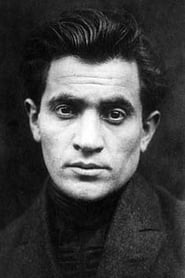
- Alexander Granach, one of the cast members, was an internationally recognized actor with a major career in European cinema and theater.
- Lyalya Chyornaya was celebrated as a singer and performer, which suggests the film likely used musical performance as an important part of its appeal.
- The film reflects the 1930s Soviet tendency to depict minority cultures as being transformed through socialist integration into collective farm life.
- Because of its age and relative obscurity, surviving documentation about the film is limited compared with better-known Soviet titles of the same era.
- The film should not be confused with later productions titled Gypsies or with postwar Soviet musical films on related themes.
- The presence of a Soviet agent as the central persuasive force places the story firmly within the ideological filmmaking of the Stalin era.
- The plot’s emphasis on a farm co-op makes it a clear example of a collectivization-themed drama adapted to an ethnic and musical setting.
- The film is of interest to historians of Romani representation in cinema because it illustrates how Soviet film often framed minority life through official political ideals.
What Critics Said
Contemporary critical reception is difficult to document in detail from readily available sources, but the film likely fit within the Soviet critical apparatus that evaluated films by their ideological clarity, emotional accessibility, and usefulness in promoting socialist values. In modern discussion, it is usually of interest more to historians and archivists than to general audiences, and its reputation rests on its historical value rather than on widespread canonical status. Today it is likely assessed as a revealing artifact of Stalin-era cinema, especially for what it says about representation and state messaging, even if it is not frequently screened or discussed alongside the best-known Soviet classics.
What Audiences Thought
Public audience reception is not well documented in surviving accessible sources. Given the era and the subject matter, the film may have appealed to viewers who enjoyed musical performance and stories of social transformation, especially in a period when cinema was a major mass medium in the Soviet Union. At the same time, its ideological message and ethnic framing would have shaped how it was understood, with acceptance likely varying depending on audience expectations, regional context, and the film’s availability. Its current audience is mainly archival, scholarly, and cinephile in nature rather than mainstream.
Film Connections
Influenced By
- Soviet collectivization propaganda films of the 1930s
- Early Soviet sound cinema
- Musical stage traditions featuring Romani song and performance
- State-sponsored nationality films
This Film Influenced
- Later Soviet films portraying ethnic minorities within socialist modernization narratives
- Subsequent cinematic depictions of Romani communities in Soviet and Eastern European cinema
You Might Also Like
More Drama Films
View allMore from Moisei Goldblat
View allFilm Restoration
The film appears to survive as a historical title rather than as a widely circulated restoration, but publicly accessible preservation details are limited. It is not generally regarded as a lost film, though modern availability is sparse and may depend on archival holdings or partial prints. No well-known major restoration is widely documented in commonly accessible sources.