Also available on: Wikimedia
Sasha

Sasha

1930 Soviet Union
Female suffering and resilienceMemory and confessionSocial hardshipTragedy and fateCrime and moral consequence

Plot

A Russian woman named Sasha recounts the tragic course of her life, framing the film as a retrospective confession shaped by sorrow, memory, and loss. Her story unfolds as a chain of personal misfortunes and emotional betrayals that push her toward suffering rather than redemption, with the narrative emphasizing how private pain can become inseparable from the social conditions surrounding it. The film follows her experiences through a stark, emotionally charged drama structure, allowing the audience to see how class, gender, and circumstance trap her in a downward spiral. Rather than presenting a straightforward melodrama, the film uses Sasha’s testimony to create a somber portrait of a woman whose life is defined by hardship and the consequences of a cruel world. The tragic arc is less about a single event than about the cumulative weight of suffering that shapes her identity and destiny.

About the Production

Release Date 1930
Production Sovkino
Filmed In Soviet Union

This early Soviet sound-era production is associated with director Alexandra Khokhlova, one of the important women working in Soviet cinema in the transition to sound. The film is notable as a compact dramatic work from the late silent/early sound period, when Soviet filmmakers were experimenting with new storytelling possibilities while still drawing on expressive silent-era performance and montage traditions. Detailed production records are scarce, which is typical for many Soviet films of this era, so information about budget, exact shooting locations, and specific release roll-out is limited. The film is generally discussed as a historical item from the Soviet studio system rather than as a widely circulated commercial release. Because surviving documentation is incomplete, some production details remain uncertain and should be treated cautiously.

Historical Background

Sasha was produced in 1930, a pivotal year in Soviet history and Soviet cinema. The Soviet Union was entering the first Five-Year Plan era, with culture increasingly shaped by ideological consolidation, industrialization, and the state's growing interest in art as a tool of social education. In film, this was also the transitional moment between the late silent period and the emergence of sound cinema, creating both artistic excitement and technical uncertainty. Directors were navigating new expectations for realism, narrative clarity, and ideological legibility while also experimenting with the emotional and expressive possibilities of sound. As a 1930 Soviet drama, Sasha sits at the intersection of these historical pressures, reflecting both the social turbulence of the period and the evolving language of Soviet screen storytelling.

Why This Film Matters

The film’s importance lies less in broad popular recognition than in its place within early Soviet cinema and women’s film history. Alexandra Khokhlova’s directing career makes the film valuable to scholars interested in the presence and contributions of women behind the camera in a field dominated by men. Its focus on a Russian woman recounting her tragic life fits into a larger cinematic tradition of female suffering and social critique, but within the Soviet context that suffering often carried implicit commentary on class, morality, and the conditions of everyday life. The film also represents the fragile survival of many early Soviet works that are known today primarily through archival records rather than widespread circulation. For historians, Sasha is significant as a reminder that Soviet cinema of 1930 included intimate, character-driven tragedies alongside the more famous ideological and avant-garde works.

Making Of

Very little detailed behind-the-scenes documentation survives in widely accessible English-language sources for Sasha, which is common for many Soviet films from 1930. What is clear is that the film was made during a period of intense formal transition, when Soviet studios were learning how to incorporate sound while still relying on the expressive visual techniques established in silent cinema. Alexandra Khokhlova’s involvement is especially significant, because women directors were uncommon in world cinema at the time and even rarer in the Soviet studio system. The film likely required balancing dialogue, performance, and visual composition in a way that preserved emotional intensity while meeting the technical demands of the new era. The scarcity of surviving production notes suggests that the film may not have been among the most heavily promoted Soviet releases of its year, but it remains important as an artifact of its moment.

Visual Style

Specific cinematographer credit and shot-by-shot visual analysis are not widely documented in accessible sources, but the film is best understood within the visual culture of late silent and early sound Soviet cinema. Films from this moment often retained strong emphasis on expressive framing, controlled performance, and composition even as sound technology changed production methods. Given the tragic subject matter, the cinematography likely supports a somber, intimate mood through restrained staging and emotionally weighted close-ups or tableau-like blocking. The film’s visual style would have been shaped by studio-era Soviet aesthetics, which often balanced realism with highly organized dramatic composition. Any surviving prints or fragments, if accessible, would be especially valuable for examining how early sound-era Soviet filmmakers integrated performance and image.

Innovations

The main technical significance of Sasha lies in its place in the early sound transition rather than in any single documented innovation. Soviet filmmakers in 1930 were adapting to synchronized sound under difficult industrial conditions, and films from this period are historically important for showing how directors negotiated changing production methods. The film’s value may also lie in the continuity it preserves with silent-era acting and visual storytelling, even as sound increasingly changed cinematic language. As an Alexandra Khokhlova film, it also contributes to the record of women shaping technical and artistic decisions in an era when that was unusual. Any further technical achievements would require archival verification from surviving elements or production documents.

Music

No reliably documented original composer or soundtrack details are readily available in commonly accessible sources. As an early Soviet sound-era film, Sasha may have included dialogue and possibly period-typical musical accompaniment or score elements, but specific information about its music has not been firmly established in the available record. If a modern archive screening uses an accompaniment, it may be a later reconstruction rather than the original theatrical presentation. Because soundtrack documentation for many films of this era is incomplete, the safest conclusion is that the original music information is currently unavailable or unverified. Researchers should consult archival prints or Soviet film catalogs for more exact soundtrack credits.

Famous Quotes

No reliably documented surviving quotes are readily available for this film.
Because accessible dialogue records are limited, no verified famous lines can be confidently listed.

Memorable Scenes

  • Sasha’s central confessional framing, in which she tells the tragic story of her own life, defines the film’s emotional architecture.
  • The sequence(s) in which her suffering accumulates into a devastating personal tragedy serve as the film’s dramatic core.
  • The film’s confrontations and reversals likely function as key melodramatic set pieces, though specific scene descriptions are not well documented in surviving public summaries.

Did You Know?

  • Sasha is directed by Alexandra Khokhlova, making it part of the relatively small body of early Soviet films directed by a woman.
  • The film belongs to the early sound-era period in Soviet cinema, when filmmakers were adapting rapidly to synchronized sound and new production practices.
  • It is a drama-crime hybrid, though its reputation is more closely tied to its tragic psychological and social melodrama than to conventional crime storytelling.
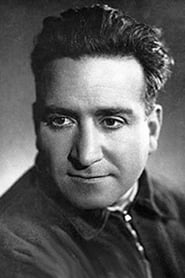
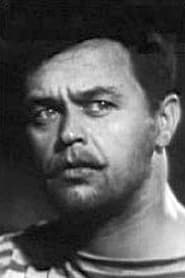
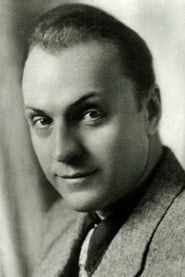
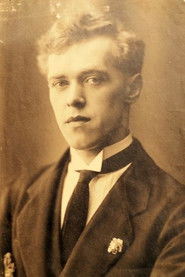
  • The cast includes Mariya Sapozhnikova, Pavel Ilyin, and Andrey Fayt, all associated with Soviet screen acting of the period.
  • The film is often described in catalog records by its premise rather than by detailed plot documentation, suggesting that surviving publicity and synopsis materials are limited.
  • Because it is a vintage Soviet film, it is of interest to historians studying women filmmakers, early Soviet sound cinema, and transitional-era screen melodrama.
  • The title Sasha is a common Russian diminutive, which gives the film a personal and intimate tone despite its tragic subject matter.
  • The film is connected to the broader Soviet tradition of socially inflected drama, where personal suffering often reflects structural hardship.

What Critics Said

Contemporary critical documentation for Sasha is limited in surviving English-language references, so its reception at the time cannot be described in detail with confidence. The film does not appear to have achieved the wide canonical status of the best-known Soviet masterpieces of the era, and later critical attention has been modest, largely confined to archival listings and historical film scholarship. Modern interest tends to focus on Alexandra Khokhlova’s authorship, the film’s place in early sound-era Soviet production, and its survival status rather than on a large body of review writing. In that sense, the film is better understood today as a historically valuable title than as a frequently reassessed classic. Where it is discussed, the emphasis is usually on its rarity and its contribution to the record of early Soviet drama.

What Audiences Thought

Detailed audience-response records are not readily available for this film, and it is unlikely to have had a large surviving popular reception history outside its original Soviet release context. As with many films from 1930, especially those that were not distributed internationally on a major scale, audience reactions were probably shaped by local exhibition conditions and the shifting expectations of early sound cinema. Because the film is now obscure and rarely screened, contemporary audiences encounter it primarily through archives, retrospectives, or film-historical databases rather than through mainstream revival circulation. Its modern audience appeal is therefore specialized, attracting viewers interested in Soviet film history, women directors, and early cinema preservation.

Film Connections

Influenced By

  • Soviet social melodrama
  • Late silent-era expressive drama
  • Early sound cinema traditions
  • Literary confession narratives

This Film Influenced

  • No specific later films are securely documented as being directly influenced by Sasha
  • Later Soviet women-directed films in historical scholarship may be discussed in relation to it

Film Restoration

The film appears to survive in archival record and catalog references, but widely accessible preservation and restoration details are not clearly documented in available sources. It should be treated as a rare early Soviet title with limited circulation and incomplete public documentation rather than as a frequently screened restored classic.

Themes & Topics

Russian womantragic life storyconfessionmelodramacrime dramaSoviet tragedy