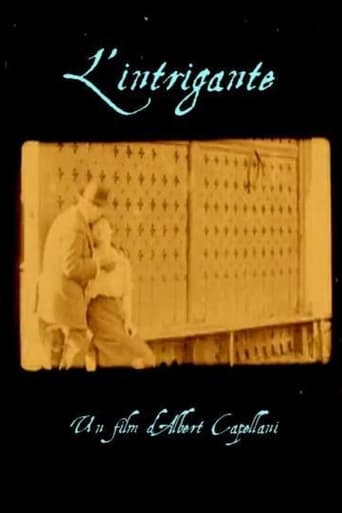
The Wrestler's Wife
Plot
In this brief early melodrama, a wife becomes increasingly anxious about the dangerous profession of her husband, a career wrestler whose livelihood depends on physical contest and public performance. Her fears are rooted not only in the violence of the sport, but also in the emotional strain of watching a loved one put his body at risk for money and status. As the story unfolds, her worry deepens into desperate concern, making the domestic sphere and the public arena collide in a compact tragedy of love, labor, and vulnerability. The film’s plot is simple and direct, typical of a one-reel dramatic short of the period, but it is structured to emphasize the emotional perspective of the wife rather than the spectacle of wrestling itself.
Director
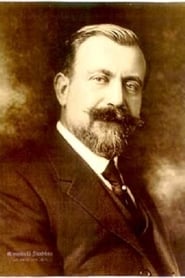
Albert CapellaniAbout the Production
The Wrestler's Wife was produced as an early French silent short under the Pathé banner during the era when the company was rapidly expanding its dramatic output for international distribution. Like many films from 1906, it was likely staged in a controlled studio environment with painted sets and theatrical blocking rather than on-location realism, reflecting the production practices of the time. The film is notable mainly for its association with Albert Capellani, who would later become one of the important directors of French silent cinema. Detailed production records, including exact budget figures, camera setups, and cast details, do not appear to survive in readily accessible contemporary sources, which is common for films of this period.
Historical Background
The Wrestler's Wife was made in 1906, at a time when cinema was transitioning from a novelty attraction toward a more established narrative entertainment medium. In France, companies like Pathé were central to this transformation, producing a huge volume of films that helped standardize conventions of editing, melodrama, and genre storytelling for audiences across Europe and beyond. The film belongs to an era before feature-length cinema became dominant, so its drama had to be compressed into a short running time, often relying on immediately legible social situations and emotional conflict. Its focus on a wife worried about her husband’s dangerous labor also reflects early twentieth-century anxieties about modern work, bodily risk, and the fragility of family life in a rapidly industrializing society.
Why This Film Matters
While not widely known today, The Wrestler's Wife is culturally significant as a surviving example of early French melodrama and of Albert Capellani's pre-feature-era work. It illustrates how silent cinema quickly developed the ability to tell intimate domestic stories that resonated with audiences through visual clarity alone. The film also reveals how early movies used recognizable professions, such as wrestling, to create immediate dramatic stakes without elaborate exposition. For scholars of silent cinema, it contributes to the understanding of Pathé’s production model and the evolution of cinematic narrative before the feature film became the dominant form.
Making Of
Very little detailed behind-the-scenes documentation is readily available for The Wrestler's Wife, which is typical for a 1906 short silent film. It was made during a period when Pathé was operating on an industrial scale, producing large numbers of films for domestic and export markets, and directors like Capellani worked within a fast-moving system of short-form production. The film likely relied on stage-like acting, succinct visual storytelling, and modest set construction, with emphasis on clear emotional beats rather than elaborate spectacle. Any casting, rehearsal, or exact shooting details have not been widely preserved in accessible surviving sources, so most reconstruction depends on knowledge of Pathé production practices and the film’s surviving catalog description.
Visual Style
The film was likely photographed in the clear, frontal style typical of early Pathé dramas, with the camera relatively stationary and action staged in depth for easy legibility. Early Capellani films often emphasize composed tableaux, expressive blocking, and strong silhouette-based reading of character relationships rather than rapid cutting. Because of the limitations of the period, visual storytelling would have depended on gesture, facial expression, and arrangement within the frame to convey the wife’s anxiety and the husband’s peril. The cinematography would thus have served narrative clarity and emotional immediacy over stylistic flourish.
Innovations
The film does not appear to be associated with a specific technical breakthrough, but it is representative of the sophisticated short-form narrative technique being developed in French cinema by Pathé in the mid-1900s. Its achievement lies in concise storytelling: a domestic emotional conflict is communicated quickly and clearly within a very short runtime. As part of Capellani’s early work, it also belongs to the body of films that helped refine acting, staging, and visual economy before feature-length filmmaking fully matured. The film’s value is historical rather than technological, illustrating how early cinema was mastering dramatic presentation.
Music
As a silent film from 1906, The Wrestler's Wife originally had no synchronized recorded soundtrack. It would have been exhibited with live musical accompaniment, likely provided by a pianist or small ensemble depending on the venue and market. No original score is known to survive, and no standardized cue sheet is widely documented for this title in accessible sources. Modern screenings, if they occur, may use archival accompaniments or newly commissioned music.
Memorable Scenes
- The wife’s repeated expressions of worry as she contemplates the risks of her husband’s wrestling career.
- The contrast between the intimate domestic setting and the public, physically dangerous world of professional wrestling.
- The emotional climax in which the wife’s fear and helplessness are foregrounded as the drama reaches its conclusion.
Did You Know?
- The film dates from the very early years of narrative cinema, when one-reel dramas were among the most common commercial formats.
- Albert Capellani is the credited director, and he would later become one of the major figures in French silent filmmaking.
- The subject matter reflects early cinema’s interest in domestic melodrama and occupational danger, both popular story elements in the 1900s.
- As a 1906 short, it would almost certainly have been presented without synchronized sound and with live musical accompaniment, as was standard for the era.
- The film survives in filmographic records under the English title The Wrestler's Wife and the original French-language production context of Pathé.
- Because it is an early silent short, plot information is extremely sparse and often limited to summary references rather than detailed continuity descriptions.
- The wrestling profession in early film often served as a shorthand for masculinity, spectacle, and physical risk, which likely informed the film’s dramatic tension.
- Films of this type were often distributed widely and internationally by Pathé, helping establish standardized melodramatic storytelling across markets.
What Critics Said
Contemporary critical reception is not well documented in accessible modern sources, and surviving reviews for this specific short are not readily available. Like many Pathé films of the period, it was probably reviewed, if at all, in trade contexts more for its production value, novelty, and dramatic clarity than for auteurist qualities. Modern assessment is likewise limited by the scarcity of detailed surviving print history and the film’s short, transitional nature, but it is valued by historians as part of Albert Capellani’s early body of work and as a representative example of 1900s melodrama. Its importance is therefore primarily historical rather than based on a large critical canon.
What Audiences Thought
There is no robust surviving audience-response record specific to the film, which is common for silent shorts from this period. In 1906, audiences generally favored compact melodramas with clear emotional premises, and a story about a wife fearing for a wrestler husband would have been easy to understand across language barriers. Pathé’s international distribution system suggests the film was intended for broad commercial appeal rather than elite prestige exhibition. Any specific box-office performance or audience numbers appear to be unavailable in surviving documentation.
Film Connections
Influenced By
- Stage melodrama traditions of the late 19th century
- Early French theatrical-style short films
- Pathé’s commercial dramatic shorts
- Popular stories centered on labor, spectacle, and family conflict
This Film Influenced
- Early domestic melodramas in silent cinema
- Later sports-and-family dramas that contrast public performance with private life
- French serial and feature melodramas developed by Albert Capellani and his contemporaries
You Might Also Like
More Drama Films
View allMore from Albert Capellani
View allFilm Restoration
The film is not widely documented as a complete surviving title in mainstream home-video circulation, and preservation details are limited in readily accessible sources. It appears to be one of the early Pathé shorts known primarily through filmographic records, with unclear public availability today. If extant, it is likely preserved in an archival collection rather than broadly distributed, but a definitive restoration or release history is not well documented in accessible references.