1921 · 88 minutes

Also available on: Archive.org
Journey into the Night

Journey into the Night

1921 88 minutes Germany
Temptation and moral downfallDesire versus dutyPsychological obsessionBetrayal and jealousyIllness, vulnerability, and dependency

Plot

Dr. Egil Börne is an eminent physician whose orderly life is disrupted when he becomes infatuated with a cabaret dancer who is already tied to a darker, more manipulative world. Drawn away from his fiancée and his professional duties, he follows her into a morally compromised sphere that exposes the fragility of his self-control and the destructive force of desire. The film develops as a psychological melodrama in which love, jealousy, and obsession intertwine with illness, deception, and emotional betrayal. Among the most memorable figures is a sinister blind painter, played by Conrad Veidt, whose eerie presence adds a haunting, almost pre-Nosferatu atmosphere to the story. In the end, the film charts not only the collapse of a man under the spell of temptation, but also the tragic costs exacted on those around him by passion and weakness.

About the Production

Release Date 1921-10-14
Production Decla-Bioscop
Filmed In Germany

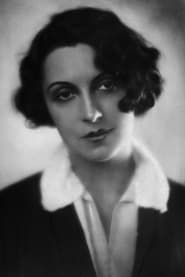
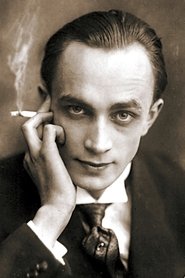
Journey into the Night (Der Gang in die Nacht) is notable as the earliest surviving feature film directed by F. W. Murnau, making it a crucial document for understanding the development of his visual style before Nosferatu and The Last Laugh. It is also unusual among Murnau’s surviving work because the original camera negative is extant, a rarity for a film of this period. The production belongs to the German silent-film tradition of the early Weimar years, when psychological melodrama and stylized expression were becoming increasingly prominent. Contemporary documentation on exact budgeting, detailed shooting locations, and full production logistics is limited, which is common for German films of the early 1920s. The film’s cast includes Olaf Fønss, Erna Morena, and Conrad Veidt, all significant performers in early European cinema.

Historical Background

Journey into the Night was made in 1921, in the immediate aftermath of World War I, during a period when Germany was grappling with political instability, economic strain, and the cultural upheaval of the early Weimar Republic. German cinema of this moment became one of the most innovative in the world, in part because filmmakers used stylization, psychological drama, and symbolic imagery to express social unease and inner turmoil. The film’s story of a respected professional undone by desire fits squarely within the era’s fascination with fractured identity, temptation, and moral collapse. It matters historically because it shows Murnau moving toward the refined visual storytelling that would culminate in Nosferatu and later films, while also preserving a key example of the sophisticated melodramatic cinema that helped define Weimar culture. Its surviving negative makes it a rare artifact from a largely lost cinematic landscape, offering direct evidence of how early 1920s German films were constructed and photographed.

Why This Film Matters

The film is significant as an early milestone in F. W. Murnau’s career and as one of the surviving links between German silent melodrama and the later prestige of Weimar-era cinema. Its narrative of temptation by a cabaret dancer resonates strongly with the broader cultural iconography of Weimar Berlin, where nightlife, sexuality, and moral anxiety became defining themes in film and literature. Conrad Veidt’s blind painter role has become especially notable because it exemplifies the eerie, stylized performance traditions that would shape German screen acting and influence horror cinema internationally. As one of the few Murnau films to survive intact, it is also culturally important for preservation history, helping define how scholars understand the evolution of one of cinema’s most influential directors. The film contributes to the lineage of psychological melodrama that would echo through later European and Hollywood films, including nightclub, femme fatale, and obsession narratives.

Making Of

Journey into the Night was produced during a formative moment in Murnau’s career, before he had fully established the expressionist and psychological style for which he later became famous. The film belongs to the Decla-Bioscop production environment that fostered ambitious German silent films in the early Weimar era, and it reflects the industry’s growing interest in sophisticated adult melodrama. While detailed records about shooting challenges and day-to-day production are sparse, the film’s survival in unusually strong material form has made it a favorite of archivists and historians. Its existing original negative has helped preserve a level of clarity that is rare for a 1921 feature, allowing modern viewers to study Murnau’s use of composition, lighting, and visual mood with greater precision. The casting of Conrad Veidt, already an imposing screen presence, gives the film an additional layer of historical significance because his role anticipates the sinister, uncanny performances that would become central to German cinema’s international reputation.

Visual Style

The cinematography is notable for its restrained but evocative silent-era visual design, favoring mood, psychological tension, and carefully arranged compositions over overt spectacle. Murnau’s early command of framing and tonal contrast can already be seen in the film’s handling of interiors, faces, and the emotional separation between characters. The visual style leans toward subtle expressionism rather than heavily distorted sets, creating an atmosphere that is ominous without becoming abstract. Conrad Veidt’s blind painter scenes are especially memorable for their uncanny effect and suggestive use of shadow and gesture. Because the original negative survives, modern viewers can appreciate the film’s photographic textures and spatial clarity more fully than is possible with many films of the period.

Innovations

The film’s most significant technical distinction is preservation-related: it is the earliest surviving Murnau feature and the only one known to survive from the original camera negative. This gives it exceptional value for studying early-1920s German production techniques, photographic quality, and editing patterns. Artistically, it shows Murnau already using cinematic space and visual rhythm to externalize emotion, a technique that would become central to his later work. While not known for a single groundbreaking effect, it represents an important step in the refinement of German psychological melodrama and the expressive silent-film style that influenced European cinema broadly. The presence of carefully staged dramatic scenes, controlled performance style, and atmospheric visual composition marks it as a sophisticated transitional work in the director’s career.

Music

As a 1921 silent film, Journey into the Night was originally screened with live musical accompaniment rather than a fixed synchronized soundtrack. No single universally standard original score is widely documented in current sources, and accompaniment would have varied by venue and later revival presentation. Modern screenings may use reconstructed, newly composed, or archival silent-film scores depending on the distributor or archive. The film’s emotional impact depends heavily on the music chosen for exhibition, especially in scenes of seduction, psychological unease, and tragic separation.

Famous Quotes

No widely documented intertitles are consistently cited in major reference sources for this film.
Original dialogue/intertitle text is not comprehensively standardized across surviving prints and restorations.

Memorable Scenes

  • The first appearances of the cabaret dancer, which establish her as a seductive, destabilizing presence in the physician’s life.
  • Conrad Veidt’s entrance as the blind painter, a moment remembered for its eerie atmosphere and visual foreboding.
  • The scenes in which Dr. Egil Börne abandons his fiancée and is increasingly isolated by his fixation.
  • The film’s emotionally charged interiors, where social respectability begins to fracture under the pressure of desire.
  • The climactic resolution of the triangle, which underscores the tragic consequences of obsession and betrayal.

Did You Know?

  • It is the earliest surviving film directed by F. W. Murnau, making it especially important to scholars of silent cinema.
  • The film is also the only Murnau title for which the original camera negative is known to survive.
  • Conrad Veidt appears in a supporting role as a blind painter, an eerie characterization that foreshadows the atmosphere associated with Murnau’s later horror work.
  • The film’s plot of a respected man seduced away from duty by a cabaret performer anticipates motifs that would recur in Weimar cinema, including The Blue Angel.
  • Because many early Murnau films are lost or fragmentary, Journey into the Night occupies an unusually prominent place in his surviving body of work.
  • It demonstrates an early stage of the director’s interest in psychological deterioration, moral ambiguity, and visual symbolism.
  • The film’s title is often rendered in English as Journey into the Night, but the original German title is Der Gang in die Nacht.
  • Its survival allows historians to trace visual and thematic links between Murnau’s pre-Nosferatu work and his later masterpieces.
  • The cast pairs Olaf Fønss and Erna Morena in a melodramatic triangle structured around temptation and sacrifice, a familiar but influential silent-era setup.
  • The presence of Conrad Veidt adds historical interest because he was one of the most internationally recognized actors of German silent cinema.

What Critics Said

Contemporary reception details are not extensively documented in widely available sources, but the film was part of the early 1920s German artistic cinema tradition that was increasingly recognized for visual sophistication and psychological depth. In retrospect, critics and historians value it far more as a key surviving Murnau film than as a frequently discussed standalone title. Modern critical assessment often emphasizes its place in the director’s development, its atmospheric imagery, and the way it previews motifs and visual strategies later refined in Nosferatu and The Last Laugh. It is also praised for the importance of its preservation: because so much of Murnau’s early work is lost, the film offers unusually direct evidence of his emerging style. Today it is generally regarded as a major archival and historical artifact, even if it is not as famous among general audiences as Murnau’s later masterpieces.

What Audiences Thought

There is limited detailed audience-response documentation from the film’s original 1921 release, which is typical for silent-era German productions outside the biggest prestige titles. Among modern silent-film enthusiasts, archivists, and Murnau admirers, however, the film is highly regarded as an essential viewing experience because of its preservation status and its position in the director’s oeuvre. Contemporary audiences who encounter it often respond to its somber mood, its refined performances, and the uncanny presence of Conrad Veidt. It is more often appreciated today in repertory screenings, film archives, and restorations than in broad popular exhibition. For many viewers, its value lies in seeing an early form of Murnau’s storytelling language take shape on screen.

Film Connections

Influenced By

  • German melodrama of the early Weimar period
  • Expressionist tendencies in postwar German cinema
  • Cabaret and nightlife imagery associated with urban modernity
  • Psychological literary dramas concerned with obsession and moral collapse

This Film Influenced

  • The Blue Angel (1930)
  • Early Weimar-era cabaret melodramas
  • Later psychological melodramas centered on temptation and downfall
  • German horror and uncanny-character cinema associated with Murnau and Veidt

Film Restoration

Preserved; it survives and is especially important because the original camera negative is extant. As one of Murnau’s earliest surviving works, it is an archival priority and has appeared in preserved and restored forms for modern viewing.

Themes & Topics