Lagourdette, gentleman cambrioleur
Plot
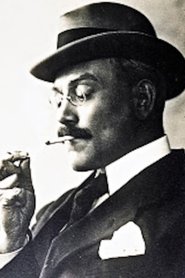
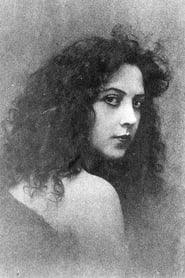
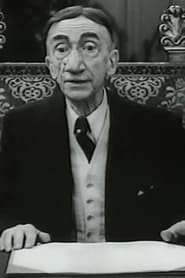
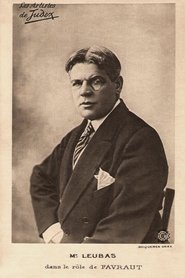
Lagourdette, gentleman cambrioleur is a short, self-aware comic film in which Louis Feuillade turns the familiar world of criminal adventure into a playful parody of his own screen persona and his earlier serials. Rather than building suspense around a serious master thief, the film treats the would-be gentleman burglar as a figure of light farce, with misunderstandings, teasing reversals, and an amused tone that invites the audience to laugh at genre conventions. Musidora and Marcel Lévesque participate in the comic game, helping Feuillade stage a meta-fictional sketch that lightly mocks the elaborate criminal melodramas associated with his name. The result is less a conventional narrative than a witty theatrical vignette, a compact satire of the “gentleman thief” type that Feuillade had helped popularize in French cinema.
About the Production
This film was made at Gaumont during the First World War, when Feuillade was producing a remarkable range of shorts and serial-related material for the studio. It appears to have been conceived as a playful comic sketch rather than a prestige production, which fits its compact scale and self-reflexive humor. The participation of Musidora and Marcel Lévesque is notable because both were closely associated with Feuillade’s world of screen villains, crooks, and theatrical intrigue, and their presence strengthens the film’s parody of those very traditions. As with many French silent productions of the period, detailed production records are sparse, so information about exact shooting locations, budget, and box office is not securely documented.
Historical Background
The film was produced in France in 1916, in the midst of the First World War, when the national film industry was under strain but still remarkably productive. French cinema in this period had to navigate disruptions caused by wartime mobilization, shortages, and changing audience expectations, while also sustaining public appetite for entertainment. Louis Feuillade remained one of Gaumont’s most important directors, and his work from this era reflects both continuity with prewar serial traditions and an increased interest in lighter, sometimes more reflexive material. Lagourdette, gentleman cambrioleur matters historically because it shows Feuillade not simply as the creator of dark serial mythology, but as a filmmaker capable of parodying the conventions he helped establish.
Why This Film Matters
Although not as widely known as Feuillade’s major serials, the film is culturally significant as an early example of cinematic self-parody within a popular genre framework. It demonstrates that silent-era filmmakers were already experimenting with meta-fictional humor, using recognizable stars and established formulas to comment on their own successes. For students of Feuillade, the film helps broaden the understanding of his artistry beyond crime melodrama and reveals a playful side of his relationship to audience expectations. Its preservation in film history databases also contributes to the broader recognition of short-form silent comedy as an important part of early twentieth-century screen culture.
Making Of
Lagourdette, gentleman cambrioleur belongs to a phase of Louis Feuillade’s career in which he was balancing the demands of popular serial filmmaking with shorter comic projects for Gaumont. The film’s most interesting behind-the-scenes feature is its meta-casting: Feuillade brings in familiar collaborators, including Musidora and Marcel Lévesque, and uses them to poke fun at the very criminal-romantic atmosphere in which they often appeared. That choice suggests a level of self-awareness uncommon in early silent popular cinema, especially in a director so closely identified with crime and suspense. Exact production records are limited, but the film’s brevity and comedic intent indicate a modestly mounted production designed for efficient studio output rather than elaborate location work or large-scale spectacle.
Visual Style
The film’s visual style is likely typical of Gaumont silent shorts of the mid-1910s: static or gently mobile framing, clear staging, and emphasis on readable pantomime rather than elaborate camera movement. Because it is a comic piece, the cinematography serves timing and performance, allowing the actors’ expressions and physical business to carry the humor. Feuillade’s staging generally favored uncluttered compositions and theatrical clarity, and that approach would have suited a parody built on quick comic recognition. The film’s visual interest comes less from technical flourish than from the contrast between elegant criminal imagery and its deliberately unserious treatment.
Innovations
The film does not appear to be associated with major technical innovations, but its notable achievement lies in genre self-awareness and tonal control. Feuillade uses the mechanics of silent staging to create comedy through juxtaposition, timing, and the audience’s knowledge of his own crime films. In that sense, the film is technically interesting as an early example of meta-cinema, where performance and framing depend on viewers recognizing conventions being gently mocked. Its achievement is conceptual rather than technological, showing how early cinema could engage in reflexive humor without special effects or elaborate editing.
Music
As a silent film, Lagourdette, gentleman cambrioleur had no synchronized recorded soundtrack at the time of its original release. Like most silent-era films, it would have been accompanied by live music in theaters, often improvised by a pianist or selected from cue sheets or local practice. No original score is known to survive in standard documentation. Modern screenings, where available, may use retrospective accompaniment created by archivists, composers, or repertory venues.
Memorable Scenes
- The comic presentation of the title character as a mock-elegant thief, played for irony rather than suspense.
- The playful interaction among Feuillade, Musidora, and Marcel Lévesque that turns familiar crime-film attitudes into a joke.
- The film’s overall inversion of the serious gentleman-burglar formula into a light, self-aware sketch.
Did You Know?
- The film is a self-parody of the kind of gentleman-thief adventures Feuillade had helped make famous in French cinema.
- It features Musidora, one of the most iconic faces of silent French film, who was strongly associated with Feuillade through her earlier roles in crime serials.
- Marcel Lévesque also appears, another performer linked to Feuillade’s comic and serial universe.
- The title echoes the popular “gentleman burglar” tradition in literature and film, but the tone is deliberately lighter and more playful than most entries in that genre.
- Because it is an early silent short, surviving documentation is limited, and many modern databases preserve only basic catalog information.
- The film is often discussed in the context of Feuillade’s willingness to experiment with genre, including parody and meta-commentary, not only crime melodrama.
- Its comic self-awareness makes it unusual within Feuillade’s reputation, which is often dominated by serious serials such as Fantômas and Les Vampires.
- The film belongs to a period when French cinema was adapting to wartime conditions while continuing to produce serialized and short-form entertainment.
- The title character, Lagourdette, is presented as a kind of mock-aristocratic burglar, a humorous inversion of the elegant criminal archetype.
What Critics Said
Contemporary critical reception is not well documented in surviving sources, which is common for many short silent-era films. Modern evaluation tends to be based on historical and auteurist interest rather than extensive original reviews, and the film is appreciated mainly as a curiosity within Feuillade’s body of work. Scholars and silent-film historians generally value it for its self-referential humor and for the way it reveals Feuillade’s flexibility as a director. In the present day, it is typically regarded as a minor but charming piece of early French cinema, interesting for context and tone more than for narrative complexity.
What Audiences Thought
Audience response at the time is not well recorded, though the film likely benefited from the popularity of Feuillade’s name and the recognition value of Musidora and Marcel Lévesque. Given its short length and comic premise, it would have functioned as light entertainment, probably appealing to viewers already familiar with the gentleman-thief and serial melodrama traditions. Modern audiences who encounter it usually do so through archives, retrospectives, or scholarly programs, where it is received as a witty and historically revealing short rather than a mainstream title. Its appeal today lies largely in its novelty, briskness, and the pleasure of seeing Feuillade spoofing the conventions he helped define.
Film Connections
Influenced By
- The popular literary and theatrical tradition of the gentleman burglar
- Early French crime serials and melodramas
- Feuillade’s own previous crime films and serial work
This Film Influenced
- Later French comic crime shorts
- Self-parodic crime comedies that reference serial conventions
- Meta-cinematic films that spoof genre tropes
You Might Also Like
More Comedy Films
View allMore from Louis Feuillade
View allFilm Restoration
The film is not generally described as lost in major catalog references and is known through archival and database records, but detailed preservation information is limited. Publicly accessible, high-quality restorations are not widely documented, so availability may depend on archive holdings and specialist screenings. In practical terms, it is best treated as a rare silent short with uncertain accessibility rather than a commonly circulating restored title.