Petersburg Nights
Plot
Set in imperial Russia and adapted loosely from Fyodor Dostoyevsky, Petersburg Nights follows Egor Efimov, a gifted serf violinist whose talent marks him out as someone meant for higher things. When his landlord releases him, Egor leaves the rural world behind and travels to the capital with hopes of finding artistic freedom and a meaningful place in culture. Instead, he encounters a harsh, cold, and bureaucratic St. Petersburg that exposes the gap between his idealism and the realities of urban life. As his dreams of true art collide with social hierarchy, institutional indifference, and emotional disillusionment, the film charts the tragic erosion of his illusions.
About the Production
Petersburg Nights was made in the early Stalin era, when Soviet cinema was being pressed into service as an ideological instrument and literary adaptations were often reshaped to fit contemporary political goals. The film is known as a loose Communist reinterpretation of Dostoyevsky rather than a straightforward adaptation, with emphasis placed on class oppression, the humiliation of a talented serf, and the emptiness of elite urban culture. Like many Soviet productions of the period, it was likely mounted with studio resources rather than on-location realism in the modern sense, and its surviving documentation is comparatively sparse. Exact budget, box-office performance, and detailed shooting records are not readily available in widely accessible sources.
Historical Background
The film was produced in 1934, a pivotal year in Soviet cultural history. By this time, Socialist Realism had been formally established as the dominant artistic doctrine, and cinema was expected to serve educational and ideological purposes while remaining emotionally accessible to mass audiences. Petersburg Nights therefore emerged in an environment where classic Russian literature was often reclaimed and rewritten as evidence of pre-revolutionary social injustice and the superiority of Soviet values. The choice to adapt Dostoyevsky in a Communist framework is significant because Dostoyevsky was historically complex and often religious, psychological, and morally ambivalent, yet Soviet filmmakers frequently reinterpreted him to support a class-based narrative. The film also reflects the broader interwar Soviet effort to create a national cinema that could be both culturally prestigious and politically useful.
Why This Film Matters
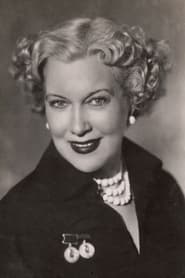
Although not among the most famous Soviet films of the 1930s, Petersburg Nights is culturally significant as an example of how canonical Russian literature was transformed under Soviet ideology. It illustrates the process by which literary heritage was not discarded but repurposed, allowing filmmakers to claim Dostoyevsky for socialist culture even while revising his meaning. The film is also notable as an early vehicle in which Lyubov Orlova appears, linking it indirectly to the rise of one of Soviet cinema's most beloved stars. For film historians, it offers insight into the stylistic and ideological tensions of early Stalin-era studio production, especially the tension between artistic aspiration and didactic narrative control.
Making Of
Petersburg Nights belongs to a phase of Soviet filmmaking in which classic literature was frequently adapted to align with official ideological expectations. Rather than preserving Dostoyevsky's philosophical complexity in a purely literary form, the production appears to have emphasized social critique, class struggle, and the destruction of a gifted peasant artist by a rigid society. Grigoriy Roshal had a reputation for handling literary material with seriousness and political clarity, and this film fits that profile. Surviving public information about the shoot, rehearsal process, and technical personnel is limited, so many finer production details are not widely verifiable. What is clear is that the film was created within a studio system that valued didactic clarity, performance discipline, and the symbolic use of settings over naturalistic spontaneity.
Visual Style
The film likely employs the controlled studio aesthetics common to Soviet drama of the period, with carefully staged interiors and expressive use of contrast between the rustic world of the serf and the urban spaces of Petersburg. In early 1930s Soviet cinema, visual style often balanced theatrical composition with emerging realist tendencies, and Petersburg Nights probably follows that pattern. The capital is treated as a visually oppressive environment, so settings would be expected to reinforce emotional coldness and bureaucratic rigidity. While detailed shot-by-shot cinematographic analysis is not widely documented in accessible sources, the film's visual design clearly supports its ideological contrast between artistic sincerity and urban alienation.
Innovations
The film does not appear to be known for major technical innovations in the way that some Soviet avant-garde works are, but it is still important as an early sound-era literary adaptation produced under the constraints of evolving Soviet film policy. Its technical achievement lies more in the integration of performance, dialogue, and musical subject matter than in experimental editing or revolutionary camera technique. The production demonstrates how Soviet studios in the mid-1930s were moving toward more polished, controlled dramatic storytelling. For historians, its value is in showing the maturity of the Soviet studio system after the silent revolutionary era.
Music
Specific information about the credited score is not widely available in the accessible sources for this film. As a Soviet sound film from 1934, music would have been an important component, especially given the centrality of a violinist protagonist and the film's interest in artistic ambition. It is reasonable to assume that musical passages were used both dramatically and symbolically, but the identity of the composer and details of the score are not consistently documented in common references. The violin motif itself appears to be integral to the narrative and thematic structure.
Famous Quotes
null
Memorable Scenes
- The opening presentation of Egor Efimov as a gifted serf violinist whose talent suggests a future beyond his station.
- Egor's departure from rural life for St. Petersburg, which functions as a visual and emotional transition from hope to disillusionment.
- Scenes in the capital that emphasize coldness, bureaucracy, and the sense that artistic aspiration is being suffocated by urban institutional life.
- The moments in which the film contrasts music and inward feeling against the rigidity of social structures and official indifference.
Did You Know?
- The film is based on Dostoyevsky but is not a direct adaptation of a single novel; it is generally described as a loose ideological reworking of his material.
- It is directed by Grigoriy Roshal, a major Soviet filmmaker known for literary adaptations and historical subjects.
- Lyubov Orlova appears in the cast, adding later star value to a film made before her most iconic musical roles made her a household name.
- The story centers on a serf musician, a character type that allowed Soviet cinema to dramatize both artistic aspiration and class exploitation.
- The film reflects a common 1930s Soviet practice of recasting classic Russian literature through a Marxist lens.
- Petersburg is portrayed less as a romantic imperial capital than as a symbol of alienation, bureaucracy, and cultural sterility.
- The film is one of the less internationally known Soviet literary adaptations of the 1930s, which makes it relatively obscure outside specialist film history circles.
- Because it is from the prewar Soviet period, complete production details are not as easily documented as for later, better-archived classics.
What Critics Said
Contemporary critical response is not well documented in easily accessible English-language sources, and detailed reviews from the period are scarce. In general, films of this type were often judged by Soviet critics according to their ideological correctness, fidelity to socialist principles, and usefulness in portraying class contradictions, rather than by purely artistic criteria. Modern evaluations tend to treat the film as an instructive but relatively minor example of 1930s Soviet literary adaptation, valuable for historical context rather than for canonical status. Its interest today lies largely in Roshal's direction, its adaptation strategy, and its place within the evolution of Soviet cultural policy.
What Audiences Thought
There is no strong surviving record of popular audience response in the international database sources commonly available for this title. In the Soviet Union, films that aligned with official values generally had a better chance of distribution and acceptance, but precise attendance figures for Petersburg Nights are not readily verified. Today the film is primarily of interest to scholars, classic Soviet cinema enthusiasts, and viewers exploring early film versions of Dostoyevsky-inspired material. Its current audience is therefore niche, and reception is often shaped by historical curiosity rather than mass familiarity.
Film Connections
Influenced By
- Fyodor Dostoyevsky's prose and themes
- Soviet Marxist literary adaptation traditions
- Early 1930s Socialist Realist cinema
- Russian social-dramatic literary cinema
This Film Influenced
- null
You Might Also Like
More Drama Films
View allMore from Grigoriy Roshal
View allFilm Restoration
The film appears to survive, as it is cataloged in film databases and referenced by title, cast, and production information; however, detailed restoration status is not widely documented in readily accessible sources. It does not appear to be commonly circulated as a restored prestige title, and availability may be limited to archival holdings, rare repertory screenings, or specialized video releases if any exist. In practical terms, it should be regarded as extant but obscure rather than lost.