The Ruse
Plot
Bat Peters, a reformed gunfighter who has left behind the violent life of the West, is now trying to build an honest future as a prospector. When he travels to Chicago to collect payment on a business arrangement with a mine promoter, he discovers that the man he trusted is crooked and has no intention of honoring the deal. Caught between his old reputation and his desire to stay reformed, Bat must use his wits and courage rather than his gun to confront the swindle. The story becomes a clash between frontier honor and urban fraud, with Bat forced to navigate both the moral and social dangers of the city before the situation can be set right.
About the Production
The Ruse was produced during the height of William S. Hart's early career as one of the defining stars of the western film. Like many short films from the mid-1910s, it was made quickly and economically, with production centered around a tightly structured action narrative built to showcase Hart's persona as a rough but morally serious western hero. The film is associated with the New York Motion Picture Company, a major early studio that released many of Hart's westerns. Specific surviving production records are sparse, and no reliable evidence survives for budgetary figures, exact shooting locations, or elaborate set construction.
Historical Background
The Ruse was made in 1915, a pivotal year in American silent cinema and in the broader cultural imagination of the western. The United States was still in the Progressive Era, a time marked by urbanization, industrial growth, and public fascination with questions of corruption, reform, and morality. That social backdrop helps explain the film's premise, which pits a reformed frontier gunman against a crooked city promoter and uses Chicago as a symbol of modern deception. In film history, 1915 is also the year The Birth of a Nation transformed feature filmmaking and commercial spectacle, while westerns continued to evolve from brief action pieces into more psychologically and thematically complex stories. Hart's films were especially important in giving the western a harder, more adult tone that would influence later screen cowboys and outlaws.
Why This Film Matters
Although The Ruse is not among the most famous surviving westerns of the silent period, it is culturally significant as part of William S. Hart's foundational body of work. Hart was one of the first major stars to give the western hero moral depth, emotional restraint, and a sense of lived-in realism, helping establish the genre's enduring image of the rugged but principled man. This film also reflects an early and influential narrative pattern in American cinema: the innocent or reformed western outsider confronting the corruption of city business and modern society. Its value to film history lies less in spectacle than in its contribution to the shaping of the western as a serious genre concerned with redemption, justice, and identity.
Making Of
The Ruse belongs to the period when William S. Hart was developing his signature screen identity: a taciturn, morally driven western protagonist who carried the weight of a violent past. Films of this type were tailored to Hart's particular strengths, combining physical action with a strong ethical conflict that distinguished his work from more playful or melodramatic westerns. Production was handled in the rapid, assembly-line manner common to the silent era, especially for short films, which meant that scripts, staging, and editing were built around a compact dramatic premise. Because the film survives mainly through historical listings rather than a wealth of production documentation, many behind-the-scenes specifics are unknown, but its importance lies in how it fits into the evolution of Hart's western style and the early development of the genre's moral seriousness.
Visual Style
As a 1915 silent western, The Ruse would have relied on clear, functional framing, expressive blocking, and strong visual contrast to communicate its story without intertitles carrying excessive exposition. Films of this sort typically emphasized medium and full shots to capture both action and actor movement, allowing Hart's physical presence to dominate the frame. The visual style likely balanced outdoor western imagery with urban scenes or urban-coded settings to underscore the story's central opposition between frontier honesty and city corruption. While no detailed shot-by-shot cinematographic record is widely cited for the film, its visual approach would have been consistent with the restrained, direct style associated with Hart's westerns.
Innovations
The film does not appear to be associated with a major technical innovation, but it participates in the refinement of early western storytelling through concise dramatic construction and a star-centered performance style. Its significance lies in how it used silent-film visual economy to tell a story of moral tension, deception, and self-control. The juxtaposition of Western identity with an urban setting also represents a noteworthy narrative technique for the period, allowing filmmakers to broaden the emotional and thematic range of the genre. In that sense, the film contributed to the maturation of the western form even without a single headline-grabbing technical breakthrough.
Music
As a silent film, The Ruse had no synchronized recorded soundtrack. Like other releases of the era, it would have been accompanied in theaters by live music, typically a pianist, organist, or small ensemble, with accompaniment chosen to match the film's mood and action. The exact cue sheet, if one existed, is not widely documented in surviving sources. Any modern presentation would likely use a reconstructed or newly composed score appropriate to early western silent cinema.
Memorable Scenes
- Bat Peters traveling from the West to Chicago to demand payment, a setup that immediately contrasts frontier identity with modern urban space.
- The confrontation with the crooked mine promoter, which dramatizes the clash between honest labor and business fraud.
- The hero's tension between his reformed life and his old gunfighter reputation, a hallmark of Hart's western characterizations.
Did You Know?
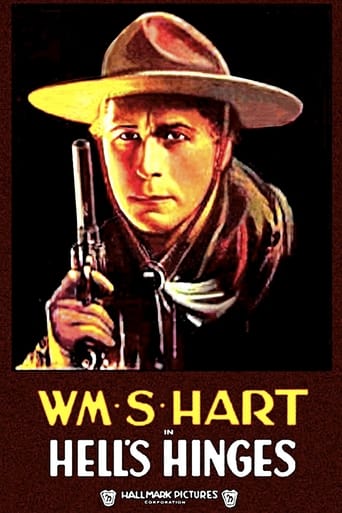
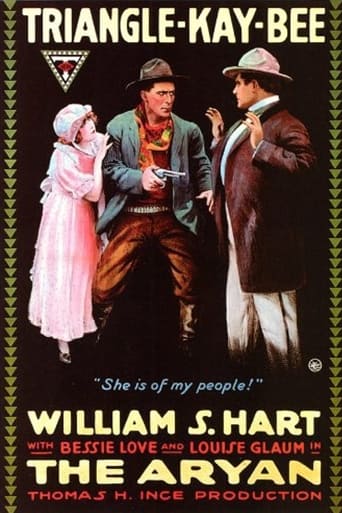
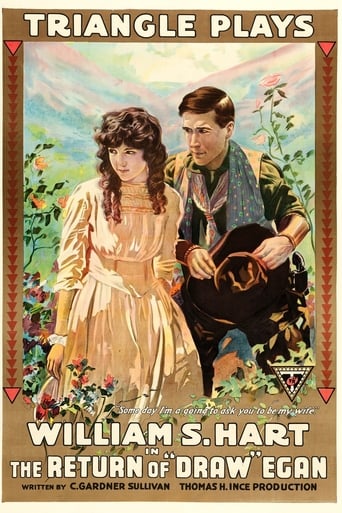
- The Ruse is one of the many early westerns associated with William S. Hart, who helped define the screen image of the hard-edged, psychologically complex cowboy hero.
- The plot places a western character in Chicago, creating an early example of the contrast between frontier values and urban corruption.
- The film is often discussed in film-historical contexts as part of Hart's effort to move western storytelling beyond simple chase-and-shoot formulas.
- Because so many silent shorts from this period are poorly documented, surviving details about cast, crew, and production are limited compared with later films.
- The film is listed with the alternate/short title The Ruse, and contemporary records may vary in how the title is formatted.
- William S. Hart not only starred in many of his films but also helped shape their moral tone, often portraying reformed outlaws or men struggling against their own violent pasts.
- The cast includes Clara Williams and John Davidson, both of whom appeared in a number of silent-era productions during this period.
- As with many 1915 releases, the film was likely exhibited as a short feature rather than a full-length program item.
What Critics Said
Contemporary critical reception details are difficult to reconstruct because many early trade-paper reviews have not been comprehensively preserved or indexed for this title. In the broader context of Hart's career, however, his films were generally praised for their seriousness, restraint, and moral clarity, qualities that distinguished them from more comic or sensational westerns of the era. Modern film historians tend to view The Ruse as an important but comparatively obscure part of Hart's output, valued primarily for what it reveals about his evolving screen persona and the genre conventions he helped establish. Because the film is not widely available and surviving documentation is limited, there is little evidence of a robust later critical reassessment beyond specialist film-historical interest.
What Audiences Thought
Specific audience-response records for The Ruse are not readily available, which is common for short silent films from 1915. At the time of release, William S. Hart was a major box-office draw, and audiences generally responded strongly to his westerns because they offered a more serious and emotionally grounded alternative to many contemporaneous genre films. The combination of action, moral conflict, and Hart's authoritative screen presence likely made the film appealing to viewers accustomed to serialized or short-form program entertainment. Its contemporary popularity is best inferred from Hart's stature and the frequency with which his westerns were released and exhibited during this period.
Film Connections
Influenced By
- Early Western short films starring William S. Hart
- Stage melodrama and frontier reform narratives
- Popular dime-novel concepts of the reformed outlaw
- Urban corruption dramas common in Progressive Era storytelling
This Film Influenced
- Later William S. Hart westerns with morally complex gunfighters
- The mature tragic western tradition
- Classic reformed-outlaw western narratives
- City-versus-frontier western storylines in later silent and sound films
You Might Also Like
More Action Films
View allMore from William S. Hart
View allFilm Restoration
Surviving print status is not clearly established in widely accessible reference sources, and the film is not commonly available in mainstream circulation. It may be extant in archival holdings or surviving in fragmentary form, but comprehensive restoration or public availability is not widely documented. For database purposes, it should be treated as an obscure silent-era title with uncertain preservation and limited access.