The Agony of Byzantium
Plot
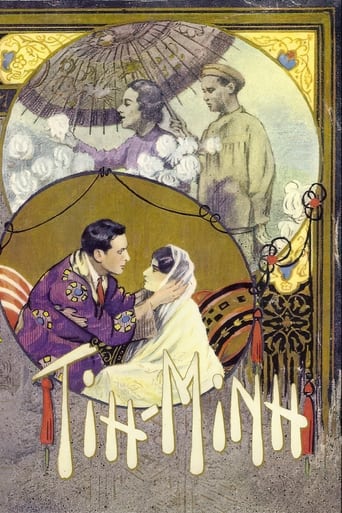
The film dramatizes the final days of Constantinople as the Byzantine Empire faces the Ottoman siege that will bring about its collapse. In a series of solemn historical tableaux, the story follows the desperate efforts of the city's defenders as they try to withstand overwhelming military pressure and preserve a civilization that has endured for more than a thousand years. As the Turkish forces tighten their grip, the film emphasizes the tragedy of a once-great empire confronting inevitable defeat. The narrative culminates in the fall of the city, a historical catastrophe that marks the end of Byzantium and the beginning of a new era in Eastern Mediterranean history.
Director
Louis FeuilladeAbout the Production
This is a French silent historical drama directed by Louis Feuillade and produced under the Gaumont banner during the early 1910s, when the company was making a large number of ambitious one- and multi-reel films for the international market. As with many Feuillade productions of the period, the film was likely mounted as a costume historical pageant rather than as a psychologically intimate drama, relying on carefully staged tableaux, period sets, and broad narrative clarity. Specific surviving production documentation on budgets, shooting schedule, and exact filming locations is not readily available, which is common for many pre-World War I productions. The film’s surviving historical record is therefore strongest in its association with Feuillade’s prolific output and Gaumont’s prestige historical programming rather than in granular production accounting.
Historical Background
The film was made in 1913, a tense year in European history, just before the outbreak of World War I. French audiences were living in a period of strong interest in national history, imperial decline, and grand historical spectacle, and cinema was increasingly used to present educational, patriotic, and culturally prestigious material. The fall of Constantinople, a foundational event in medieval and early modern history, resonated as a story of civilizational transformation, religious conflict, and the end of an era. In pre-war France, such films also fit into a broader culture of historical memory that used the screen to dramatize the rise and fall of empires, reinforcing cinema’s role as both entertainment and popular history lesson.
Why This Film Matters
Although not among Feuillade’s most famous surviving works, the film is significant as part of the early development of historical cinema in France. It reflects the ability of silent film to condense major historical events into vivid visual narratives, helping establish the historical drama as a respectable and marketable genre. The film also shows how early cinema engaged with world history beyond purely national subjects, presenting Constantinople’s fall as a civilizational turning point with broad cultural meaning. For modern scholars, it is valuable as evidence of how Gaumont and Feuillade balanced spectacle, pedagogy, and popular appeal in the years before feature-length historical epics became the norm.
Making Of
Little detailed behind-the-scenes documentation survives for this film, which is typical for many French productions from 1913. What can be said with confidence is that it was made within Louis Feuillade’s extraordinarily productive period at Gaumont, when he was directing a steady stream of films across genres and often working with regular company performers and production resources. The project likely relied on studio-controlled interiors, painted backdrops, and carefully arranged historical costumes to evoke medieval Constantinople rather than on large-scale on-location reconstruction. As a historical drama, it would have depended heavily on visual shorthand and pageant-like composition to communicate geopolitical collapse to audiences accustomed to silent film’s compressed storytelling.
Visual Style
The film likely uses the compositional conventions typical of Feuillade’s early 1910s work: frontal staging, balanced tableaux, strong use of deep costume contrast, and readable group arrangements that communicate power relations within a scene. Silent historical dramas of this period often favored static or minimally mobile cameras placed to present the whole action clearly, allowing sets and costumes to carry much of the expressive burden. If surviving materials and descriptions are scarce, the film can still be understood as part of Feuillade’s broader visual style, which balanced theatrical legibility with an emerging cinematic sense of scene progression. The emphasis would have been on solemnity, grandeur, and the visual legibility of imperial collapse rather than on rapid editing or elaborate camera movement.
Innovations
The film’s main achievement lies in its use of early cinema to represent a major historical event with clarity and gravity. Its value is less about cutting-edge technology than about the refinement of production techniques then current at Gaumont: costume design, tableau composition, set dressing, and the efficient staging of historical narrative within the limitations of silent-era filmmaking. As a pre-war French historical drama, it helped demonstrate how cinema could render distant history in a persuasive and respectable format. This kind of work contributed to the maturation of screen history as a genre and to the wider acceptance of film as a serious cultural medium.
Music
As a silent film, it had no synchronized recorded soundtrack. Like most films of its era, it would originally have been accompanied in theaters by live music, which may have ranged from a solo pianist to a small ensemble depending on the venue. No standardized original cue sheet or published score is widely documented for this title in accessible modern references. Contemporary screenings today, where available, would typically use a reconstructed or newly composed accompaniment chosen by the presenting archive or festival.
Memorable Scenes
- The tableau-style depiction of the besieged city under threat, emphasizing the looming end of Byzantine power.
- The climactic fall of Constantinople, staged as a historical catastrophe and the symbolic collapse of an entire empire.
Did You Know?
- The film is one of Louis Feuillade’s historical subjects from the pre-war French silent era, distinct from his better-known crime serials and fantasy works.
- Its subject, the fall of Constantinople in 1453, had long been a favorite of historical painting and literature, and early cinema frequently adapted such monumental events because they lent themselves to spectacle and clear moral drama.
- The film is sometimes discussed as an example of how French cinema used history to create prestige productions before feature-length historical epics became common.
- It should not be confused with later films about Byzantium or the fall of Constantinople; this is the 1913 Feuillade film specifically identified by its French title and Gaumont origin.
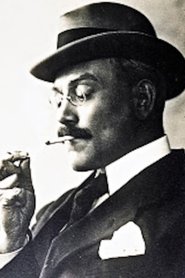
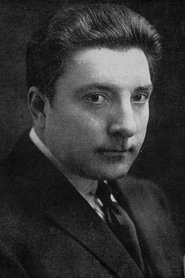
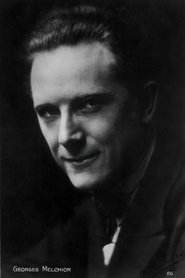
- The cast is associated with early French silent cinema, including performers such as Luitz-Morat, Georges Melchior, and Albert Reusy.
- Because many silent-era short historical films were not preserved in complete form, the film’s exact original length and complete surviving version are difficult to confirm from readily accessible modern references.
- Feuillade’s historical films often combined theatrical staging with cinematic framing, helping bridge stage-pageantry traditions and modern screen storytelling.
- The film participates in a broader early-20th-century European fascination with imperial decline, national destiny, and the dramatic end of civilizations.
- Its historical setting allowed the production to depict large-scale conflict and the symbolic collapse of a world order without requiring the elaborate battle choreography that later sound-era epics would use.
- As a Gaumont release from 1913, it belongs to the same industrial context that produced a huge range of short films distributed internationally before World War I disrupted European film production.
What Critics Said
Contemporary critical reception is difficult to reconstruct in detail because many trade-paper notices and local reviews have not been widely digitized or indexed in accessible form. In general, Feuillade’s historical shorts were regarded as polished, respectable fare, valued for their clarity, staging, and suitability for cultured audiences. Modern assessment tends to place the film within the broader context of Feuillade’s pre-serial output and early French historical cinema rather than as a standalone canonical masterpiece. Film historians are more likely to discuss it for what it reveals about Gaumont production practice and early historical representation than for any surviving record of critical controversy or acclaim.
What Audiences Thought
There is no comprehensive surviving box-office or audience survey data for the film. As a 1913 historical drama from a major French company, it was likely intended for general urban audiences as well as theaters seeking respectable, educational, and visually impressive programming. Early spectators generally responded positively to historical films that offered recognizable events, costumes, and spectacle, and this film’s subject would have been immediately intelligible and dramatic to viewers. Its present-day audience is largely limited to historians, archivists, and silent-film enthusiasts, since the film is not widely circulated in mainstream exhibition.
Film Connections
Influenced By
- Medieval and Renaissance histories of the fall of Constantinople
- Historical tableau traditions in theater and painting
- Early French historical cinema
- Gaumont prestige productions
This Film Influenced
- Later historical films dramatizing the fall of Constantinople
- Early European epic and costume dramas that treated imperial collapse as spectacle
You Might Also Like
More Drama Films
View allMore from Louis Feuillade
View allFilm Restoration
Preservation status is not firmly documented in readily accessible modern sources. The film appears to survive only poorly documented or incompletely circulated in archival contexts, and it is not widely available in mainstream release. If a print or fragment survives, it is primarily of archival rather than commercial circulation interest. Its status should therefore be treated as uncertain pending confirmation from a specific archive catalog.