Also available on: Wikimedia Archive.org
The Bear's Wedding

The Bear's Wedding

1925 Soviet Union
Inherited curseMadness and loss of controlBestiality versus civilizationGothic tragedyAncestral trauma

Plot

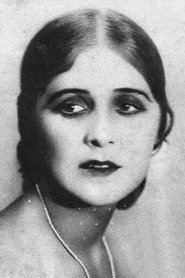
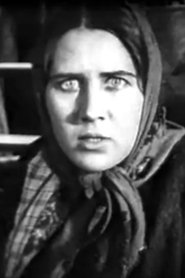
The Bear's Wedding follows Count Shemet, a aristocrat whose life is overshadowed by a dark hereditary curse rooted in his mother’s earlier trauma with a bear. During periodic seizures, he transforms into a bestial, murderous figure associated with the bear and becomes a danger to those around him, turning the drama into a Gothic tale of inherited madness, guilt, and bodily terror. The story builds around Shemet’s struggle between social identity and animalistic compulsion, with the curse functioning as both a supernatural and psychological menace. Vera Malinovskaya and Natalya Rozenel appear in the orbit of the doomed count, helping frame the tragedy as a conflict between love, fear, and uncontrollable violence. The film’s mood and premise place it firmly in the tradition of melodramatic horror, with the “bear” as a symbolic embodiment of ancestral sin and violent instinct.

About the Production

Release Date 1925
Production Goskino

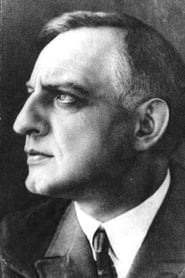
The film is a silent Soviet-era production directed by and starring Konstantin Eggert, a combination that was not uncommon in the formative years of Russian cinema but remains notable for the degree of creative control it implies. Because surviving production documentation is sparse, many specific behind-the-scenes details such as exact sets, location shooting, and budgetary data are not securely recorded in widely available reference sources. The film is remembered primarily through its cast, credited director, and surviving plot description rather than through a robust production paper trail. Its premise suggests a stylized blend of expressionistic horror and psychological melodrama, likely shaped by the period’s interest in heightened theatrical acting and visual symbolism.

Historical Background

The Bear's Wedding was made in 1925, during a crucial period in Soviet cinema when the post-revolutionary film industry was finding its identity under state influence and within a rapidly changing cultural landscape. This was the era of major formal experimentation, when filmmakers were exploring montage, expressive acting, and new ways of dramatizing psychology, ideology, and social conflict. Although many famous Soviet films of the mid-1920s are associated with overt revolutionary themes, this film demonstrates that genre, Gothic melodrama, and folkloric horror also had a place in the broader cinematic culture of the period. Its emphasis on inherited trauma, bodily transformation, and aristocratic decline also reflects the era’s fascination with collapsing old-world social forms and the uneasy remnants of pre-revolutionary culture.

Why This Film Matters

The film is culturally interesting because it sits at the intersection of Soviet silent cinema, Gothic horror, and psychological melodrama, a combination that is less widely discussed than the major montage masterpieces of the same decade. Its use of a bear as a symbolic engine of violence draws on Russian cultural associations with wilderness, folklore, and animal power, while its cursed aristocrat premise gives it an almost decadent, fin-de-siècle horror atmosphere. For scholars and enthusiasts of early genre cinema, it offers evidence that Soviet filmmaking was not limited to propaganda or revolutionary epics but also included dark, fantastical stories. Even if not widely screened today, it contributes to a broader understanding of how horror and the fantastic developed in world cinema before the sound era.

Making Of

Concrete behind-the-scenes records for The Bear's Wedding are limited, but the film is significant as a project in which Konstantin Eggert assumed both directorial and acting responsibilities. That dual role suggests a production shaped by his personal artistic control, which may have influenced the film’s tone and the staging of Count Shemet’s physically demanding, psychologically unstable role. Silent-era Soviet filmmaking often relied on expressive makeup, gesture, and carefully arranged tableaux, and a premise involving a man who periodically becomes a bear-like killer would have required especially stylized performance and visual planning. The scarcity of detailed surviving production notes is itself characteristic of many mid-1920s films, whose development histories were not always preserved with the same thoroughness as later sound-era productions.

Visual Style

Detailed technical cinematography records are scarce, but a film of this kind would have depended on stark lighting, expressive framing, and theatrical compositions to convey its Gothic atmosphere. The transformation and seizure scenes likely required strong visual contrasts and heightened body language, since silent cinema had to externalize psychological disturbance without sound. The bear motif probably invited symbolic imagery rather than literal special effects alone, meaning the film’s visual strategy would have emphasized suggestion, shadow, and performance. In the context of 1920s Soviet cinema, the cinematography would have been shaped by the broader silent-era emphasis on expressive mise-en-scène and visual storytelling.

Innovations

No major technical innovation is securely documented for the film in standard references, but its achievement lies in adapting a psychologically and symbolically rich horror premise to silent cinema. The challenge of depicting periodic transformation into a murderous bear-like state without sound would have demanded inventive acting, makeup, editing, and staging. The film also represents an early Soviet effort to engage with genre material beyond overt political drama, which is historically noteworthy in itself. Its blend of melodrama, horror, and folkloric symbolism makes it an interesting example of how silent cinema could suggest inner turmoil through visual means.

Music

As a silent film, The Bear's Wedding did not have an original synchronized soundtrack in the modern sense. Like most silent-era releases, it would have been shown with live musical accompaniment, which could vary from theater to theater depending on the venue and local practice. No universally documented original score is currently available in widely accessible references. Any contemporary presentation would therefore depend on archive or restoration practice rather than a fixed historical soundtrack.

Memorable Scenes

  • The count’s seizure sequence, in which he becomes the bear-like killer, is the film’s central horror image and likely its most memorable transformation moment.
  • The backstory involving the mother’s traumatic encounter with a bear functions as a chilling prologue that explains the curse and establishes the film’s Gothic tone.
  • Scenes of the doomed aristocrat oscillating between social refinement and violent animal instinct dramatize the film’s core conflict between civilization and monstrosity.

Did You Know?

  • The film is directed by Konstantin Eggert, who also stars as Count Shemet, making it a notable example of a director taking a central performance role in his own film.
  • Its title is often discussed as a Gothic or symbolic one, with the bear functioning less as a literal animal and more as a manifestation of inherited violence and psychological breakdown.
  • The plot centers on a hereditary curse tied to the mother’s traumatic encounter with a bear, a premise that gives the film an unusually folkloric and nightmarish quality for a 1920s Soviet production.
  • The film belongs to the silent era, so its atmosphere would have depended heavily on intertitles, performance, staging, and visual composition rather than spoken dialogue.
  • Because surviving information is limited, The Bear's Wedding is better known today in film-historical catalogs and databases than through regular repertory screenings.
  • The cast includes Vera Malinovskaya and Natalya Rozenel, both names associated with early Soviet screen acting and theatrical performance traditions.
  • The film is frequently categorized as drama and horror, a genre pairing that reflects the era’s blending of psychological tragedy with supernatural or Gothic elements.
  • The story’s transformation sequence, in which the count becomes a bear-like killer during seizures, anticipates later cinematic interest in split identities and monstrous alter egos.
  • As a 1925 Soviet film, it emerges from a period when the industry was exploring both revolutionary themes and genre storytelling, including literary adaptations and melodramatic fantasies.
  • The film’s preservation status is not clearly documented in common public references, which makes it one of many silent-era works whose visibility depends on archive holdings and surviving prints.

What Critics Said

Contemporary critical reception is not well documented in commonly accessible English-language sources, and detailed reviews from the film’s original release period are difficult to verify. In modern film-historical discussion, the work is generally treated as a rare or obscure silent-era Soviet title rather than as a canonical classic, which means its reputation rests more on scholarly cataloging and historical curiosity than on a large body of criticism. Where it is mentioned, the film is usually noted for its unusual premise, its director-star setup, and its place within early Soviet genre production. Current assessments tend to value it as an example of neglected silent horror-melodrama and as part of the broader, still-underexplored history of Russian genre filmmaking.

What Audiences Thought

Specific audience response data from 1925 is not readily available in surviving public records. As a silent-era Soviet film, its original audience would likely have encountered it in a theatrical context with live musical accompaniment, and reception would have depended heavily on local exhibition conditions, star appeal, and the public’s appetite for melodramatic or sensational material. Because the film is now obscure and not part of mainstream repertory circulation, modern audience awareness is limited mostly to archive researchers, classic film enthusiasts, and database users. Its unusual plot and horror premise, however, make it the kind of silent film that often attracts curiosity when discovered by contemporary viewers.

Film Connections

Influenced By

  • Gothic literature and melodrama traditions
  • Russian folklore involving the bear as a symbolic creature of power and danger
  • Early silent-era horror and psychological drama
  • Stage melodrama and expressionist performance styles

This Film Influenced

  • Later transformation and split-identity horror films
  • Soviet and Russian genre films drawing on folklore and psychological curse narratives
  • Silent-era horror melodramas with aristocratic decline and inherited doom

Film Restoration

The film’s preservation status is not clearly established in widely available public references. It is not commonly known as a frequently screened restoration, and it may survive only in archival holdings or incomplete materials, but a definitive public-status summary is difficult to verify from accessible sources. In practical terms, it should be regarded as a rare silent film whose availability is limited and whose survival history is uncertain without direct archive confirmation.

Themes & Topics

cursed aristocratbear transformationseizuresGothic horrorsilent film