1916 · Approximately 50-60 minutes

Also available on: YouTube
The Three Musketeers

The Three Musketeers

1916 Approximately 50-60 minutes United States
Loyalty and friendshipHonor and braveryPolitical intrigueAmbition and coming of ageRomantic danger and courtly deception

Plot

D'Artagnan, a young and impulsive Gascon nobleman, leaves his home determined to reach Paris and win a place among the King’s Musketeers. Once in the capital, his hot temper and pride quickly lead him into conflict, but those same qualities also help him prove his courage as he becomes allied with the celebrated trio Athos, Porthos, and Aramis. As court intrigue deepens, the Musketeers become entangled in the political and personal schemes surrounding Cardinal Richelieu and the dangerous Lady de Winter, whose machinations threaten both the honor of the Queen and the safety of the realm. The film follows D'Artagnan’s transformation from an ambitious provincial youth into a loyal companion and a participant in high-stakes affairs of state, combining swordplay, romance, and courtly intrigue in a fast-moving adaptation of Alexandre Dumas’s classic novel.

About the Production

Release Date 1916
Production Universal Film Manufacturing Company
Filmed In California, USA

This 1916 adaptation was produced during the American silent-film era, when studios routinely mounted historical adventures as prestige features to demonstrate scale and sophistication. Like many productions of its time, it relied on studio sets and nearby California locations rather than overseas European interiors, using costume design, cavalry work, and staged duels to evoke 17th-century France. The film is an early example of Universal’s interest in literary adaptations and large-scale action material, and it reflects the period’s emphasis on clear visual storytelling, intertitles, and expressive acting to carry the narrative without synchronized sound. Surviving documentation on budget, exact shooting schedule, and original release pattern is limited, which is common for films of this era.

Historical Background

The Three Musketeers (1916) was made during the height of the American silent feature boom, when the motion picture industry was rapidly standardizing feature-length storytelling and competing for legitimacy with theater and literature. In 1916, the United States was still neutral in World War I, but the European setting of Dumas’s novel would have offered audiences both escapist adventure and a nostalgic vision of aristocratic intrigue and heroic masculinity. The film emerged in a period when studios were investing in literary adaptations to attract middle-class audiences and to demonstrate that cinema could handle familiar classics rather than just short-form spectacle or melodrama. Its existence also reflects the broader international popularity of The Three Musketeers as a source text, which had already become a dependable vehicle for swashbuckling action, romance, and ensemble heroics on stage and screen.

Why This Film Matters

Although not as widely remembered as later adaptations, this film is part of the long cinematic lineage that helped establish Dumas’s novel as a foundational screen adventure. Early versions such as this one were important in defining the visual vocabulary of musketeer films: capes, plumed hats, swordplay, loyal companionship, and courtly conspiracies became enduring shorthand for the genre. The 1916 adaptation also illustrates how silent cinema translated a dense and episodic novel into concise melodramatic form, influencing how audiences came to expect classic literature to be adapted for film. For historians, it is significant as an artifact of Universal’s early feature production and as evidence of how Hollywood recycled and reinterpreted European literary prestige for mass entertainment.

Making Of

The film was mounted at a time when Universal and other studios were racing to elevate the feature film into a respectable attraction, and a well-known literary property like The Three Musketeers was ideal for that purpose. The production would have depended heavily on costuming, sword choreography, and tightly staged ensemble scenes to convey the camaraderie among the musketeers and the political danger of the court plot. Directors of the period typically worked with a fast production rhythm, so scenes were designed to be readable in a single tableau or a small series of shots, with actors using broad but precise gesture to compensate for the absence of spoken dialogue. Available records do not provide extensive detail about on-set incidents or specific shooting challenges, but the film clearly belongs to the era’s tradition of elegant, economical adaptations built around recognizable literary prestige and visual spectacle.

Visual Style

The cinematography would have followed the visual conventions of 1916 silent filmmaking, using static or lightly mobile camera setups, carefully arranged group compositions, and strong contrast between interiors and exteriors to maintain legibility. Historical adventure films of this period often relied on broad framing to showcase costumes, duels, and ensemble movement, and this production would have used that style to present the musketeers as a heroic collective. Lighting and staging would have emphasized faces, gestures, and the spatial relationships between court figures and conspirators, with intertitles filling in dialogue and exposition. The overall visual style likely prioritized narrative clarity and theatrical pageantry over the more dynamic camera movement that would develop in later decades.

Innovations

The film’s chief technical achievement lies in its adaptation of a large-scale literary adventure into a concise silent feature that could still preserve major plot beats and character relationships. Like many productions of the 1910s, it had to communicate complex political intrigue through visual staging, intertitles, and actor movement rather than dialogue, which required disciplined mise-en-scène and editorial economy. The presence of swordfights, period costumes, group action scenes, and court settings demonstrates the growing ambition of silent feature production in the mid-1910s. While it did not introduce a known landmark technology, it exemplifies the maturing craft of silent historical adventure filmmaking.

Music

As a silent film, The Three Musketeers (1916) did not have a synchronized recorded soundtrack. In theaters, it would have been accompanied by live music, which may have ranged from a single pianist to a small orchestra depending on the venue and prestige of the exhibition. Music for silent features of this era was often selected from existing repertory, local improvisation, or cue sheets supplied to exhibitors, especially for action scenes, duels, and moments of suspense. No single original composed score is generally documented as the film’s fixed soundtrack.

Famous Quotes

No synchronized spoken dialogue survives from this silent film.
Intertitle text is not comprehensively preserved in accessible sources for this version.

Memorable Scenes

  • D'Artagnan’s arrival in Paris and his rapid introduction to the hazards of court life and dueling culture.
  • The first alliance between D'Artagnan and the three musketeers, establishing the bonds of camaraderie that drive the story.
  • Confrontations with the agents of Cardinal Richelieu and the mounting tension around the royal court’s political secrets.
  • A climactic sequence of swordplay and intrigue that resolves the central conflict in adventure-melodrama fashion.

Did You Know?

  • This film is a silent adaptation of Alexandre Dumas’s 1844 novel The Three Musketeers, one of the most frequently filmed adventure stories in cinema history.
  • The production predates the famous 1921 Douglas Fairbanks version and represents an earlier American attempt to bring the Musketeers story to the screen in feature form.
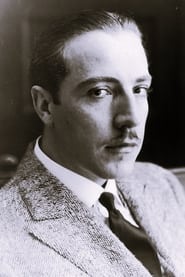
  • Orrin Johnson, who played D'Artagnan, was a familiar silent-era leading man often cast in adventurous and romantic roles.
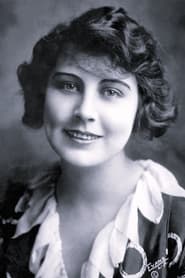
  • Dorothy Dalton was a prominent silent-film actress known for sophisticated and dramatic roles, and her casting helped lend star appeal to the production.
  • The film was made by Universal, which in the mid-1910s was expanding from short subjects into more ambitious feature-length productions.
  • Because it is a silent film from the 1910s, music was not fixed as part of the picture; theaters would have accompanied screenings with live musicians, often using cue sheets or local improvisation.
  • As with many silent adaptations of classic literature, the story was streamlined to fit the shorter running time of the era, emphasizing action, recognizable character types, and major plot turns.
  • Survival status information for many silent-era films is often incomplete, and this title is primarily documented through film databases and archival references rather than widely circulating prints.

What Critics Said

Detailed contemporary review coverage is difficult to recover comprehensively, but the film was likely received in line with many mid-1910s literary adventures: praised for its familiar story, action scenes, and elaborate costume settings rather than for deep psychological realism. Silent-era critics often valued clarity of narrative and the ability of a production to translate a beloved novel into visual terms, and this film would have been judged by those standards. In modern scholarship it is chiefly of historical interest, studied as an early feature adaptation of a canonical adventure novel and as part of Universal’s silent-era output. Because it is less famous than later versions, it does not have the lasting critical footprint of the 1921 or 1939 adaptations, but it remains noteworthy within the development of screen swashbucklers.

What Audiences Thought

Specific audience records are scarce, but the film would have appealed to viewers who enjoyed patriotic heroics, romance, and fast-moving adventure. The story’s popularity and the familiarity of the characters likely made it accessible even to audiences who had not read the novel, and the compact structure would have suited the preferences of silent-era moviegoers accustomed to concise, episode-driven narratives. As with many films of the period, reception was probably shaped more by local exhibition quality, live musical accompaniment, and star recognition than by nationally uniform audience data. Today, interest is primarily archival, with viewers and researchers seeking it out for its historical value rather than as a widely circulated mainstream title.

Film Connections

Influenced By

  • The Three Musketeers by Alexandre Dumas (1844)
  • Stage adaptations of The Three Musketeers popular in the late 19th and early 20th centuries
  • Early silent historical adventure films

This Film Influenced

  • The Three Musketeers (1921)
  • The Iron Mask (1929)
  • The Three Musketeers (1935)
  • The Three Musketeers (1948)
  • The Three Musketeers (1973)

Film Restoration

Survival status is uncertain in readily accessible public sources; like many silent-era films, it may be incomplete, privately held, or presumed lost in part or entirely. If extant, it is not widely distributed and is primarily known through archival references, databases, and historical film documentation rather than mainstream home-video circulation.

Themes & Topics

D'ArtagnanmusketeersCardinal Richelieucourt intrigueswordplayloyaltyromanceadventure