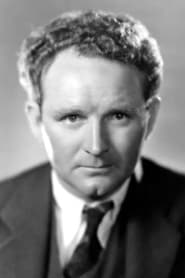
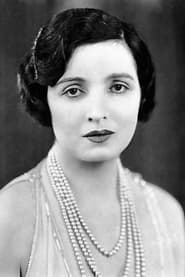
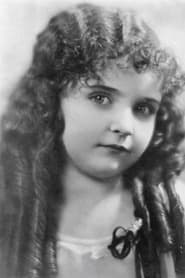
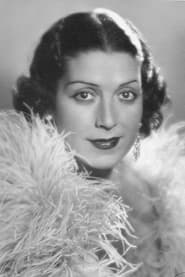
Daddy's Gone A-Hunting
Plot
Julian, a struggling artist living in Harlem with his devoted wife Edith and their newborn child, has been reduced to drawing for magazines in order to survive. Feeling that his talents are being wasted and convinced that greater opportunity lies elsewhere, he persuades Edith to support his plan to seek his fortune in Paris. The separation sends their lives in starkly different directions: Julian’s hopes in Europe are repeatedly frustrated, while Edith remains in New York, working in a shop on Fifth Avenue and enduring loneliness with quiet dignity. As the years pass, Edith is courted by a wealthy admirer but continues to remain emotionally faithful to Julian, even as she assumes he may never return. When Julian finally comes back three years later, defeated and no closer to success, the film underscores the emotional cost of ambition, separation, and the differing paths taken by husband and wife.
About the Production
Daddy's Gone A-Hunting was produced during the mid-1920s Hollywood silent-era emphasis on star-driven domestic dramas and urban melodrama. It was adapted from a contemporary stage story by Rida Johnson Young, and like many Frank Borzage films of the period, it centers on emotional realism and the strain placed on intimate relationships by poverty and aspiration. Surviving production documentation is limited, so precise budget, box-office, and location records are not generally cited in standard references. The film was distributed by Goldwyn Pictures before that company was folded into the newly formed Metro-Goldwyn-Mayer later in 1924; depending on regional release patterns, this title may have reached audiences under MGM-era distribution channels even though production originated under Goldwyn.
Historical Background
The film was made in 1925, a period when American cinema was rapidly consolidating into the studio system and silent features were reaching a high point of sophistication in performance, editing, and visual storytelling. It emerged in the aftermath of World War I and during the cultural ferment of the Jazz Age, when themes of ambition, mobility, marriage, and the tension between material success and personal fulfillment resonated strongly with urban audiences. The story’s Harlem setting, Fifth Avenue employment, and Parisian artistic dream reflect the era’s fascination with modern city life and transatlantic aspiration. In industrial terms, the film also sits at an important moment in the Goldwyn-to-MGM transition, representing the kind of polished, middle-class melodrama that major studios used to attract prestige audiences.
Why This Film Matters
Although not among the best-known silent films today, Daddy's Gone A-Hunting is culturally significant as an example of Frank Borzage’s humane approach to melodrama and his recurring interest in love tested by social and economic hardship. The film captures a distinctly 1920s anxiety about masculine artistic ambition versus domestic obligation, while giving Edith a dignified emotional center that anticipates later Hollywood portraits of patient, suffering wives. Its New York-to-Paris structure also reflects the era’s cinematic fascination with cosmopolitan identity and the belief that artistic success required geographic and emotional distance from home. For modern viewers, the film is also valuable as a surviving window into the performances of Alice Joyce and Percy Marmont and into the style of serious silent-era studio dramas.
Making Of
Daddy's Gone A-Hunting was mounted as a prestige silent drama in the Goldwyn orbit, with Frank Borzage bringing his characteristic sympathy for ordinary people under emotional pressure. The production reflects the studio-era preference for literary or stage-based material that could be adapted into vehicles for established screen performers such as Alice Joyce. Borzage’s direction likely emphasized intimate domestic detail over spectacle, a hallmark of his work that often drew strong performances from actors playing emotionally burdened spouses and lovers. Precise on-set anecdotes, casting negotiations, and technical production records are not widely preserved in standard modern sources, but the film belongs to the same creative environment that helped define the emotionally expressive silent melodrama later associated with Borzage’s more famous titles.
Visual Style
As a silent 1920s drama, the cinematography would have relied on expressive composition, intertitles, and performance-driven visual storytelling rather than dialogue. Frank Borzage’s films from this period often favor softly modulated lighting, intimate close-ups, and carefully staged domestic spaces that heighten emotional isolation and tenderness. The film’s contrasting settings of modest Harlem interiors, Fifth Avenue work life, and the romantic idea of Paris would have allowed the cinematography to distinguish social and psychological states through visual design. Although specific shot-by-shot analyses are limited by the film’s rarity, it likely reflects the elegant, unobtrusive style typical of prestige silent studio dramas.
Innovations
The film does not appear to be associated with any major technical innovation, but it participates in the mature silent-era vocabulary of expressive editing, intertitle rhythm, and star-focused visual storytelling. Its achievements are primarily artistic rather than technological, especially in the way it uses setting and performance to communicate emotional distance and longing without sound. Borzage’s direction is notable for making domestic struggle feel cinematic through composition and pacing. The film also illustrates the polished production values of a major studio feature during the late silent period.
Music
As a silent film, Daddy's Gone A-Hunting did not have a synchronized recorded soundtrack at the time of release. It would have been accompanied in theaters by live music, often a pianist, organist, or small ensemble, with cue sheets likely guiding exhibition practice depending on venue. No universally documented original score is commonly cited in modern reference materials. Any music heard today in restorations or screenings would typically be a later accompaniment created for presentation.
Memorable Scenes
- Julian persuading Edith that leaving for Paris is the only way to save his artistic future, a scene that frames the film’s central emotional conflict.
- Edith continuing to work in New York while raising the child and quietly waiting for news from Julian, emphasizing her endurance and emotional discipline.
- Julian’s disappointing return from Paris after years of frustration, a payoff scene that redefines the couple’s hopes and sacrifices.
- The final confrontation or reunion between husband and wife, which crystallizes the theme that ambition and love have taken very different paths.
- The contrast between Edith being courted by a wealthy suitor and her continued emotional loyalty to Julian, a key scene illustrating the film’s moral tension.
Did You Know?
- The film is directed by Frank Borzage, who became one of the most admired directors of intimate romantic melodramas in the silent era.
- Alice Joyce, a major screen star of the 1910s and 1920s, plays Edith, a role that emphasizes emotional restraint rather than overt theatricality.
- Percy Marmont, often cast in refined or emotionally conflicted roles, portrays Julian as an artist torn between idealism and financial necessity.
- The story places much of its emotional weight on the contrast between New York and Paris, a familiar silent-era device for contrasting artistic dreams with practical reality.
- The film is based on a play by Rida Johnson Young, whose work often focused on melodramatic domestic conflict and romantic sacrifice.
- Because it is a silent film from the 1920s, it would originally have been shown with live musical accompaniment rather than a fixed synchronized soundtrack.
- The title is somewhat misleading if interpreted literally; the narrative is not a hunting story but a domestic drama about a husband who leaves his family to pursue artistic success.
- The film is associated with the transitional period just before MGM fully consolidated the Goldwyn production legacy.
- This title is relatively obscure today compared with Borzage's later surviving classics, making it of special interest to silent-film historians and preservation researchers.
- Surviving prints and availability information are limited, which has contributed to its rarity in modern film access and scholarship.
What Critics Said
Contemporary reviews are not extensively summarized in surviving mainstream reference sources, but the film was generally received as a polished dramatic vehicle for its stars and director rather than as a sensational or controversial work. As with many silent-era melodramas, later critical interest has been shaped less by original box-office impact than by Borzage’s reputation and by the film’s place within early studio storytelling. Modern critics and historians who discuss it tend to approach it as an interesting, relatively obscure Borzage title that demonstrates his sensitivity to emotional nuance, though it is not usually ranked among his canonical masterpieces. Its scarcity in circulation has limited sustained critical reassessment, so appraisal today is often based on archival summary rather than widespread public familiarity.
What Audiences Thought
Detailed audience-response records are scarce, which is common for silent films that were not later revived as repertory staples. At the time of release, the film would likely have appealed to audiences who favored sophisticated domestic drama, star-centered acting, and stories of marital sacrifice and artistic struggle. The presence of Alice Joyce in a sympathetic role would have been a draw for viewers already familiar with her polished screen persona. In the modern era, audience reception is constrained by availability; it is mostly seen by silent-film enthusiasts, archivists, and scholars rather than general audiences.
Film Connections
Influenced By
- Contemporary stage melodramas by Rida Johnson Young
- Domestic-realist silent dramas of the 1910s and early 1920s
- European-artistic-fantasy narratives common in silent cinema
This Film Influenced
- Later Frank Borzage melodramas centered on love and endurance
- Studio-era domestic dramas featuring separated spouses and transatlantic aspiration
You Might Also Like
More Drama Films
View allMore from Frank Borzage
View allFilm Restoration
The film is not generally classed among the most accessible surviving silent features, and availability is limited. Reference sources and film archives indicate that it is either rare, incomplete in circulation, or not widely distributed on home video or streaming services. Specific restoration status is not consistently documented in standard public sources, so its preservation situation should be treated as uncertain rather than definitively lost. If extant, it appears to survive only in limited archival form rather than as a commonly available preservation title.