Parisian Love
Plot
Armand and Marie are poor young Parisians struggling to survive on the streets, living by wit, opportunism, and mutual devotion. Their precarious life takes a dramatic turn when a botched robbery leaves Armand in trouble and brings him to the attention of Pierre Marcel, a wealthy and charitable scientist who offers the young man a chance at respectability and a better future. Marie, fierce, impulsive, and fiercely possessive, sees Marcel not as a benefactor but as the man who has taken Armand away from her and from the harsh but intimate world they shared. Her resentment drives the film’s conflict, as romance, jealousy, class difference, and criminal temptation collide against the backdrop of Parisian street life and bourgeois comfort. The story builds toward a melodramatic confrontation in which the loyalties between love, gratitude, revenge, and social aspiration are forced into the open.
About the Production
Parisian Love was produced during the mid-1920s at Fox, when the studio was building a reputation for glossy melodramas and vehicles for emerging stars such as Clara Bow. Like many silent-era studio productions, it was mounted on controlled sets rather than extensive location shooting, allowing the filmmakers to create a stylized Parisian atmosphere on the Fox lot. Surviving documentation on the production is limited, so many specific details such as budget, shooting schedule, and unit assignments are not clearly documented in accessible modern sources. The film is closely associated with Clara Bow’s rise in the silent era, but it is not one of her most famous surviving titles.
Historical Background
Parisian Love was produced in 1925, a moment when Hollywood was expanding its dominance over international popular entertainment and the silent feature was at a mature, highly refined stage before the coming of synchronized sound. The mid-1920s also saw studios increasingly build pictures around star personas, and Clara Bow’s name carried a promise of youth, modernity, and emotional directness that aligned strongly with contemporary audience tastes. The film’s themes of class mobility, criminal underworlds, and romantic jealousy reflect larger post-World War I anxieties and fascinations: the tension between poverty and wealth, between street life and respectability, and between instinctive passion and social order. Its Paris setting belongs to a long American fascination with an idealized but dangerous Europe, where love stories could be intensified by exoticism, nightlife, and moral ambiguity. In that sense, the film is both a product of 1920s Hollywood melodrama and a window into the cultural fantasies American studios circulated about foreign urban life.
Why This Film Matters
Although not among the most famous surviving Clara Bow titles, Parisian Love is culturally significant as part of the body of work that helped define Bow’s screen persona and the types of emotionally direct heroines that became associated with late silent cinema. Films like this helped establish the template of the young, energetic, sexually frank but emotionally vulnerable female lead that Bow would later embody even more famously. The picture also illustrates Fox Film Corporation’s role in shaping mainstream silent melodrama and in exporting a stylized image of Paris to American audiences. For historians, its importance lies less in major awards or technical milestones than in how it reflects star-making, genre conventions, and social attitudes in the final years before sound transformed production and performance styles. It is also useful as an example of how many silent films survive primarily in fragments of documentation, stills, and catalog records rather than through widespread exhibition today.
Making Of
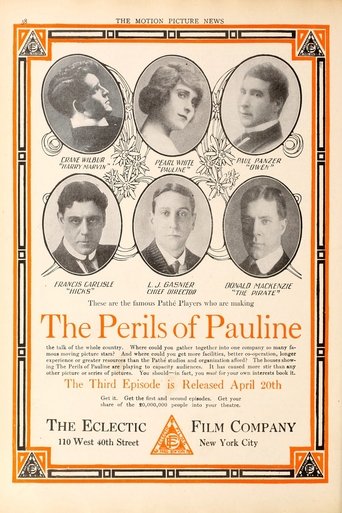
Parisian Love was made at a time when Fox Film Corporation was producing a steady stream of melodramas designed to showcase personality-driven performances and emotionally charged situations. Louis J. Gasnier had a long international career and was experienced in directing efficient, fast-moving productions, which was especially valuable in the silent era when films had to communicate character and conflict visually and with intertitles. Clara Bow’s presence would have been a major selling point, as she was emerging as a defining screen personality of the decade, capable of playing both toughness and vulnerability. Detailed behind-the-scenes records are sparse, but the film appears to have relied on studio craftsmanship rather than elaborate on-location authenticity, using sets and lighting to suggest Parisian streets and interiors. Like many silent-era productions, it would have been shaped heavily in the editing room and through performance, with the actors expected to convey the emotional stakes of poverty, jealousy, and moral rescue without dialogue. The surviving information suggests a conventional but polished Fox production rather than an experimental or technically adventurous one.
Visual Style
The film’s visual style would have been shaped by late silent-era studio cinematography, emphasizing expressive lighting, carefully arranged compositions, and clear visual storytelling to support the emotional dynamics of the plot. A Paris setting in a Fox production of this era would typically have been evoked through street scenes, interior contrasts between poverty and wealth, and atmospheric framing rather than documentary realism. The cinematography likely relied on close-ups for emotional emphasis, especially for Clara Bow’s expressive face and body language, which were central to her appeal. As with many silent melodramas, visual contrast between the roughness of the streets and the refinement of the scientist’s world would have served as a key storytelling device. Specific cinematographer credit and technical camerawork details are not consistently available in modern summaries, so the safest conclusion is that the film exemplifies polished studio craftsmanship rather than a known signature visual experiment.
Innovations
Parisian Love does not appear to be associated with a major technical innovation or breakthrough. Its significance lies more in professional silent-era craftsmanship: visual storytelling, star-centered acting, and polished studio mise-en-scène designed to carry a melodramatic narrative without sound. The film’s value to historians is as an example of mature 1920s studio technique, where lighting, framing, and editing served psychological and emotional clarity. If extant materials survive, they would be useful for studying how Fox handled urban melodrama and how directors like Gasnier managed pacing and character emphasis in compact feature running times. No widely recognized special effects, color process, or camera invention is associated with the film.
Music
Parisian Love was produced as a silent film, so it did not have a synchronized recorded soundtrack in the modern sense. Exhibition would have relied on live musical accompaniment that varied by theater, from a solo pianist in smaller venues to a larger orchestral or cue-based accompaniment in major houses. No single original score is widely documented as definitively attached to the film across all releases. Any music heard today in surviving presentations is generally a later archival or restoration accompaniment rather than a historically fixed 1925 soundtrack. As a result, music for the film should be understood as contextual and performative rather than standardized.
Famous Quotes
No verified surviving dialogue quotes are widely documented for this silent film, as intertitles vary by surviving print and source.
As a silent production, the film is better known for its visual storytelling than for fixed, widely cited lines of dialogue.
Memorable Scenes
- The early scenes of Armand and Marie surviving on the streets of Paris establish their rough, intimate world and the emotional bond that binds them together.
- The botched robbery sequence functions as the story’s turning point, shifting Armand from street danger into the orbit of Pierre Marcel’s charity.
- Marie’s reaction to Marcel’s intervention crystallizes the film’s emotional conflict, as her jealousy transforms into a revenge motive.
- The contrast between the street world and Marcel’s wealthy, scientific household provides the film’s central visual and dramatic tension.
Did You Know?
- Parisian Love is a silent feature from the period when Clara Bow was rapidly becoming one of Hollywood’s most bankable and recognizable young stars.
- The film’s title and Paris setting evoke the romanticized, often gritty view of continental urban life that was common in American silent melodramas of the 1920s.
- Director Louis J. Gasnier was an experienced filmmaker who worked in both France and the United States, making him well suited to stories with cosmopolitan or European-flavored settings.
- The picture is now regarded as relatively obscure compared with Clara Bow’s later Paramount and Fox hits, which makes it harder to document in detail than her more famous surviving films.
- Because it is a silent film, any original music accompaniment would have varied by theater, meaning no single definitive soundtrack was attached to all prints in release.
- The film’s known plot centers on a triangle of desire, gratitude, and jealousy, a structure that reflects the melodramatic storytelling style of Fox’s silent-era dramas.
- The term 'Apache' in the plot description refers to a sensationalized contemporary label for certain Parisian underworld or street characters, a common trope in early twentieth-century fiction and film.
- As with many 1920s silent features, the film’s survival status is not widely publicized in mainstream databases, so it remains difficult to know how complete extant materials may be.
What Critics Said
Contemporary critical reception is not widely preserved in easily accessible modern summaries, so a detailed consensus from 1925 reviewers is difficult to reconstruct with certainty. As a Fox melodrama starring Clara Bow, it likely received attention for its star appeal and emotional immediacy rather than for unusual originality, since studio reviews of the period often emphasized performance, pacing, and attractiveness of production values. In retrospect, the film is usually discussed in connection with Bow’s early career and as part of the larger silent-era melodrama tradition rather than as a canonical masterwork. Modern critical interest is generally limited because the film is obscure and not as readily available as Bow’s more famous works, but scholars and collectors view it as an important piece of her filmography and of 1920s studio storytelling. Its reception today is therefore more historical than evaluative: valued for documentation, context, and star study rather than for a widely debated artistic reputation.
What Audiences Thought
There is no widely cited box-office record or audience survey surviving in standard modern references for Parisian Love, so its exact popular reception cannot be quantified with confidence. Given Clara Bow’s growing popularity in 1925, it likely benefited from strong fan interest in her performances and from the general appeal of melodramatic romance and crime stories. Silent-era audiences were accustomed to stories of class struggle, redemption, and romantic jealousy, and the film’s premise would have fit comfortably within mainstream tastes. Its lasting audience presence today is limited by its obscurity and the uneven availability of surviving prints or home-video access, so it is far less familiar to modern viewers than Bow’s later hits. For contemporary audiences who encounter it through archives or retrospectives, the appeal is primarily historical, with interest centered on Bow, Gasnier, and the style of mid-1920s Fox filmmaking.
Film Connections
Influenced By
- French urban melodramas and underworld stories of the early 20th century
- Victorian and turn-of-the-century stage melodrama
- American silent crime-romance formulas
- stories romanticizing Parisian nightlife and street culture
This Film Influenced
- Later Clara Bow romantic dramas and crime melodramas
- Fox silent-era urban melodramas with class conflict
- American films using Paris as a backdrop for romance and danger
You Might Also Like
More Drama Films
View allMore from Louis J. Gasnier
View allFilm Restoration
The film is not widely known as a complete mainstream home-video title, and detailed preservation information is limited in public-facing sources. It may survive in archival holdings or partial materials, but its current status is not as clearly documented as many better-known silent films. In practical terms, it should be treated as an obscure silent title with uncertain accessibility, rather than a broadly available restored classic.