The Heart of an Indian
Plot
In this brief Western melodrama, a white settlement comes under attack, and the violence sets in motion a tragic chain of misunderstandings and reprisals. During the raid, an Indian man, grieving the loss of his own infant, kidnaps a white baby and brings the child to his wife as a substitute for their dead child. The white mother, desperate to recover her baby, ventures into the Indian camp, where she is seized by the tribe and threatened with torture. Before the ordeal can be completed, the settlers counterattack, destroying the camp and killing the warriors, while the Indian wife returns the baby to its mother and helps her escape. In the final irony, the Indian wife mourns her own dead child at the grave, unaware that her world has been obliterated by the settlers' assault.
About the Production
The Heart of an Indian was produced during Thomas H. Ince's highly influential years as a pioneer of the organized studio Western. Like many one-reel films of the period, it was made quickly and economically, with an emphasis on outdoor action, clear visual storytelling, and strongly simplified melodramatic conflict. Surviving documentation is sparse, so precise shooting dates, unit assignments, and exact locations are not reliably recorded. The film reflects the production method associated with Ince's Western unit: tightly planned scripts, efficient location work, and a focus on visually legible action that could be understood without synchronized dialogue. The film's treatment of Native American characters is now recognized as part of an era of heavily stereotyped silent-era frontier storytelling.
Historical Background
The Heart of an Indian was produced in 1912, a pivotal year for American cinema when the industry was rapidly transitioning from short nickelodeon fare toward more organized production practices and stronger genre identity. Thomas H. Ince was among the key figures systematizing filmmaking, helping move Westerns from small novelty pictures into reliable studio products with consistent themes, casts, and production methods. The film emerged during a period when the American frontier was being mythologized on screen, often through stories that framed Indigenous peoples as obstacles to settlement while borrowing emotional depth from family melodrama. It also reflects the broader social climate of the early twentieth century, when popular entertainment frequently reinforced colonial narratives and racial hierarchies even as it sometimes offered moments of sympathetic characterization. For historians, the film matters as an artifact of both genre development and representation, illustrating how early Hollywood built the Western's emotional vocabulary while normalizing violent conquest.
Why This Film Matters
Although likely not widely known to modern audiences, the film is culturally significant as an early example of the Western's formative narrative grammar. It combines elements that became enduring genre staples: settlement attack, abduction, rescue, frontier revenge, and the emotional center of family loss. At the same time, it is a revealing artifact of silent-era attitudes toward Native Americans, showing how early cinema frequently used Indigenous characters as tragic foils in stories that justified settler violence. For scholars of film history, the film helps document Thomas H. Ince's role in shaping American screen production and the Western's ideological framework. Its significance today lies less in popularity than in what it reveals about the development of film language, industry organization, and racialized storytelling in the earliest years of Hollywood.
Making Of
The Heart of an Indian was made at a time when Thomas H. Ince was developing a disciplined production model that treated the Western not as a loose improvisational spectacle, but as a carefully planned form of visual narrative. His units were known for staging action on open land, using practical locations and straightforward cutting to maximize clarity for audiences watching silent films without intertitles carrying all the dramatic burden. The film's subject matter reveals the period's reliance on domestic tragedy and frontier violence to generate emotion, with the kidnapped child and the grieving mother serving as the central melodramatic engines of the plot. Production specifics are not richly documented, but the film sits squarely within the early Bison/Kay-Bee output that helped define the American Western before the feature-length era took hold. From a modern perspective, the film is also important as evidence of how early Hollywood encoded Native American characters into tragic, often contradictory roles, combining sympathy for individual suffering with destructive and stereotyped depictions of tribal life.
Visual Style
The film likely employed the clear, stage-like long and medium shots common to early 1910s Westerns, with an emphasis on readable blocking and action staged in open landscapes. Thomas H. Ince productions often favored efficient visual storytelling over elaborate camera movement, using composition and crosscutting to make rescues, raids, and pursuit scenes immediately understandable. Outdoor daylight photography would have been essential to the film's look, and the frontier setting would have provided broad visual contrast between settlement, camp, and wilderness. The cinematography would have prioritized action continuity and emotional clarity rather than expressive camera experimentation. As with many films of the period, performance and staging would carry much of the narrative weight because intertitles and editing conventions were still developing.
Innovations
The film is not known for a specific technological breakthrough, but it belongs to the period in which Thomas H. Ince helped standardize efficient production and narrative clarity in the Western genre. Its technical significance lies in its contribution to the evolving grammar of action storytelling: raid, abduction, rescue, confrontation, and tragic denouement were all arranged in a compact, easy-to-follow structure. Such films helped refine the use of crosscutting and parallel action to sustain tension in short-form cinema. The picture also reflects the industrial discipline associated with Ince's productions, which were important in shaping later studio methods of planning, scheduling, and genre specialization.
Music
As a silent film, The Heart of an Indian had no synchronized recorded soundtrack. In exhibition, it would typically have been accompanied by live music from a pianist, organist, or small theater ensemble, with selections chosen to match the action and emotional tone of the scenes. No original composed score is known to survive, and no standardized cue sheet is reliably documented for the film in common reference sources. Modern presentations of surviving silent-era films like this one often use newly assembled accompaniment or archival piano scoring if the film is screened in a restoration context.
Memorable Scenes
- The moment the Indian father takes the white baby from the chaos of the raid, replacing his dead child with the kidnapped infant in a desperate act of grief.
- The white mother's perilous journey into the Indian camp to recover her child, turning maternal desperation into the film's emotional center.
- The climactic settler assault that destroys the Indian camp and kills the braves, concluding the film with brutal frontier revenge.
- The Indian wife returning the baby to its mother and enabling her escape, a brief gesture of compassion amid the violence.
- The final scene of the Indian wife mourning at the grave of her own child, underscoring the tragedy that remains after the camp's destruction.
Did You Know?
- The film was directed by Thomas H. Ince, one of the most important early architects of the American studio system and a major force in shaping the screen Western.
- It was released in 1912, during the era when Westerns were still short subjects, often only one reel in length.
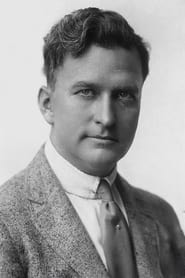
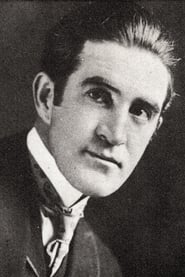
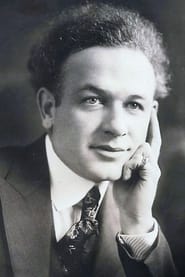
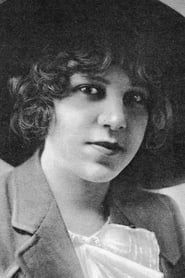
- The cast included Francis Ford, J. Barney Sherry, and Ann Little, all performers associated with early frontier films and action-driven silent melodramas.
- The title is often cited in film databases as The Heart of an Indian, though surviving prints or complete production materials are not widely accessible.
- The plot centers on maternal grief on both sides of the cultural divide, a common melodramatic device in early silent-era frontier narratives.
- The film is notable today more for historical study than for public circulation, since many films of this period survive only in fragments or are lost.
- Thomas H. Ince's Westerns helped establish visual conventions that later became standard in the genre, including rescue-driven plots, settlement attacks, and climactic raids.
- The story reflects the era's prevailing stereotypes and colonial attitudes toward Native Americans, making it an important example for scholars studying representation in early cinema.
- Ann Little later became well known for silent-era Western work and serials, and this film belongs to the formative period of her screen career.
- Because precise archival records are limited, some details such as exact runtime, exhibition date, and production units may vary slightly across historical references.
What Critics Said
Contemporary detailed reviews are difficult to reconstruct because many early 1912 films were covered only briefly in trade publications, if at all, and surviving critical commentary is sparse. As with many Ince Westerns of the period, the film was likely received as a compact, dramatic frontier picture suited to program exhibition rather than as a prestige release. Modern criticism tends to approach the film historically, emphasizing its importance as part of Thomas H. Ince's output and as an example of early Western storytelling conventions. From a present-day standpoint, critics and historians are also likely to note its troubling racial ideology and the way it uses Native American characters within a highly stereotyped framework. Its value today is archival and analytical rather than reputational in the sense of being celebrated for artistry alone.
What Audiences Thought
Audience reaction at the time is not well documented in surviving records, which is typical for short silent films from 1912. The film would have played as part of a larger bill, and audiences likely encountered it as an exciting, emotionally charged Western short featuring kidnapping, rescue, and violent confrontation. Its themes of child endangerment and maternal anguish were designed to provoke strong emotional responses, a reliable strategy in early melodrama. Like many frontier shorts of the period, it probably appealed to viewers seeking action and sensational conflict rather than nuanced historical realism. Today, it is mostly of interest to silent film enthusiasts, historians, and archivists rather than general audiences, especially because availability is limited.
Film Connections
Influenced By
- Early American frontier melodramas and Western stage traditions
- Thomas H. Ince's own developing Western production style
- Popular dime-novel and pulp-fiction depictions of frontier conflict
- Early nickelodeon-era one-reel action dramas
This Film Influenced
- Later Thomas H. Ince Westerns that refined the rescue-and-raid formula
- Subsequent silent-era frontier dramas built around settlement attacks and abduction plots
- The broader Western genre's recurring use of child rescue and siege narratives
You Might Also Like
More Western Films
View allMore from Thomas H. Ince
View allFilm Restoration
Survival status is uncertain in accessible public references; the film is generally treated as a rare early silent Western and may be lost or survive only in incomplete archival holdings. No widely circulated restoration or commercially available print is currently well documented in mainstream sources.