Broken Ways
Plot
In this Griffith western melodrama, a young wife discovers that the husband from whom she has separated is not merely cruel but a criminal, and she believes him to be dead after leaving him behind. As she prepares to remake her life and give herself to another man, her presumed-dead husband suddenly reappears, now fleeing from justice and desperate to reclaim his claims upon her. The wife is forced into an agonizing moral dilemma: should she denounce him to the law, or protect the man she once loved despite his brutality and wrongdoing? She initially yields to one impulse and then to the other, only for justice to intervene in the end, closing the drama with a stern moral resolution typical of early Griffith melodrama.
About the Production
Broken Ways was produced during the Biograph period when D. W. Griffith was directing a large number of short films each year and working with a stable repertory company of performers. Like many Griffith films from 1913, it was made as a one-reel or short-format drama rather than a feature-length production, and precise budget information has not survived in the standard archival record. The film is notable for combining western elements with domestic melodrama, a blend Griffith often used to intensify moral conflict. Surviving documentation is limited, so many production specifics such as exact shooting dates, set construction details, and on-location information are not definitively recorded.
Historical Background
Broken Ways was released in 1913, a pivotal year in world cinema and in American social life. In the United States, silent film was rapidly evolving from brief novelties into a more sophisticated narrative art, and Griffith was one of the central figures pushing that transformation through editing, performance style, and emotional storytelling. The western genre was also becoming a major screen form, but early westerns often mixed frontier imagery with melodramatic domestic concerns, reflecting contemporary anxieties about law, masculinity, marriage, and social order. The film matters historically because it sits at the intersection of Griffith’s Biograph-era experimentation and the consolidation of the American movie language that would dominate the industry in the following decade.
Why This Film Matters
Broken Ways is significant as an example of early American cinema’s use of the western not simply for action, but as a moral stage on which intimate ethical conflicts could be played out. Its premise centers on a woman’s impossible choice between legality, loyalty, and personal survival, a theme that resonated with early twentieth-century audiences and appears frequently in pre-feature melodramas. The film also belongs to the body of Griffith shorts that helped establish the emotional close-up, the dramatic cutting pattern, and the intensification of domestic stakes within popular cinema. Even though it is not among Griffith’s best-known titles, it contributes to the lineage of silent westerns and to the development of star personas for Blanche Sweet, Henry B. Walthall, and Harry Carey.
Making Of
Broken Ways was made in the fast-paced Biograph production environment, where Griffith and his collaborators were turning out films at a remarkable rate and relying on a familiar ensemble of actors. Blanche Sweet and Henry B. Walthall were among the company’s most trusted dramatic leads, often cast in emotionally fraught roles that required restraint and strong visual expression. Harry Carey’s participation is another reminder of Griffith’s ability to use strong supporting players who could bridge domestic drama and frontier material. No detailed behind-the-scenes production diary survives for the film, but its structure suggests Griffith’s interest in compressing a difficult moral choice into a short, visually efficient narrative.
Visual Style
The film’s cinematography would have followed the clean, stage-aware but increasingly expressive visual style associated with Griffith’s Biograph work in 1913. Typical features of this period include carefully arranged compositions, relatively brief scenes, and selective use of closer framing to emphasize emotional reaction and moral tension. Because it is a silent short, visual clarity and actor gesture were essential to communicating the central dilemma, especially the wife’s conflicted response to her husband’s return. The western setting would have provided open-air contrast and visual breadth, even if the story remained focused on intimate dramatic confrontation.
Innovations
Broken Ways does not appear to be associated with a single headline technical innovation, but it belongs to Griffith’s broader period of technical refinement in editing, scene construction, and dramatic compression. The film exemplifies the efficient storytelling of early 1910s shorts, where intercutting, performance emphasis, and visual staging were used to present a complete moral crisis in a compact running time. Its achievement lies in the way it fuses western atmosphere with domestic melodrama, demonstrating how flexible the emerging film grammar had become under Griffith’s direction. In that sense, it participates in the evolving syntax of narrative cinema rather than standing out for one isolated invention.
Music
As a silent film, Broken Ways originally had no synchronized recorded soundtrack. Musical accompaniment would have been provided live in theaters, varying by venue, exhibitor, and local pianist or small orchestra. No definitive original cue sheet or composed score is widely documented in standard references for this title. Any modern screenings or archival presentations typically use reconstructed silent-film accompaniment tailored to the mood and pacing of the surviving print or reconstruction, if available.
Famous Quotes
No verified surviving dialogue quotes are widely documented for this silent film.
As a silent film, any textual dialogue would have appeared in intertitles that vary by surviving print.
Memorable Scenes
- The wife’s anguished moment of decision when she learns that the husband she believed dead has returned as a fugitive.
- The confrontation in which she must decide whether to deliver him to the law or protect him despite his crimes.
- The final intervention of justice, which resolves the moral tension and closes the film on an emphatic note.
Did You Know?
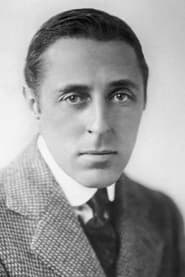
- Broken Ways was directed by D. W. Griffith during one of his most prolific years at Biograph, when he was refining many of the storytelling techniques that would shape classical cinema.
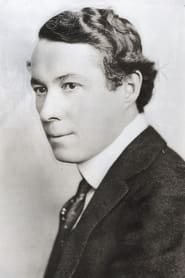
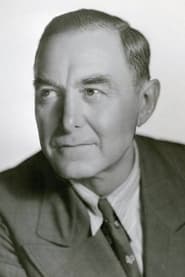
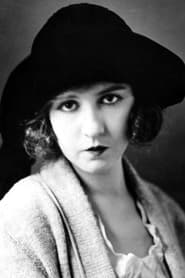
- The film stars Henry B. Walthall and Blanche Sweet, two of Griffith's most important dramatic performers, along with Harry Carey, who would later become a major western star.
- Although categorized as a western, the plot is driven more by domestic morality and emotional crisis than by frontier action, making it closer to a hybrid melodrama.
- The film is part of the broad early-1910s trend in which Western settings were used to stage ethical dilemmas about law, loyalty, marriage, and redemption.
- Because it is a silent film from 1913, any original intertitles, music cue sheets, or studio promotional copy may differ depending on surviving prints and archive sources.
- Griffith frequently used short films like this to experiment with pacing, cross-cutting, and expressive close-ups before expanding those methods in his feature work.
- Harry Carey’s presence is especially notable because his later fame in westerns makes this an early example of his association with the genre.
- As with many Biograph titles of the period, surviving information is incomplete, and the film is often documented more through catalog records and contemporary listings than through extensive modern scholarship.
What Critics Said
Contemporary critical commentary on Broken Ways is not widely preserved in modern circulation, and the film does not appear to have generated the extensive review record that later Griffith features did. In its own era, it would likely have been evaluated as a solid Biograph short, with attention to its performances and moral drama rather than as a landmark release. Modern scholars generally regard such Griffith shorts as important historical documents of narrative development, even when individual titles are not heavily discussed in criticism. Today the film is valued primarily by historians and archivists for what it reveals about early western melodrama, Griffith’s directorial approach, and the careers of its principal actors.
What Audiences Thought
No robust box-office or audience survey data survives for Broken Ways, which is typical for a 1913 short film. As a Biograph release, it would have been shown in nickelodeons and short-film programs, where audiences consumed a rapid succession of dramas, comedies, and western subjects. Its mixture of suspense, moral conflict, and frontier setting would likely have been accessible to the broad popular audience of the period. The fact that it remains cataloged and discussed today suggests it retained archival interest even if direct audience response from 1913 is no longer documented.
Film Connections
Influenced By
- The western melodramas and frontier tales popular in American stage and early film culture
- D. W. Griffith's own Biograph-era short dramas
- Victorian and turn-of-the-century domestic melodrama traditions
This Film Influenced
- Later silent western melodramas that paired frontier settings with domestic moral conflict
- Early feature westerns and melodramas that explored law, loyalty, and redemption
You Might Also Like
More Western Films
View allMore from D.W. Griffith
View allFilm Restoration
Preservation status is uncertain in standard public references; the film is documented in catalogs, but complete surviving materials are not widely confirmed in mainstream sources. It may survive in archive holdings or incomplete form, but it is not broadly circulated as a commonly available restored title. Researchers should consult major silent-film archives and catalog records for the most current preservation status.