1915 · Approximately 20 minutes

Also available on: Archive.org
Enoch Arden

Enoch Arden

1915 Approximately 20 minutes United States
Self-sacrificeMarital fidelityLoss and absenceDuty versus desireDomestic happiness

Plot

Enoch Arden is a silent adaptation of Alfred, Lord Tennyson’s well-known poem, centering on a devoted seaman who disappears for years after being marooned on a desert island. Believed dead, Enoch leaves behind his wife Annie and their family, and in his absence Annie eventually marries Philip Ray, a childhood friend who has cared for her and the children. When Enoch finally returns to his home, he discovers the life he once knew has been transformed, and he quietly realizes that revealing himself would destroy the domestic peace Annie has rebuilt. In a deeply tragic act of self-denial, he chooses love expressed through sacrifice rather than possession, and withdraws from the happiness he once hoped to reclaim. The film closes on the pathos typical of early literary adaptations, emphasizing endurance, duty, and the emotional cost of heroic restraint.

About the Production

Release Date 1915-07-15
Production Biograph Company
Filmed In Studio production in the United States; specific on-location filming details are not widely documented

This 1915 feature was produced by the Biograph Company during the period when D. W. Griffith had only recently departed from the studio’s direct control but many of his key collaborators and performers were still active there. The film is an adaptation of Tennyson’s narrative poem, part of a broader early-cinema tradition of prestige literary subjects that could be marketed to middle-class audiences as culturally respectable. Like many films of the era, precise budgetary records and detailed shooting logs have not survived in readily accessible form, so production specifics such as exact costs and set locations remain uncertain. The film was mounted as a dramatic, performance-driven silent picture, relying on expressive acting and visual storytelling rather than intertitles-heavy exposition.

Historical Background

In 1915, American cinema was entering a decisive phase of expansion: feature-length storytelling was becoming more common, and producers increasingly looked to established literature to validate film as a serious artistic medium. The Biograph Company occupied an important place in this transition, having been central to the development of American film grammar in the previous decade. Tennyson’s poem had long been a familiar part of English-language literary culture, so adapting it in silent form allowed filmmakers to present a recognizable, emotionally solemn story to audiences already primed to understand its tragic structure. The film also reflects the values of its moment: self-sacrifice, domestic duty, and moral restraint were prized dramatic qualities, and the motion picture medium was proving itself capable of presenting intimate psychological conflict without spoken dialogue. Its significance lies less in commercial impact than in its place within the early feature-era movement toward legitimate literary adaptation and star-centered dramatic performance.

Why This Film Matters

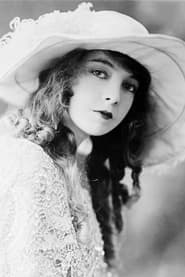
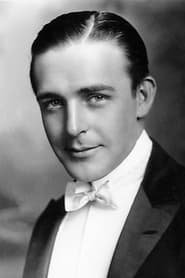
Although not among the most famous silent films today, Enoch Arden is culturally important as an example of early 20th-century film culture’s dialogue with high literature. It demonstrates how filmmakers used canonical poetry to elevate the perceived seriousness of cinema, helping persuade audiences and critics that motion pictures could carry tragic, adult emotional themes. The story itself, built around absence, fidelity, remarriage, and renunciation, resonated with contemporary moral ideas about family and duty while also highlighting the uniquely expressive possibilities of silent acting. For modern film historians, the film is also valuable as an artifact of the careers of Lillian Gish, Wallace Reid, and Christy Cabanne at a formative moment in American cinema. It contributes to the broader historical record of how early Hollywood transformed literary and theatrical material into concise visual narratives.

Making Of

Enoch Arden was made at a time when the American film industry was rapidly transitioning from short subjects to longer narrative forms, and literary adaptations were a reliable way to confer prestige on films that were still often sold as brief programs. Christy Cabanne worked within a studio system that valued efficiency, so the production likely emphasized quick staging, minimal sets, and emotionally legible acting over elaborate spectacle. The involvement of Lillian Gish and Wallace Reid is significant because both were major figures in silent-era acting style, and their early appearances help situate the film within the Biograph stock-company method of production. Detailed surviving production memos, stills, and day-by-day shooting notes are scarce, which is typical for a 1915 film of this scale, but the adaptation clearly reflects the era’s preference for earnest, literary sentiment and clear moral conflict.

Visual Style

The film’s visual style would have been shaped by the conventions of 1915 American silent cinema: static or lightly moving camera setups, tableau-like staging, and close attention to expressive gesture. Because the narrative depends on unspoken recognition and emotional restraint, cinematography would have prioritized readable facial expressions and clear spatial relationships between characters. Early Biograph productions often favored straightforward composition over flashy camera movement, which would have suited the film’s intimate, tragic material. As with many films of the period, title cards likely carried only essential exposition, leaving much of the emotional weight to framing and performance.

Innovations

Enoch Arden is notable less for technical innovation than for its efficient use of silent-film grammar to compress a famous literary work into a compact screen form. Its achievement lies in visual clarity: the story’s central emotional reversal must be communicated through pose, blocking, and facial expression without dialogue. The film also represents the early studio-era practice of adapting prestigious source material in a way that could elevate cinema’s cultural status. In that sense, its technical significance is historical and industrial rather than technological, marking the maturity of silent storytelling conventions in the mid-1910s.

Music

As a silent film, Enoch Arden did not have an original synchronized recorded soundtrack. Exhibition would typically have been accompanied by live music, often selected by the theater’s pianist, organist, or small ensemble to match the mood of the drama. Surviving sources do not identify a single standardized cue sheet or composer associated specifically with the film. In modern archival screenings, silent film accompanists may choose period-appropriate music or original improvisation to support the film’s melancholy, poetic tone.

Famous Quotes

No fully verified spoken dialogue or surviving intertitle transcription is widely documented for this silent film.
The film’s most famous textual source is Tennyson’s poem, but complete surviving quotation records from the intertitles are not readily available.

Memorable Scenes

  • Enoch’s return home and his silent realization that Annie has rebuilt her life with Philip Ray.
  • The moment of tragic recognition in which Enoch understands that exposing himself would shatter the family’s new stability.
  • The final act of self-effacement, where Enoch chooses to leave rather than reclaim a life that no longer belongs to him.

Did You Know?

  • The film adapts Alfred, Lord Tennyson’s famous poem 'Enoch Arden,' which was one of the most recognizable narrative poems of the 19th century.
  • Lillian Gish appears in one of her early screen roles, part of the period when she was becoming one of silent cinema’s defining actresses.
  • Wallace Reid also appears, reflecting the Biograph era’s use of a rotating stock company of performers before he became a major star in feature films.
  • Christy Cabanne, the director, was closely associated with the early Griffith/Biograph filmmaking environment and directed numerous shorts and features in the 1910s.
  • The film is much shorter than later feature-length literary adaptations, showing how major Victorian literature was still often compressed into one-reel or short two-reel silent forms in the mid-1910s.
  • Because it is based on a poem rather than a stage play or novel, the film depends heavily on visual condensation of plot and character emotion.
  • The story’s central moral dilemma—whether Enoch should reveal himself to the wife who has remarried in his absence—made it especially suited to silent melodrama.
  • The film survives in archival references and listings, but like many films of its era, complete modern distribution and accessibility are limited.

What Critics Said

Contemporary reviews are not widely preserved in a single definitive source, so the film’s precise first-run critical reception is difficult to reconstruct in detail. In the context of 1915 criticism, however, a film like Enoch Arden would likely have been judged on the clarity of its adaptation, the dignity of its tone, and the emotional effectiveness of its performances rather than on technical spectacle. Today it is primarily discussed by silent-film scholars and archivists as a representative early literary adaptation and as part of the filmographies of its notable cast and director. Modern evaluation tends to emphasize its historical value, its concise translation of a famous poem into silent imagery, and its role in the development of prestige screen drama.

What Audiences Thought

No robust audience-survey data survives for this specific release, which is common for films from the silent era. Given the prominence of Tennyson’s poem and the emotional nature of the story, it likely appealed to viewers who enjoyed sentimental drama and literary adaptation. Its short running time would have made it suitable for mixed bill programs, where audiences saw it as one component within a larger exhibition rather than as a standalone feature in the modern sense. Today its audience is largely composed of silent-film enthusiasts, researchers, and viewers seeking early performances by major stars such as Lillian Gish.

Film Connections

Influenced By

  • Enoch Arden by Alfred, Lord Tennyson
  • Victorian literary melodrama
  • Early Biograph dramatic shorts

This Film Influenced

  • Later silent literary adaptations that condensed canonical poems and novels into short dramatic films
  • Subsequent screen versions of tragic domestic reconciliation stories

Film Restoration

The film is not generally classified as lost in archival references, but it is a scarce early silent title with limited modern availability; surviving prints or elements may exist in archives or private holdings, though access is restricted and not widely circulated.

Themes & Topics

marooned seamanreturned husbandremarriagesilent melodramaliterary adaptationself-denial