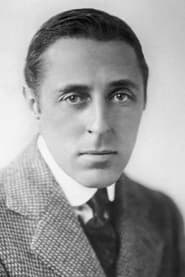
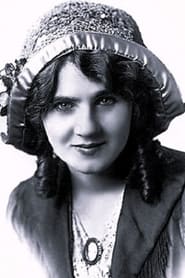
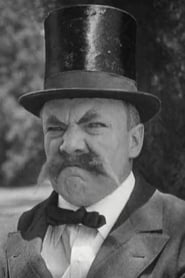
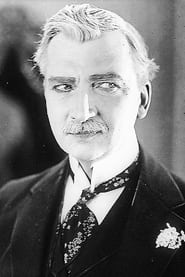
1909 · Approximately 10-12 minutes

Also available on: Archive.org
Confidence

Confidence

1909 Approximately 10-12 minutes United States
Trust and marital faithFemale reinvention and respectabilityBlackmail and social vulnerabilitySecrecy and exposureMoral redemption

Plot

Nellie, seeking to leave behind her former life and the social dangers associated with it, flees east and adopts a new identity by training as a nurse. In her new life she finds respectability and stability, eventually marrying a doctor who believes in her past being truly behind her. But the peace she has built is threatened when one of her former associates tracks her down and attempts to blackmail her with knowledge of her prior circumstances. As the blackmail scheme is uncovered, the tension resolves around the film’s central moral idea: the husband’s unwavering trust in Nellie proves stronger than the extortion attempt, allowing her to remain secure in her marriage and new social position.

About the Production

Release Date 1909
Production Biograph Company
Filmed In United States

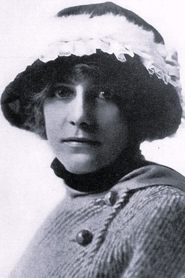
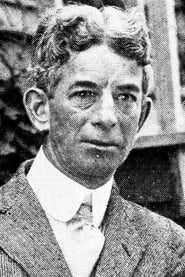
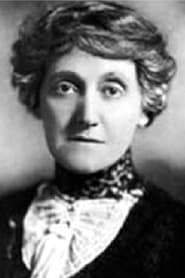
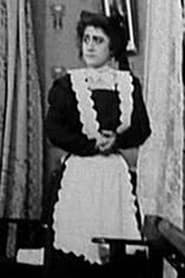
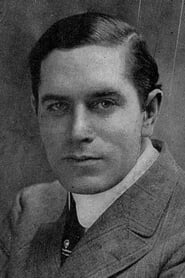
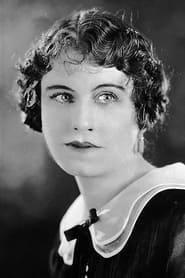
Confidence is a one-reel Biograph drama directed by D.W. Griffith during his highly prolific 1909 period, when he was refining the short narrative film into a more psychologically legible and dramatically efficient form. Like many Griffith films of the era, it was produced quickly with a stock company of regular Biograph performers, including Florence Lawrence, Charles Inslee, and Herbert Prior. Surviving documentation for exact budgetary or box-office figures is not known, which is typical for early silent shorts. The film belongs to Griffith’s series of domestic and melodramatic character studies, in which moral redemption, threatened respectability, and social stigma are central concerns.

Historical Background

Confidence was produced in 1909, a formative year for American cinema and for D.W. Griffith’s development as a filmmaker. The industry was still dominated by short subjects, and studios like Biograph were experimenting with narrative clarity, emotional immediacy, and more sophisticated editing to distinguish film from stage melodrama. The story reflects Edwardian-era concerns about female reputation, mobility, and the possibility of social reinvention in rapidly modernizing America, especially the contrast between old identities and new urban respectability. It also belongs to a period when cinema was increasingly concerned with domestic melodrama and moral consequences, using compact plots to dramatize social anxieties about marriage, trust, and hidden pasts. The film matters historically because it sits within Griffith’s early body of work that helped define the grammar of narrative cinema before the feature-length era fully took hold.

Why This Film Matters

Although Confidence is not among Griffith’s most famous titles, it is culturally significant as a representative example of the early silent melodrama that helped establish film conventions around characterization, moral conflict, and narrative resolution. The film participates in the era’s common but influential “fallen woman” tradition, in which a woman’s past threatens her present social acceptance, and redemption is achieved through secrecy, trust, or the moral integrity of a husband. For historians, the film is valuable because it shows how quickly cinema was learning to compress psychologically charged material into a few minutes while still delivering a complete emotional arc. It also contributes to Florence Lawrence’s importance in film history, reinforcing the emergence of recognizable performers at a time when screen acting was becoming a key selling point. More broadly, the film helps document how early twentieth-century cinema addressed questions of female agency, respectability, and the fragility of social identity.

Making Of

Confidence was made at Biograph during the period when D.W. Griffith was turning the short film into a more disciplined storytelling form, often using recurring stock players and carefully arranged scenes to keep the action comprehensible in a very brief running time. Florence Lawrence was one of Biograph’s key performers and a major draw by 1909, and her presence would have helped anchor the emotional stakes of the story. The film’s production context suggests a fast, efficient shoot typical of the studio’s schedule, with Griffith emphasizing expressive performance, tableau composition, and motivated cutting rather than elaborate sets or spectacle. No detailed surviving production memo is widely cited for this title, so much of what is known comes from the film itself, period trade references, and general Biograph studio practice.

Visual Style

The cinematography is characteristic of early Biograph production under Griffith: static or lightly mobile camera placement, tableau-like staging, and an emphasis on readable spatial relations within the frame. The film likely uses medium and long shots to present action clearly, allowing the audience to follow character interactions and emotional cues without the aid of heavy explanatory intertitles. Early Griffith films often relied on precise blocking and gesture, and Confidence would have used those tools to make the blackmail threat and the final affirmation of trust immediately understandable. Visual economy, simple interiors, and direct presentation are part of its aesthetic identity.

Innovations

Confidence does not appear to be associated with a major singular technical innovation, but it is historically important as part of the transitional work in which Griffith and Biograph were standardizing cinematic narrative technique. Its achievement lies in the efficient compression of a full melodramatic arc into a short running time, with clear motivation, rising suspense, and a decisive resolution. The film likely demonstrates the period’s increasingly sophisticated use of cross-cutting or scene linkage only insofar as needed for clarity, though not on the scale of Griffith’s later innovations. Its value is as an example of early narrative economy and the growing fluency of silent film storytelling.

Music

As a silent film, Confidence had no synchronized recorded soundtrack. Like most silent-era screenings, it would have been accompanied by live music tailored by the exhibitor, typically a pianist or small ensemble using mood-based cueing. No definitive original score is known to survive for the film, and any modern presentation may use a reconstructed or newly composed accompaniment. The film’s emotional structure would have lent itself to expressive underscoring for suspense, domestic reassurance, and moral resolution.

Famous Quotes

No verified surviving dialogue or intertitle text is widely documented for this film.
No famous quoted lines are securely attributable from extant source material.

Memorable Scenes

  • Nellie’s departure from her former life and her attempt to start again as a respectable nurse in the East.
  • The confrontation in which her old acquaintance discovers her and attempts to use her past as leverage.
  • The moment the blackmail scheme is exposed and the husband’s faith in Nellie is affirmed as the film’s emotional climax.

Did You Know?

  • Confidence is a surviving example of D.W. Griffith’s early Biograph-period work, when he was directing multiple one-reel films each month.
  • Florence Lawrence appears in the film, one of the most famous early screen actors and often called the first movie star.
  • The film is a compact morality drama centered on secrecy, reputation, and the possibility of personal reinvention, themes that recur frequently in Griffith’s pre-feature work.
  • Charles Inslee and Herbert Prior were both regular Biograph performers who appeared in numerous Griffith shorts across 1908 and 1909.
  • The film’s title refers not merely to romantic trust, but to the social and emotional stability that the husband’s faith provides against public exposure and blackmail.
  • As with many 1909 Biograph productions, it was likely made with minimal intertitles and relied heavily on clear acting, staging, and editing to convey plot.
  • The picture is part of a broader early silent-era interest in fallen-woman narratives and the possibility of moral rehabilitation through marriage and domestic respectability.
  • It is often discussed by film historians as one of the many shorts that show Griffith’s growing ability to structure dramatic conflict in concise, readable scenes.
  • The film’s story reflects contemporary anxieties about women’s pasts, anonymity in urban life, and the vulnerability of women trying to remake themselves socially.
  • Because early studio records are incomplete, many production details for the film remain undocumented, making surviving prints and catalog descriptions especially important to its study.

What Critics Said

Contemporary critical reception is only sparsely documented, which is common for a 1909 one-reel Biograph drama. In period terms, films like this were usually reviewed less as autonomous artworks and more as efficient dramatic entertainments, with trade notices often focusing on the clarity of the story, the performers, and the strength of the melodrama. In retrospect, critics and historians view Confidence as a competent but relatively minor Griffith short, important mainly within the director’s early development and within the larger evolution of silent narrative technique. Its historical value today lies in its illustration of the period’s moral storytelling and the precision with which early filmmakers could sustain suspense and emotional resolution in a very short format.

What Audiences Thought

No reliable nationwide audience-reaction data survives for this specific title, but films of this type were generally well suited to nickelodeon audiences who favored clear, emotionally direct stories. The film’s plot of secrecy, blackmail, and vindicated domestic trust would likely have been immediately legible and satisfying to early viewers, especially because it resolves into a reassuring moral conclusion. As a Biograph release featuring Florence Lawrence, it would have benefited from the public’s growing fascination with repeat screen performers. Modern audiences encountering the film through archives or restorations tend to appreciate it more as a historical artifact and a concise example of early silent melodrama than as a widely known classic.

Film Connections

Influenced By

  • Stage melodrama and domestic moral plays of the late 19th and early 20th centuries
  • Fallen-woman narratives in popular fiction and theater
  • Early Biograph narrative shorts and Griffith’s own pre-1910 dramatic formulae

This Film Influenced

  • Early domestic melodramas that centered on reputation, blackmail, and moral redemption
  • Later silent-era woman-centered melodramas that used secrecy and social stigma as central conflicts

Film Restoration

The film is extant in archival circulation and is not generally regarded as a lost film, though surviving materials may vary in completeness and print quality depending on source. Like many early silent films, it is typically encountered through preservation elements, archive holdings, or curated classic-film collections rather than widely circulated commercial releases.

Themes & Topics