1919 · Approximately 50-60 minutes

Also available on: Archive.org
The Other Half

The Other Half

1919 Approximately 50-60 minutes United States
class divisionfriendship under pressuresocial inequalityemotional loyaltyambition and pride

Plot

The Other Half is a social drama centered on a friendship strained by the pressures of class difference, a theme that King Vidor would return to repeatedly in his silent-era work. The story follows the emotional tensions that arise when characters from different social strata attempt to maintain affection, loyalty, and personal dignity in a world shaped by money, status, and convention. As the relationship is tested, the film explores how ambition, pride, and social expectation can distort human connection and force painful choices. The drama builds toward the idea that emotional sincerity does not erase the barriers imposed by class, but it can expose their cruelty and hypocrisy. Like many of Vidor's early films, it uses intimate personal conflict to reflect broader social inequalities.

About the Production

Release Date 1919
Production The Charles Ray Company, First National Exhibitors' Circuit

The Other Half was a silent-era feature directed by King Vidor and photographed during the period when he was developing the socially conscious style that would later define several of his most important films. It was made in association with the Charles Ray production organization and released through First National, a major exhibitor-backed distribution system of the late 1910s. Surviving production documentation is limited, so many specific day-to-day details of the shoot are not firmly documented in widely accessible sources. The film is notable in Vidor's career for its interest in class conflict and emotional realism, concerns that align with the post-World War I social mood in American cinema.

Historical Background

The Other Half was released in 1919, immediately after World War I and during a period of significant social transition in the United States. American cinema was growing rapidly in industrial scale, feature films were becoming the dominant format, and audiences were increasingly receptive to stories about class, mobility, and social instability. The phrase 'the other half' carried strong cultural meaning in an era when urban wealth, labor unrest, and postwar readjustment were all highly visible in public life. King Vidor would later become one of the most important directors to explore these tensions in a distinctly American way, and this film fits into that larger historical movement toward socially conscious melodrama.

Why This Film Matters

While not as widely remembered today as Vidor's major classics, The Other Half is significant as part of the director's early development of a cinema attentive to class division and emotional realism. It contributes to the silent-era tradition of dramas that used personal relationships to comment on economic and social inequality, a tradition that would remain important throughout American film history. The film also helps illustrate how mainstream Hollywood in the late 1910s could engage with social questions without abandoning accessible melodramatic storytelling. For scholars of silent cinema and Vidor's career, it offers evidence of the themes that would later mature in films such as The Crowd and Hallelujah.

Making Of

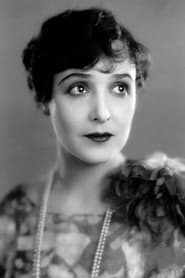
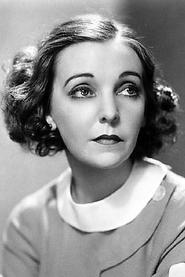
The Other Half was made during a formative stage in King Vidor's career, when he was moving from routine studio work toward more personal storytelling about class, labor, and social pressure. The film's production reflects the late-1910s Hollywood system in which independent producer units often collaborated with major distribution partners like First National. Although detailed behind-the-scenes production anecdotes are scarce, the film is important as part of the body of work in which Vidor sharpened his ability to dramatize social conflict through intimate relationships rather than broad melodrama alone. The casting of Florence Vidor and Zasu Pitts suggests a production aimed at credible emotional performance rather than heavy spectacle, which was well suited to the visual and acting conventions of the silent period. Because archival records for many 1910s features are incomplete, some aspects of its production history remain difficult to reconstruct with certainty.

Visual Style

The cinematography would have relied on the visual grammar typical of late silent features: expressive framing, clearly staged interactions, and lighting designed to emphasize emotional contrasts between characters and social settings. In a King Vidor drama of this period, the camera likely serves the psychology of the scene rather than decorative flourish, with emphasis on readable body language and spatial relationships that underscore class distinction. Surviving information does not point to a named cinematographer in common reference sources here, so detailed technical attribution is limited. Nevertheless, the film belongs to the period in which Vidor was learning to use visual storytelling to make social context legible without spoken dialogue.

Innovations

The film does not appear to be associated with a singular technical innovation in the way that later silent epics were, but it is technically notable as part of King Vidor's early command of silent dramatic construction. Its importance lies in the disciplined use of visual storytelling to communicate social tension and class contrast without dialogue. As with many late-1910s features, the craft emphasis would have been on continuity editing, expressive composition, and performance-driven storytelling. Its contribution is therefore more historical and stylistic than technological.

Music

As a silent film, The Other Half originally would have been accompanied by live music in theaters, typically a pianist, organist, or small ensemble depending on venue and exhibitor resources. No definitive original score is widely documented in standard reference sources. Modern screenings, when available, may use a compiled silent-film accompaniment or a newly created score based on archival practice. Because the film predates synchronized sound, music would have been essential to shaping mood, pacing, and emotional emphasis.

Famous Quotes

No verified surviving dialogue quotes are widely documented for this silent film.
Intertitles survive only in fragmentary or archival references, so full quotable lines are not reliably established in standard modern sources.

Memorable Scenes

  • A key dramatic sequence centers on the friendship's strain as social differences become impossible to ignore, turning personal affection into a test of status and pride.
  • The film's most memorable moments are likely those in which Vidor stages emotional confrontation through silent gestures, glances, and class-coded settings rather than through explanatory dialogue.

Did You Know?

  • The film is directed by King Vidor, who would later become one of Hollywood's major directors of social drama and spectacle.
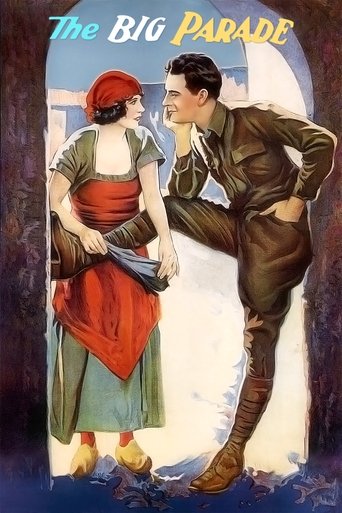
  • It belongs to Vidor's early silent period, before his most famous features such as The Big Parade and The Crowd.
  • The title refers to the idea of the 'other half' of society, a common phrase used in the early 20th century to denote social classes separated by wealth and privilege.
  • Florence Vidor, one of the principal cast members, was a prominent silent-era actress and at the time one of the best-known stars associated with refined dramatic roles.
  • The film reflects a recurring King Vidor interest in the tension between individual emotion and social structure.
  • Because it is a silent film from 1919, no synchronized spoken dialogue survives, and modern references rely on intertitles and surviving archival descriptions where available.
  • The film is sometimes discussed in film-history contexts as an example of Vidor's developing empathy for working-class and middle-class characters.
  • It was produced during the period when feature-length silents were becoming the norm in mainstream American cinema.
  • Like many films from this era, complete surviving print status is not always consistently documented across all archives, which makes historical research important for accurate identification.
  • The cast includes Zasu Pitts, who would later become a familiar character actress in both silent and sound cinema.

What Critics Said

Contemporary critical reception is difficult to summarize in detail because surviving reviews and full trade coverage are limited compared with later, better-documented releases. As a King Vidor silent drama with class-conscious themes, it would have been judged within the standards of the period for emotional clarity, acting, and moral emphasis rather than modern notions of psychological realism. Later critics and historians tend to value the film primarily as an early example of Vidor's developing social vision rather than as one of his major achievements. In modern reference works, it is generally treated as an important but lesser-known title from his silent period.

What Audiences Thought

Audience response data for a 1919 film of this kind is largely unavailable in precise form. As a First National release, it would likely have reached the established urban and regional exhibition network that served feature films of the period. The fact that it survives in filmographies and archival references suggests that it had at least enough circulation to enter the historical record, though there is no widely cited evidence of major box-office triumph. Like many silent dramas, its immediate audience reception is best understood through the broader popularity of class-and-conscience melodramas in the postwar era.

Film Connections

Influenced By

  • Victorian and early-20th-century social problem fiction
  • silent-era American melodrama
  • contemporary class-conscious stage and literary dramas

This Film Influenced

  • King Vidor's later social dramas, especially The Crowd (1928)
  • King Vidor's Hallelujah (1929)
  • later Hollywood class-conscious melodramas

Film Restoration

The film is an extant silent feature in archival reference, though complete preservation details are not consistently summarized in widely accessible public sources. It should be treated as a historical silent film that may survive in archives or incomplete holdings rather than as a universally available mainstream title. Because documentation varies by repository, the safest summary is that its preservation status is not as prominently publicized as that of major canonical Vidor titles.

Themes & Topics