As It Is in Life
"Null"
Plot
A poor but affectionate father, worn down by hardship and responsibility, remarries in hopes of bringing stability and companionship into his home. His young daughter, however, feels threatened by the new marriage and becomes deeply distressed at the thought of losing her father’s devotion. Moved by the child’s unhappiness, the father makes the painful choice to sacrifice his own new domestic happiness for her sake, revealing the moral duty and emotional self-denial at the center of the story. The film unfolds as a melodramatic domestic tragedy, emphasizing parental love, sacrifice, and the emotional costs of poverty and family duty.
About the Production
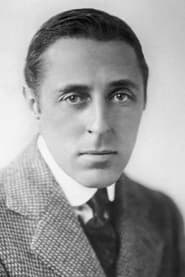
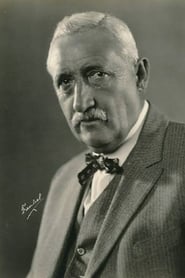
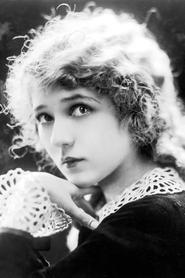
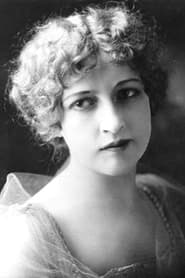
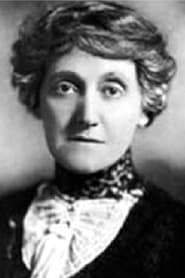
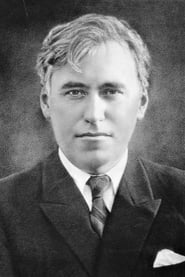
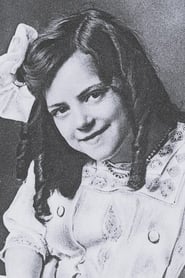
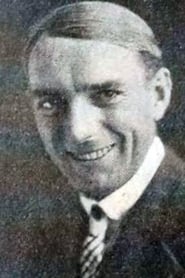
This is an early Biograph one-reel drama directed by D. W. Griffith and photographed in the concise, highly staged style typical of 1910 studio production. Like many Griffith-era Biograph films, it was made quickly with a repertory company of stock players, including Mary Pickford, George Nichols, and Marion Leonard. Surviving documentation is limited, so precise production details such as sets, shooting schedule, and budget are not known, but the film belongs to Griffith’s prolific period when he was refining emotional storytelling through close observation of domestic conflict. The picture is also representative of the era’s moralized melodramas, in which sacrifice and parental duty were recurring subjects.
Historical Background
The film was made in 1910, at a time when the American film industry was transitioning from short, one-reel subjects toward more ambitious narrative forms, though the one-reel drama remained the standard release format. It belongs to the Progressive Era, when American popular culture often emphasized moral uplift, domestic virtue, and the sanctity of family obligations, especially in middle-class melodrama. D. W. Griffith’s Biograph films from this period were central to the development of continuity editing and emotionally legible screen storytelling, even when the plots themselves were simple and highly moralistic. As It Is in Life matters historically because it illustrates how early cinema treated domestic sacrifice as a dramatic subject and shows the star-building environment in which Mary Pickford was emerging.
Why This Film Matters
While not one of Griffith’s best-known titles, the film is culturally significant as an example of the early silent domestic melodrama that helped define narrative cinema’s emotional vocabulary. Its story of a father sacrificing personal happiness for his child reflects early twentieth-century ideals about duty, parental love, and self-denial, themes that resonated strongly with contemporary audiences. The film also contributes to the historical record of Mary Pickford’s early screen career and of Griffith’s collaborative Biograph output, both of which are foundational to American film history. For scholars and archivists, the film is valuable less for widespread fame than for its role in demonstrating the ordinary but influential short-form storytelling that shaped classical Hollywood melodrama.
Making Of
As It Is in Life was made during Griffith’s extraordinarily productive Biograph period, when he was directing films at a rapid pace and relying on a stable ensemble of actors. The production likely used Biograph’s New York studio resources, with simple interiors and staged blocking designed to communicate the emotional conflict quickly to silent-film audiences. The cast list indicates the use of familiar Biograph repertory players, suggesting an efficient production model rather than an elaborate location shoot. Because the film is from 1910, detailed surviving behind-the-scenes documentation is limited, but it fits Griffith’s broader method of using short domestic dramas to refine performance style, composition, and audience sympathy through economical storytelling.
Visual Style
The cinematography was likely straightforward and theatrical, using static or minimally moving cameras, carefully arranged interiors, and clear frontal staging characteristic of 1910 Biograph productions. Griffith and his collaborators were increasingly attentive to expressive composition and the placement of actors within the frame, allowing the emotional relationships to read cleanly without intertitles dominating the narrative. The visual style would have relied on gesture, facial expression, and spatial clarity rather than elaborate camera movement. As with many early Griffith shorts, the craft lies in efficient scene construction and in guiding the viewer’s eye to the central emotional conflict.
Innovations
There are no widely documented technical innovations specific to this film, but it is part of Griffith’s broader early-period experimentation with cinematic storytelling techniques. The film likely uses concise scene construction, expressive close attention to performance, and efficient editing to communicate complex domestic emotion within a short running time. Its importance is therefore historical and stylistic rather than technological. It exemplifies the increasingly sophisticated narrative grammar Griffith was helping to develop in American silent cinema.
Music
As a silent film, As It Is in Life had no synchronized recorded soundtrack. In exhibition, it would have been accompanied by live music, typically a pianist, organist, or small theater ensemble, using improvised or compiled mood cues suited to domestic melodrama. No original score is known to survive, and any modern presentation would generally use a reconstructed accompaniment tailored to the film’s tone. The music in its original exhibition would have been locally determined rather than standardized.
Memorable Scenes
- The central emotional confrontation in which the daughter’s distress makes the father reconsider his remarriage is the film’s defining dramatic moment.
- The father’s final act of sacrifice, choosing his child’s happiness over his own new domestic hopes, serves as the story’s emotional climax.
Did You Know?
- This film was released in the same year Mary Pickford was rapidly becoming one of Biograph’s most recognizable stars.
- It is a one-reel silent drama, typical of early 1910 American filmmaking before feature-length storytelling became dominant.
- The title phrase reflects the era’s fondness for moral, sentimental domestic dramas centered on family obligation.
- D. W. Griffith often used such short films to experiment with emotional clarity, performance nuance, and cross-cutting within concise narratives.
- George Nichols and Marion Leonard were both important Biograph performers who appeared in many Griffith productions.
- The film’s surviving details are sparse, which is common for many pre-1915 silent shorts; many records from the period are fragmentary.
- The plot is emblematic of Griffith-era melodrama, where sacrifice by a parent is presented as virtuous and socially restorative.
- Mary Pickford frequently portrayed vulnerable, emotionally expressive young women and girls in early Biograph work, helping establish her screen persona.
- The film is cataloged with a Wikidata identifier and TMDb listing, reflecting continued archival interest despite its obscurity.
- As with many early silent shorts, original promotional material and contemporary reviews are difficult to locate in complete form.
What Critics Said
Contemporary critical response is not well documented in the surviving record, which is typical for many 1910 shorts. At the time, films like this were generally reviewed in trade publications and local newspaper listings more as program items than as standalone works, with emphasis placed on sentiment, acting, and moral effect rather than auteurist analysis. In retrospect, the film is viewed primarily by historians as part of Griffith’s early Biograph output and as evidence of Mary Pickford’s developing screen presence. Modern reception tends to be archival and scholarly rather than popular, with interest focused on its place in silent-cinema history and on the surviving credits and production context.
What Audiences Thought
Audience reaction from 1910 is not comprehensively preserved, but films of this type were designed to appeal to broad nickelodeon audiences who favored brief, emotionally direct dramas. The story’s emphasis on a father’s sacrifice and a child’s distress would likely have been immediately legible and moving to viewers accustomed to melodramatic conventions. As a Biograph release, it would have circulated widely in theaters and vaudeville-style film programs, where short domestic tragedies were a common and reliable attraction. Today, audiences who encounter it are usually silent-film enthusiasts or researchers, and reception is shaped by historical interest rather than mass-market familiarity.
Film Connections
Influenced By
- Victorian and turn-of-the-century domestic melodrama
- Stage melodramas centered on family sacrifice
- Early Biograph short-film storytelling conventions
This Film Influenced
- Later domestic melodramas in American silent cinema
- Classical Hollywood family-sacrifice dramas
- Mary Pickford-era sentimental screen roles
You Might Also Like
More Drama Films
View allMore from D.W. Griffith
View allFilm Restoration
The film is believed to survive in archival or cataloged form, though detailed preservation and restoration information is limited in readily available sources. It is not generally regarded as a lost film, but documentation about the condition of surviving elements is scarce.