M'Liss
"The exact original release tagline is not reliably documented in surviving sources; contemporary advertisements emphasized Mary Pickford as the beloved mountain girl and promoted the picture as a dramatic romance of the California gold fields."
Plot
Set in a rough California mining camp, M'liss follows a spirited young woman whose independence and quick temper make her both admired and underestimated by the men around her. She falls in love with schoolteacher Charles Gray, a gentle newcomer who tries to bring education and order to the camp, but the community's simmering tensions explode when Gray is accused of murder. As suspicion turns to mob violence and a lynching threat gathers, M'liss proves her courage by fighting to save the innocent man she loves. The story blends romance, melodrama, and frontier roughness, culminating in a rescue-and-exoneration drama that reinforces both M'liss's resilience and Gray's moral integrity.
About the Production
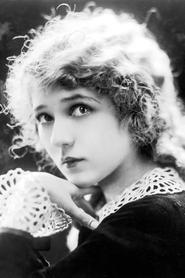
M'Liss was produced as a Mary Pickford star vehicle during the height of her silent-era fame, adapted from the popular 1902 play by Clay M. Greene, which itself was based on Bret Harte's earlier fiction. The film was mounted with emphasis on rustic authenticity, frontier atmosphere, and emotional clarity, all of which suited Pickford's carefully cultivated screen image as a plucky, resourceful young woman. Like many productions of the period, precise budget records are not generally available in standard reference sources, and the film's detailed box-office performance has not been reliably preserved. Surviving documentation indicates it was distributed through Artcraft, a Paramount-affiliated releasing brand created to showcase leading stars.
Historical Background
M'Liss was released in 1918, near the end of World War I and during a period when American cinema was rapidly consolidating into the studio and star systems that would define the 1920s. Mary Pickford was at the peak of her influence, one of the most famous women in the world and a key figure in the transformation of film acting into a fully recognized form of stardom. The film's frontier setting also tapped into a long American fascination with mining camps, western lawlessness, and the moral tensions of community justice versus mob violence. Its source material belongs to a tradition of Bret Harte adaptations that idealized and dramatized Gold Rush California, a subject that resonated with audiences interested in American identity, rugged individualism, and sentimental romance.
Why This Film Matters
The film is significant as part of Mary Pickford's screen legacy and as an example of how silent cinema turned established literary and theatrical material into star-centered popular entertainment. It helped reinforce Pickford's image as the small but forceful heroine who could command both comedy and high drama, a persona that shaped female stardom in the early film industry. M'Liss also illustrates the era's fascination with frontier justice and female courage, themes that remained durable in American film culture. For scholars and archivists, it is an important artifact of Pickford's Artcraft period and of the wider transition from short-form melodrama to feature-length prestige filmmaking.
Making Of
M'Liss was made at a moment when Mary Pickford's productions were expected to balance commercial appeal with literary pedigree, so the adaptation of a well-known western melodrama made strategic sense. Marshall Neilan's direction was tailored to Pickford's strengths: expressive close-ups, emotional immediacy, and the ability to shift from comic feistiness to sincere pathos. The production drew on the visual conventions of frontier drama, including mining-camp settings, rough-hewn supporting characters, and a climactic rush toward public violence and rescue. As with many silent-era productions, detailed day-by-day production records have not survived in broad circulation, but the film is firmly associated with Pickford's independent star system and with Artcraft's effort to package prestige entertainment around her name.
Visual Style
The visual style is characteristic of late-1910s American silent features, with emphasis on legible staging, expressive reaction shots, and clear spatial geography for the action. Frontier exteriors and camp interiors are used to establish social roughness and moral danger, while Pickford's close-ups and mid-shots are likely framed to maximize her expressive face and physical vitality. The cinematography would have relied on naturalistic daylight effects where possible and on theatrical composition for dramatic confrontations, especially in the climactic rescue material. As with many films of the period, the camera style serves narrative clarity more than flashy technical virtuosity, but it remains important as an example of mature silent-era storytelling.
Innovations
M'Liss is not usually cited for a single groundbreaking technical innovation, but it reflects the professional sophistication of late-1910s feature production in editing, framing, and continuity storytelling. Its most notable achievement lies in the integration of performance, setting, and melodramatic pacing, especially in maintaining tension through the false accusation and mob-justice sequence. The film also demonstrates the industrial maturity of star-centered production, where visual style was calibrated around the persona and emotional range of a major celebrity. In that sense, its technical significance is historical and industrial rather than revolutionary.
Music
As a silent film, M'Liss had no synchronized recorded soundtrack. Exhibition music would have been supplied live by theater musicians, often from cue sheets or improvised accompaniment tailored to the venue and audience. The exact original musical arrangement is not consistently documented in surviving references, and no fixed studio-issued score is widely known for the film. Modern presentations of the film, when available, may use compiled silent-film accompaniment or newly created scoring.
Famous Quotes
No surviving, widely verified dialogue quotes are available from this silent film in commonly cited archival sources.
Because M'Liss is a silent film, any original intertitles would vary by surviving print and are not consistently documented in modern references.
Memorable Scenes
- M'liss's introduction as a lively, outspoken girl whose wit and confidence contrast with the rough mining-camp environment.
- The tender courtship material between M'liss and schoolteacher Charles Gray, which softens the film's rugged setting with romance.
- The sequence in which Gray is falsely implicated in a murder, shifting the story into suspense and injustice.
- The tense mob buildup toward lynching, a classic silent melodrama set piece that tests the community's morality.
- M'liss's determined intervention to save Gray, which serves as the emotional climax and confirms her bravery.
Did You Know?
- M'Liss is one of Mary Pickford's many films in which she plays a youthful, spirited heroine, a persona that helped define her stardom in the silent era.
- The film adapts Clay M. Greene's stage version of Bret Harte's story, continuing the long screen and stage afterlife of Harte's California-set frontier material.
- Marshall Neilan, the director, was also one of Pickford's real-life collaborators and a frequent figure in her professional circle.
- Thomas Meighan appears in one of the principal male roles, adding a prominent leading man of the period to the cast.
- The plot's lynching crisis reflects a common silent-era melodramatic device used to heighten suspense and emotional stakes.
- The film was released through Artcraft Pictures, part of the distribution strategy used to present Pickford's films as premium attractions.
- Because it is a 1918 silent picture, music accompaniment would have varied from theater to theater rather than being fixed to a single standardized score.
- The title character's name is sometimes stylized as M'Liss, reflecting the period spelling and pronunciation of the source material.
- The film belongs to the wave of prestige literary and theatrical adaptations that helped lend silent features cultural legitimacy.
- Surviving references to the film are mostly bibliographic and archival rather than based on extensive modern restoration publicity, indicating that it is less widely seen than Pickford's best-known later classics.
What Critics Said
Contemporary reception was generally favorable in trade and popular exhibition circles, with attention focused on Pickford's ability to enliven a familiar frontier melodrama through charm, energy, and emotional control. Like many silent films of its era, however, detailed surviving reviews are scattered, so the full range of critical opinion is not as thoroughly documented as for later, better-preserved classics. Modern assessment tends to place it within Pickford's transitional body of work: admired as an important star vehicle and literary adaptation, but discussed more for historical interest than as one of the canonical masterpieces of silent cinema. Historians value it for what it reveals about Pickford's screen persona, 1910s production practice, and the conventions of pre-1920s American feature storytelling.
What Audiences Thought
At the time of release, audiences were likely drawn by Mary Pickford's name alone, as she was one of the most dependable box-office attractions of the silent era. The emotional mix of romance, peril, and redemption fit well with popular tastes for melodrama and western-flavored frontier tales. While precise audience surveys do not survive, the film's distribution through a major star vehicle channel indicates that exhibitors considered it a strong commercial draw. Today, audience familiarity is limited because the film is not as widely circulated as Pickford's best-known surviving features, but it retains interest among silent-film enthusiasts and classic cinema researchers.
Film Connections
Influenced By
- Bret Harte's stories and frontier fiction
- Clay M. Greene's stage adaptation of M'Liss
- Popular Western melodrama of the 1910s
- Silent-era star vehicles built around strong female leads
This Film Influenced
- Later frontier melodramas featuring a brave heroine rescuing an innocent man
- Subsequent Mary Pickford productions that reinforced the independent-girl persona
- Silent Western romances that blended danger, community justice, and sentimental resolution
You Might Also Like
More Mystery Films
View allMore from Marshall Neilan
View allFilm Restoration
Surviving documentation indicates the film exists in archival holdings or at least in partial preserved form, but it is not among the most commonly screened or widely restored Mary Pickford titles. Its exact preservation completeness is not consistently described in the most accessible references, so it should be treated as a historically important silent feature with uncertain public-access availability rather than as a fully mainstream circulating title.