1910 · Approximately 16 minutes

Also available on: Archive.org
The Usurer

The Usurer

1910 Approximately 16 minutes United States
GreedMoral punishmentThe limits of wealthUsury and exploitationSocial conscience

Plot

A wealthy moneylender, arrogant in his belief that wealth can solve or control everything, becomes consumed by his own greed and cruelty. As he profits from the desperation of others, a moral reckoning is set in motion that forces him to confront the human cost of usury. The film builds toward a terrifying and symbolic punishment that strips away his sense of security and power, making him understand money's limits in the face of suffering and mortality. In keeping with D.W. Griffith's early moral dramas, the story is concise, melodramatic, and built around a stark contrast between avarice and compassion.

About the Production

Release Date 1910-07-14
Production Biograph Company
Filmed In Fort Lee, New Jersey, USA

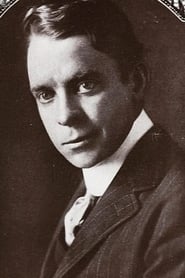
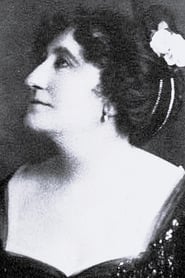
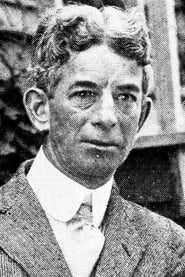
The film was made during D.W. Griffith's Biograph period, when he was directing a rapid succession of one-reel dramatic shorts that helped define early American narrative cinema. Like many Biograph productions of 1910, it was likely shot quickly on a modest budget with a repertory company of regular players and a mixture of studio and outdoor locations around the Fort Lee area. Surviving information on the production is limited, which is typical for many films from this era, but the title and premise fit Griffith's recurring interest in morality tales centered on greed, punishment, and social conscience. The cast list associated with the film includes familiar Griffith-era performers such as George Nichols, Grace Henderson, and Alfred Paget.

Historical Background

The Usurer was made in 1910, at a moment when American cinema was rapidly evolving from brief novelty films into a more sophisticated narrative form. This was also a period of intense social debate over money, debt, banking, and the ethics of lending, themes that resonated strongly with working- and middle-class audiences. D.W. Griffith's Biograph shorts often reflected contemporary moral concerns while helping standardize editing, staging, and narrative continuity for mainstream film grammar. The film matters historically because it belongs to the foundational years of American silent cinema, when the language of screen storytelling was being codified scene by scene.

Why This Film Matters

Although The Usurer is not among Griffith's best-known surviving works, it is culturally significant as an example of how early American films addressed economic morality through melodrama and allegory. Films like this helped popularize the idea that cinema could teach, warn, and shape public feeling, not merely entertain. It also demonstrates how early filmmakers used simple narratives about greed and punishment to speak to broader anxieties about class, money, and social justice. In film history terms, it is part of the body of work that established Griffith as a central figure in the development of American narrative film language, even as his later career became more controversial and far more famous.

Making Of

The Usurer was produced during the highly productive Biograph years in which Griffith was experimenting with how much story could be compressed into a single reel. The production likely relied on the studio's stock company, with performers taking on broadly defined moral types rather than psychologically complex modern characters. Surviving documentation on the shoot itself is sparse, so most behind-the-scenes discussion comes from what is known about Griffith's workflow at Biograph: fast-paced turnaround, efficient staging, and reliance on clear visual contrasts to communicate character and theme. The film also fits the period's tendency toward explicitly moral storytelling, in which greed, punishment, and redemption were rendered in simple but forceful terms for a mass audience.

Visual Style

The film's visual style would have been characteristic of Griffith's Biograph period: static or lightly moving camera placement, carefully arranged staging in depth, and expressive use of gesture and framing to clarify moral conflict. Early 1910 Griffith films increasingly used closer views and more varied editing than many of his contemporaries, so the storytelling likely depended on a combination of medium shots, inserts, and emphatic reaction shots. The image design would have emphasized contrast between the usurer's wealth and the suffering around him, reinforcing the moral argument through composition. As with most films from this period, cinematography served narrative clarity first and artistry second, though the two often overlapped in Griffith's hands.

Innovations

The film does not appear to be associated with a single groundbreaking technical invention, but it belongs to the body of Griffith's early work that helped refine continuity editing and expressive narrative compression. Its significance lies in the efficient use of a short runtime to build moral conflict, escalate tension, and deliver a decisive dramatic payoff. The production also reflects early cinematic techniques of symbolic storytelling, where character types and visual contrasts carry thematic meaning. In that sense, it is technically important as part of the broader evolution of feature-friendly storytelling methods.

Music

No original soundtrack survives, as the film was made for silent exhibition. Like all silent-era releases, it would have been accompanied by live music tailored to the venue, ranging from a solo pianist to a small theater orchestra depending on the exhibition site. Any modern presentations would typically use a compiled or newly created score, but no definitive original music cue sheet is known here. The film's emotional impact would originally have depended heavily on musical accompaniment chosen by the exhibitor.

Memorable Scenes

  • The climactic punishment sequence in which the moneylender is forced into a terrifying confrontation with the consequences of his greed.
  • The scenes establishing the usurer's cold, calculating relationship to money and those who depend on him.
  • The visual contrast between wealth and human distress, which functions as the film's central moral illustration.

Did You Know?

  • This is one of the many short morality dramas D.W. Griffith made for Biograph in 1910, before he moved on to feature-length productions.
  • The film’s story is built around the social anxiety surrounding usury, a subject often treated as both economic and moral corruption in early cinema.
  • Fort Lee, New Jersey, was one of the most important centers of American film production at the time, before Hollywood became dominant.
  • George Nichols, Grace Henderson, and Alfred Paget were among the familiar faces who appeared repeatedly in Griffith’s early Biograph films.
  • Because it is an early silent short, plot information survives more reliably than detailed production records, which are often incomplete or lost.
  • The title reflects a type rather than just a character name, signaling the film’s allegorical and didactic approach.
  • The film is representative of Griffith’s early 1910 work, when he was refining cross-cutting, expressive close-ups, and symbolic visual storytelling.
  • Like many Biograph films of the period, it was originally accompanied by live music in theaters, though no original score survives.

What Critics Said

Contemporary reviews for many Biograph shorts were brief, and specific surviving criticism for The Usurer is limited. At the time of release, films of this type were generally appreciated for their dramatic clarity, moral seriousness, and the strength of their visual storytelling rather than for individual auteurist recognition. Modern historians tend to view it as a minor but illustrative entry in Griffith's early oeuvre, valuable for understanding his development as a filmmaker and the conventions of 1910 melodrama. Its reputation today is therefore mostly archival and historical rather than popularly celebrated.

What Audiences Thought

Specific audience-response records for The Usurer do not survive in a detailed form, which is common for early silent shorts. As a Biograph release, it was likely shown to audiences in nickelodeons and short-program venues where dramatic moral tales were a staple of the experience. The clear premise and sensational punishment element would likely have made it accessible and memorable to viewers accustomed to concise melodrama. Its reception was probably typical of the period: immediate, local, and largely unrecorded beyond trade notices and exhibition circulation.

Film Connections

Influenced By

  • Victorian morality tales
  • Stage melodrama
  • Early social reform literature
  • Biblical parable traditions
  • Turn-of-the-century temperance and reform filmmaking

This Film Influenced

  • Early morality dramas in silent cinema
  • Later social-problem films that dramatize exploitation and punishment
  • D.W. Griffith's own continuing use of moral conflict and symbolic narrative

Film Restoration

The film is preserved, though it is an early silent short with limited surviving documentation and may survive in archival or home-movie-format sources rather than in widespread circulation. As with many 1910 Griffith shorts, information about completeness and restoration status can vary by archive and print source. It is not generally considered lost.

Themes & Topics